
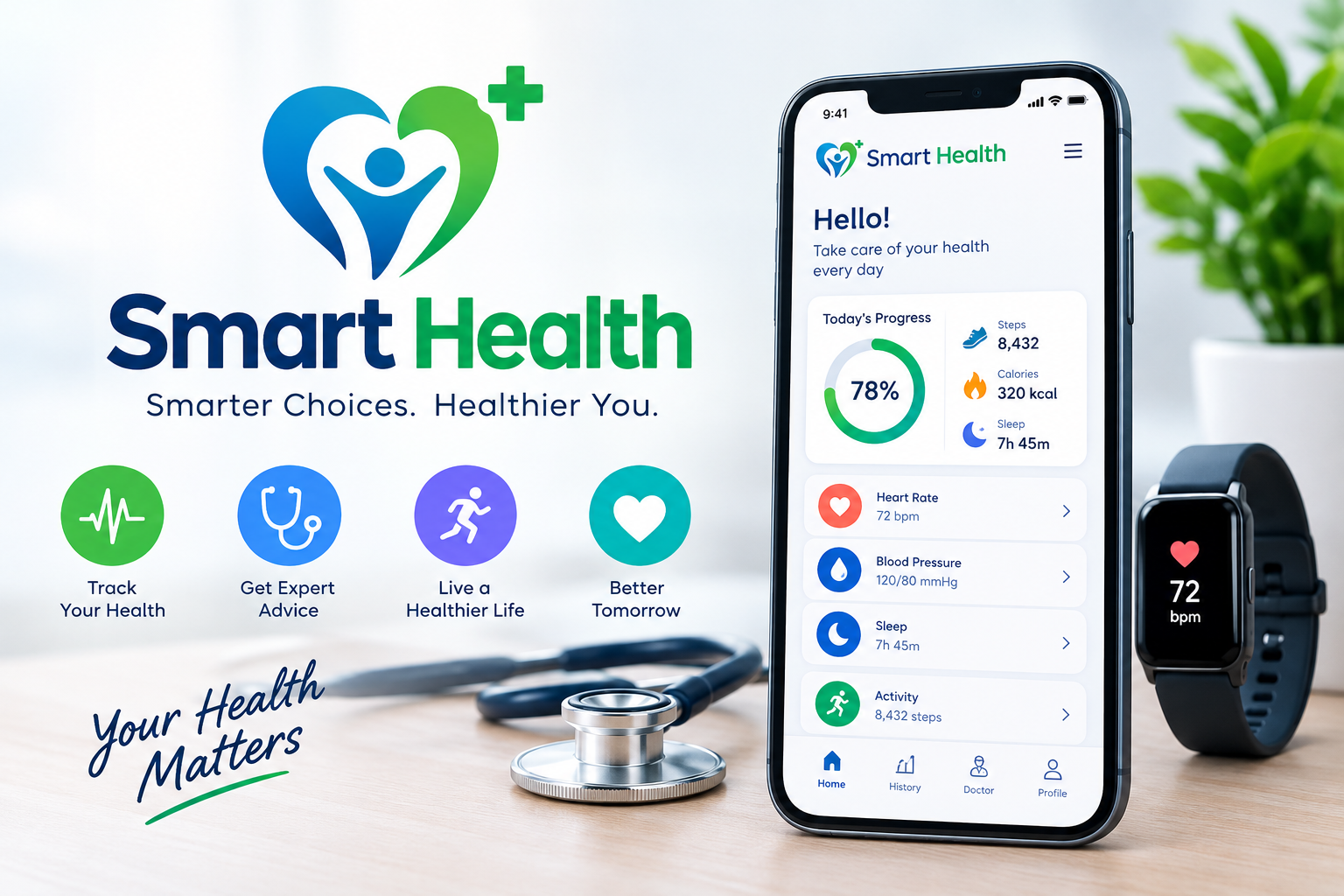
Healthcare is becoming increasingly connected. Instead of relying only on occasional visits to a clinic, people can now use smartwatches, mobile health apps, connected medical devices, and remote monitoring systems to collect and manage health information.
This growing approach is commonly described as smart health or smart healthcare. It combines digital technologies with healthcare services to make monitoring, communication, and care more connected and data-driven.
Smart health is not limited to one device or application. It can involve wearable sensors, mobile applications, electronic health records, telehealth platforms, artificial intelligence (AI), cloud systems, and the Internet of Medical Things (IoMT).
For individuals, the goal is often greater awareness and easier access to health information. For healthcare professionals, connected systems can provide additional information that may support monitoring and clinical decision-making.
What Is Smart Health?
Smart health is the integration of digital and connected technologies into healthcare to support monitoring, communication, information management, and healthcare delivery.
It can include wearable technology, IoT devices, mobile health applications, AI, data analytics, cloud computing, telehealth, and connected medical equipment. These technologies can collect information from users or patients and transmit it to an application, platform, or healthcare professional for further analysis or review.
For example, a person may use a smartwatch to track activity and heart rate. A patient with a medical condition may use a connected monitoring device that sends measurements to a healthcare team. A healthcare provider may then review that information alongside other clinical data.
The important point is that smart health is an ecosystem rather than a single product.
How Smart Health Technology Works
Although smart health systems vary considerably, many follow a similar process:
- Data collection: Sensors or devices collect health-related information.
- Connectivity: The information is transferred through technologies such as Bluetooth, Wi-Fi, or mobile networks.
- Storage: Data may be stored in an application, cloud platform, or healthcare information system.
- Analysis: Software or analytical systems process the information.
- Action: The resulting information can support monitoring, communication, or healthcare decisions.
IoT-based healthcare systems commonly rely on sensors, networks, and applications working together. Research on intelligent healthcare systems describes wearable sensors and connected medical devices as important components of this process.
This does not mean every smart health device provides a medical diagnosis. A fitness tracker and a clinically validated medical monitor can have very different purposes and levels of accuracy.
Common Smart Health Devices and Technologies
Smart health covers a wide range of technologies.
Wearable Devices
Smartwatches, fitness trackers, smart rings, and other wearable devices can collect information such as activity, sleep-related measurements, heart rate, and other metrics depending on the device.
Wearables are particularly useful because they can collect information while a person goes about normal daily activities. Research into smart healthcare has identified wearable sensors as an important part of connected health systems.
Health and Medical Apps
Mobile health applications can help users record information, manage appointments, monitor selected measurements, access educational resources, or communicate with healthcare services.
The usefulness of an app depends on what it is designed to do. A general wellness application should not automatically be treated as a substitute for professional medical care.
Connected Medical Devices
Connected blood pressure monitors, glucose-related devices, thermometers, ECG equipment, and other medical technologies can transmit measurements digitally.
Some connected devices are designed specifically for clinical use, while others are intended primarily for personal wellness monitoring.
Artificial Intelligence and Data Analytics
AI and machine learning can be used to process large amounts of healthcare information and identify patterns. Smart healthcare research also explores AI-supported decision systems, medical imaging, predictive models, and automated analysis.
The technology can support healthcare professionals, but the appropriate use of AI depends on the specific system, data quality, validation, and clinical context.
Telehealth and Remote Monitoring
Telehealth allows healthcare services to be delivered through digital communication tools. Remote patient monitoring can combine connected devices with healthcare platforms so that certain measurements can be reviewed without requiring every interaction to happen inside a healthcare facility.
Benefits of Smart Health
Smart health technologies can offer several potential advantages when they are appropriately designed and used.
Continuous or More Frequent Monitoring
Traditional healthcare often provides measurements at specific appointments. Connected devices can collect information more frequently, potentially giving users and healthcare professionals a broader picture of changes over time.
Greater Patient Engagement
Having access to personal health information can encourage people to pay closer attention to areas such as physical activity, sleep, or other measurable health behaviors.
Smart healthcare research describes patient engagement and self-management as important areas where connected technologies may contribute.
Remote Access to Healthcare
Remote monitoring and telehealth can reduce the need for some in-person interactions. This can be particularly useful when physical distance, mobility, or access to healthcare facilities creates difficulties.
Better Access to Health Data
Digital systems can make relevant information easier to record, organize, and share. When systems are properly integrated, healthcare professionals may have access to information that supports a more complete view of a patient’s situation.
More Personalized Care
Healthcare data can potentially help professionals understand individual patterns and adjust care according to a person’s circumstances. However, personalization depends on reliable data and appropriate clinical interpretation rather than simply having more data.
Smart Health Applications
Smart health technology is being explored and used across many areas of healthcare and wellness.
| Area | Example of Smart Health Use |
|---|---|
| Fitness | Activity and exercise tracking |
| Sleep | Sleep monitoring through connected devices |
| Heart health | Heart-rate or ECG-related monitoring |
| Diabetes care | Connected glucose-monitoring technologies |
| Elderly care | Remote monitoring and safety systems |
| Remote care | Digital consultations and patient monitoring |
| Hospital care | Connected medical equipment and data systems |
| Preventive health | Tracking selected health and lifestyle indicators |
Connected healthcare systems can also support hospital operations, medical equipment management, patient monitoring, and healthcare data exchange.
Challenges and Limitations
Smart health offers useful possibilities, but it also creates important challenges.
Privacy and Data Security
Health information is sensitive. Connected devices and digital platforms need appropriate security measures to protect information from unauthorized access.
Researchers have identified confidentiality, authentication, authorization, and data integrity as important concerns in IoT-based healthcare systems.
Accuracy
Not every wearable or health application is a medical device. Measurements can vary according to the technology, device design, user behavior, and circumstances.
A health metric from a consumer device should therefore be interpreted according to the manufacturer’s stated purpose and, when relevant, professional medical advice.
Interoperability
Different healthcare technologies do not always communicate seamlessly. Smart health systems may involve devices, applications, healthcare records, and networks that use different technologies and standards.
Interoperability remains an important technical consideration for connected healthcare.
Too Much Information
More data does not automatically mean better healthcare. Constant notifications or large quantities of measurements can become confusing if users do not understand what the information means.
The value of smart health depends on turning useful data into understandable and appropriate action.
How to Use Smart Health Technology Responsibly
If you are considering a smart health device or application, look beyond the number of features.
Consider:
- Purpose: Is it designed for wellness, fitness, monitoring, or clinical use?
- Accuracy: What does the manufacturer say about its measurements?
- Privacy: How is your health information collected, stored, and shared?
- Compatibility: Does it work with your phone or other healthcare systems?
- Ease of use: Can you realistically use it consistently?
- Professional guidance: Do you need a healthcare professional to interpret the results?
Most importantly, do not use a consumer health device to replace professional medical assessment when you have concerning symptoms or a medical problem.
The Future of Smart Health
Smart health is likely to continue developing as connected devices, AI, data analytics, and healthcare platforms become more integrated.
Recent research describes smart healthcare as an ecosystem involving IoT, AI, mobile technologies, wearable devices, data analysis, and connected medical systems.
Future systems may focus increasingly on better interoperability, more convenient remote monitoring, improved data analysis, and patient-centered healthcare. At the same time, privacy, security, accuracy, regulation, and responsible use will remain essential.
The most meaningful progress will not simply come from collecting more health data. It will come from making that information useful, secure, understandable, and appropriately connected to healthcare services.
Key Takeaways
- Smart health combines healthcare with connected digital technologies.
- Wearables, mobile apps, IoT devices, AI, and telehealth are important parts of the smart health ecosystem.
- Remote monitoring can allow selected health information to be collected outside traditional healthcare settings.
- Consumer wellness devices should not automatically be treated as clinical diagnostic tools.
- Privacy, security, accuracy, and interoperability are major considerations.
- Smart health works best when technology supports—not replaces—appropriate healthcare.
FAQs
What does smart health mean?
Smart health refers to using connected digital technologies such as wearable devices, health applications, sensors, AI, and IoT systems to support health monitoring, healthcare communication, information management, and care delivery.
What are examples of smart health technology?
Examples include smartwatches, fitness trackers, connected blood pressure monitors, glucose-monitoring technologies, wearable sensors, telehealth platforms, health apps, and connected medical equipment.
Is smart health the same as digital health?
The terms overlap, but they are not necessarily identical. Digital health is a broad category covering digital technologies used in health and healthcare. Smart health often emphasizes connected, intelligent, data-driven systems involving technologies such as IoT, AI, sensors, and analytics.
Can smart health devices diagnose diseases?
Some regulated medical devices may be designed for specific diagnostic or monitoring purposes, while many consumer wearables are designed mainly for wellness and fitness. Users should check the intended purpose of a specific device and seek professional medical advice when necessary.
Is smart health data safe?
Safety depends on the specific device, application, platform, and security practices. Because health information can be sensitive, users should review privacy policies, account security settings, data-sharing permissions, and available security features.
How does smart health help patients?
Smart health can help patients monitor selected information, access digital healthcare services, communicate remotely with providers, and become more engaged with their health information. Its usefulness depends on the technology and the individual’s healthcare needs.
Conclusion
Smart health represents a shift toward more connected and data-driven healthcare. From wearable devices and mobile applications to remote monitoring, IoT, and AI, these technologies can support people and healthcare professionals in managing information and staying connected.
The technology is most useful when its purpose, accuracy, privacy, and limitations are clearly understood. Smart health should complement appropriate professional care rather than replace it. As connected healthcare continues to develop, secure data handling, interoperability, responsible AI, and patient-centered design will remain central to its future.
Learn More About: Diet Health Effects
