
Health and wellbeing are important parts of everyday life, but the two terms are often understood in different ways. Health and wellbeing definitions go beyond simply being free from illness and include the physical, mental, emotional, and social factors that influence how people live and feel. Understanding these concepts can help explain why healthy habits, supportive relationships, emotional balance, and a safe environment all contribute to a better quality of life. In this guide, we explore what health and wellbeing mean, how they differ, their key dimensions, and how they can influence everyday life.
What Do Health and Wellbeing Mean?
The terms health and wellbeing are closely connected, but they do not mean exactly the same thing. Both describe important aspects of a person’s life and can influence how someone functions, feels, and participates in everyday activities.
Health is often associated with the condition and functioning of the body and mind. It can include physical fitness, mental health, the presence or absence of illness, and the ability to carry out normal activities.
Wellbeing has a broader meaning. It can include physical and mental health, emotional balance, relationships, social connections, sense of purpose, personal security, and satisfaction with life.
Understanding these definitions is useful because good health is not only about avoiding illness. A person’s overall wellbeing can also be influenced by their environment, relationships, daily habits, work, finances, and ability to cope with challenges.
Understanding the Definition of Health
Health can be understood as a state of physical and mental functioning that allows a person to live and carry out daily activities. It is not simply the absence of disease.
Physical Health
Physical health relates to how well the body functions. It can involve areas such as:
- Nutrition and eating habits
- Physical activity
- Sleep and rest
- Personal hygiene
- Healthy body functioning
- Prevention and management of illness
Maintaining physical health can help people perform everyday tasks and participate in work, education, family life, and recreational activities.
Mental Health
Mental health concerns emotional, psychological, and cognitive functioning. It can influence how people think, feel, respond to situations, make decisions, and interact with others.
Mental health exists across a wide range of experiences. People may experience stress, worry, sadness, or other difficult emotions at different points in life. Looking after mental wellbeing can involve healthy routines, supportive relationships, appropriate professional help, and effective ways of managing challenges.
What Is Wellbeing?
Wellbeing is a broader concept that describes how people experience and function in their lives. It can involve both positive experiences and the ability to deal with difficulties.
A person may have good physical health but still experience poor wellbeing because of loneliness, ongoing stress, lack of purpose, difficult relationships, or dissatisfaction with their circumstances.
Similarly, someone living with a health condition can still experience meaningful relationships, purpose, enjoyment, and a strong sense of wellbeing.
This is why wellbeing should be viewed as a multidimensional concept rather than a single measure.
Key Dimensions of Health and Wellbeing
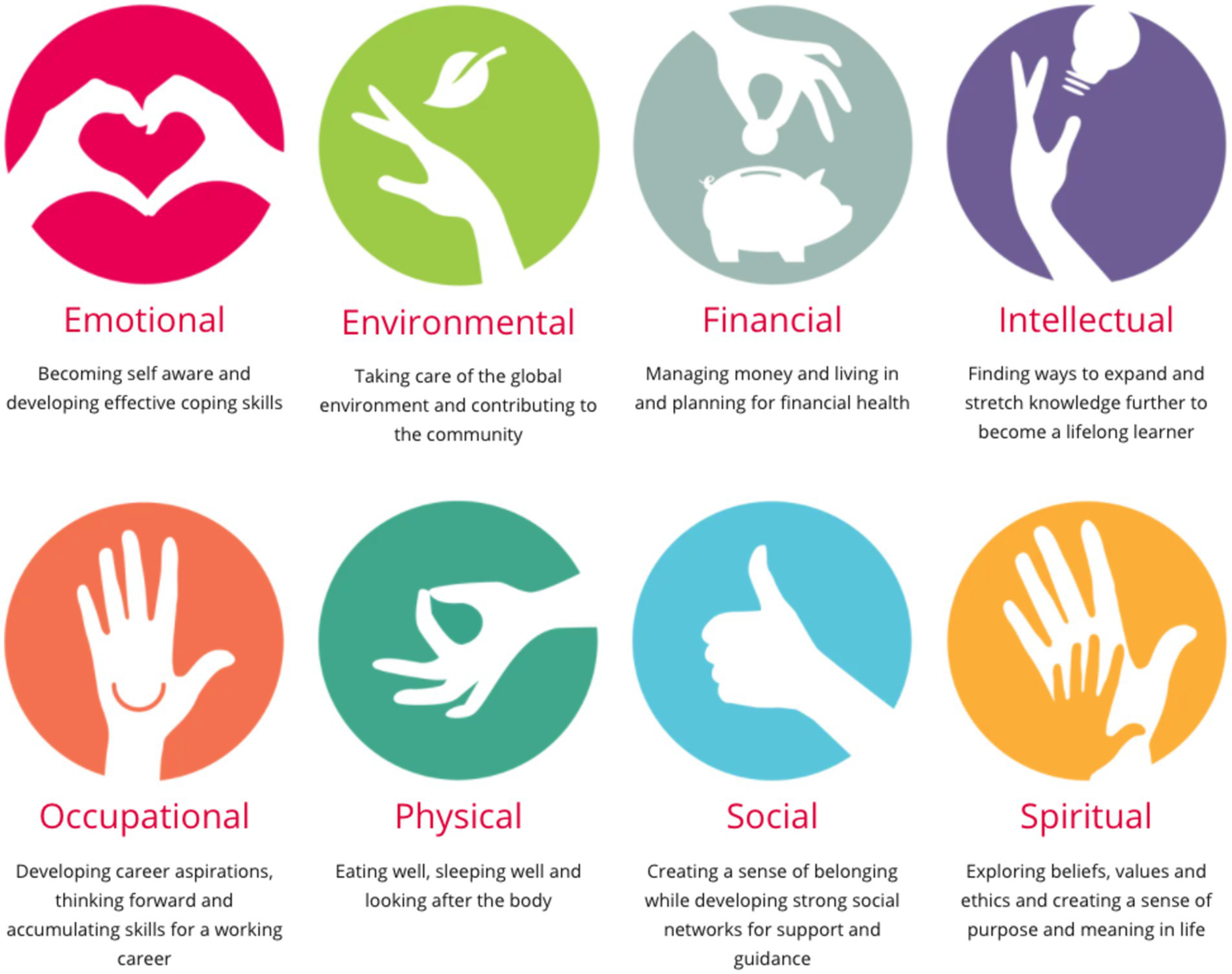
Health and wellbeing definitions can be divided into several interconnected areas.
| Dimension | What It Can Include |
| Physical | Movement, nutrition, sleep, fitness, and physical functioning |
| Mental | Thinking, coping, concentration, and psychological functioning |
| Emotional | Understanding and managing emotions |
| Social | Relationships, belonging, communication, and community |
| Spiritual | Values, meaning, purpose, or personal beliefs |
| Environmental | Safe, healthy, and supportive surroundings |
| Financial | Ability to manage financial needs and reduce financial stress |
| Occupational | Satisfaction, balance, purpose, and healthy participation in work |
These dimensions can affect one another. For example, financial difficulties may increase stress, while social isolation may affect emotional wellbeing. On the other hand, supportive relationships can contribute to resilience and a stronger sense of connection.
Health vs. Wellbeing: What Is the Difference?
Although the terms are sometimes used interchangeably, there is an important distinction.
Health generally focuses more on the condition and functioning of the body and mind. It includes physical and mental aspects and can involve the prevention, treatment, or management of illness.
Wellbeing is broader and focuses on how a person experiences and functions in life. It includes health but can also encompass relationships, emotions, purpose, security, environment, and life satisfaction.
For example, consider someone who has no diagnosed physical illness but regularly feels isolated and dissatisfied with their daily life. Their physical health may be relatively good, while their overall wellbeing may be less positive.
This distinction shows why improving wellbeing can involve more than medical care or physical fitness.
Examples of Health and Wellbeing in Everyday Life
Health and wellbeing are reflected in many ordinary activities and experiences.
Physical example: Getting adequate rest, staying physically active, eating a varied diet, and seeking appropriate healthcare when needed.
Mental example: Developing healthy ways to manage everyday stress and maintaining activities that support psychological wellbeing.
Emotional example: Recognizing emotions and finding constructive ways to respond to difficult situations.
Social example: Maintaining supportive relationships with family, friends, colleagues, or community groups.
Environmental example: Having access to a safe and comfortable place to live, work, study, or relax.
Purpose and meaning: Taking part in activities that provide personal meaning, enjoyment, achievement, or a sense of contribution.
These examples demonstrate that wellbeing is influenced by both personal choices and wider circumstances.
Why Health and Wellbeing Are Important
Health and wellbeing can influence nearly every part of daily life. They can affect energy, concentration, relationships, productivity, independence, and the ability to participate in activities that matter to a person.
A balanced approach can also help people recognize that different areas of life are connected. For instance, regular physical activity may support physical fitness while also contributing to mood and daily functioning. Strong social connections can provide emotional support during challenging periods.
For communities and organizations, focusing on wellbeing can also encourage healthier environments rather than concentrating only on illness or treatment.
How to Support Better Wellbeing
There is no single routine that works for everyone, but several basic approaches can contribute to healthier living and overall wellbeing:
- Get enough quality sleep and maintain a regular sleep routine.
- Eat a varied and balanced diet.
- Include physical activity that is appropriate for your abilities and circumstances.
- Make time for supportive relationships and social connections.
- Develop healthy strategies for managing stress.
- Take breaks from work or other demanding activities.
- Spend time on hobbies and activities that provide enjoyment or meaning.
- Seek professional support when health or emotional concerns become difficult to manage.
- Create safe and supportive environments at home, work, and in the community.
Wellbeing is not about being happy or healthy all the time. Difficult experiences are a normal part of life. A broader understanding of wellbeing recognizes the importance of coping, adapting, connecting with others, and finding meaningful ways to move forward.
Frequently Asked Questions
1. What are health and wellbeing definitions?
Health and wellbeing definitions explain the concepts of health and quality of life. Health commonly focuses on physical and mental functioning, while wellbeing covers broader areas such as emotions, relationships, purpose, environment, and life satisfaction.
2. What is the difference between health and wellbeing?
Health generally focuses on physical and mental condition, while wellbeing is a broader concept that includes health along with emotional, social, environmental, and other aspects of living well.
3. What are the main dimensions of wellbeing?
Common dimensions include physical, mental, emotional, social, spiritual or purpose-related, environmental, financial, and occupational wellbeing.
4. Can someone have good health but poor wellbeing?
Yes. A person may have relatively good physical health while experiencing loneliness, stress, dissatisfaction, or other challenges that negatively affect their overall wellbeing.
5. Why is mental health part of overall wellbeing?
Mental health influences how people think, feel, cope with challenges, make decisions, and interact with others. These factors are closely connected to overall quality of life.
6. How can people improve their wellbeing?
People can support wellbeing through healthy sleep, nutritious food, appropriate physical activity, social connections, stress management, meaningful activities, and professional support when needed.
7. Is wellbeing the same for everyone?
No. Wellbeing is influenced by individual circumstances, needs, values, relationships, environment, and life experiences. What supports one person’s wellbeing may not be equally effective for another.
Conclusion
Understanding health and wellbeing definitions provides a more complete view of what it means to live a healthy and fulfilling life. Health includes important physical and mental aspects, while wellbeing extends further into emotional, social, environmental, occupational, and personal areas.
The two concepts are closely connected and can influence one another. Taking a balanced approach means looking beyond illness and considering the different factors that help people function, connect, cope, and experience meaning in everyday life.
Learn About: Diet Health Effects
