
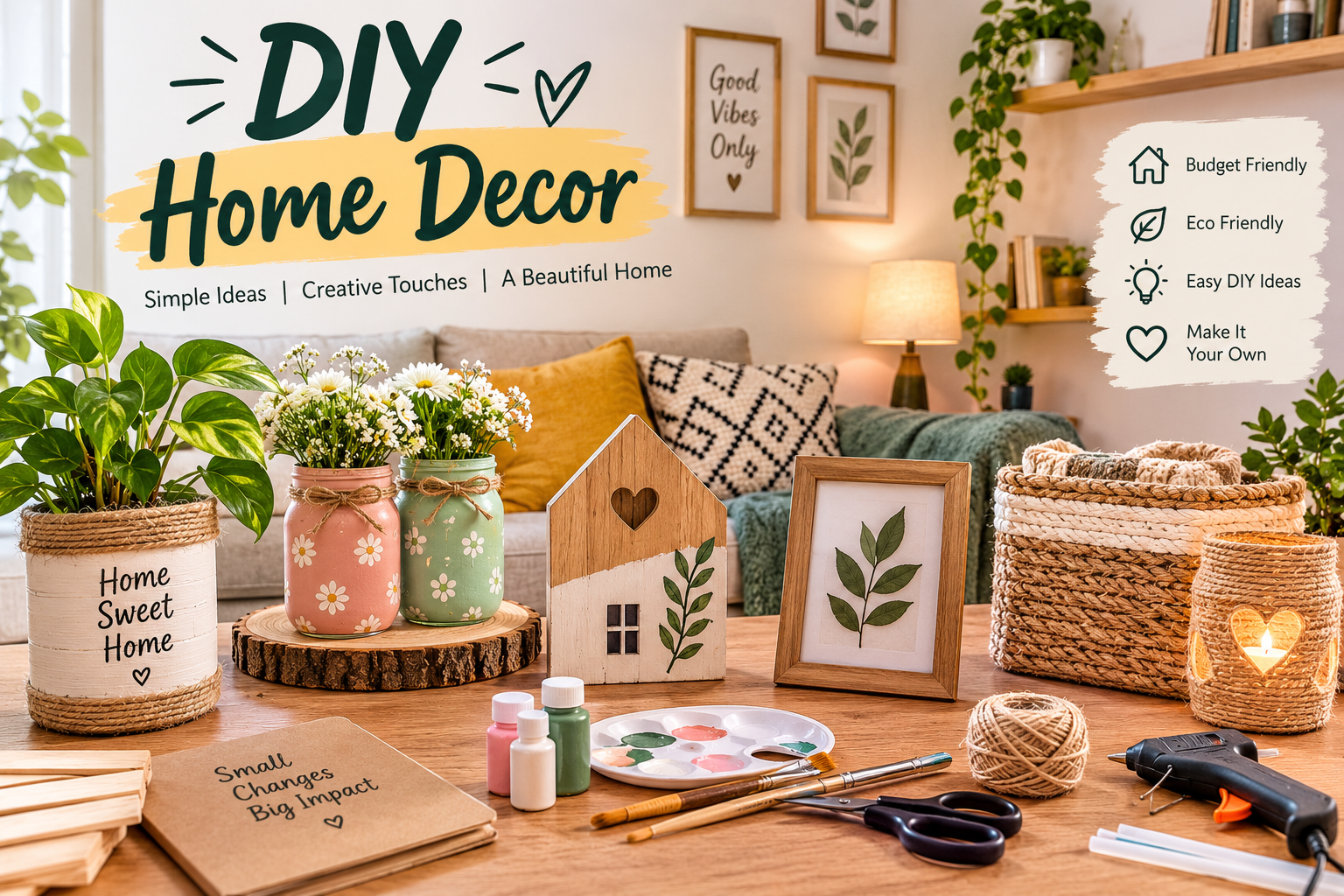
Creating a beautiful home does not always require expensive furniture, designer accessories, or a complete renovation. With creativity, practical planning, and a few basic materials, you can transform ordinary rooms into attractive and comfortable spaces. DIY home decor offers an accessible way to personalise your surroundings while making better use of your budget.
Whether you want to refresh your living room, decorate a bedroom, organise your kitchen, or add character to a small apartment, there are plenty of projects to explore. You can make handmade decorations, update old furniture, reuse everyday items, or introduce simple colour and texture changes.
The best DIY decorating projects combine appearance with practicality. Instead of purchasing accessories simply because they look attractive, consider how each item will complement your existing furniture and support your daily routine. This guide explains creative DIY home decor ideas, affordable materials, room-by-room projects, and useful planning tips to help you achieve attractive results.
What Is DIY Home Decor?
DIY home decor means creating, modifying, or arranging decorative items yourself instead of purchasing every finished product. DIY stands for “do it yourself” and includes projects ranging from simple crafts to furniture makeovers.
Examples of DIY home decoration include:
- Creating artwork using canvas, paper, or fabric.
- Painting flowerpots to match your interior colour scheme.
- Making decorative cushion covers.
- Repurposing wooden crates as storage shelves.
- Refreshing an old table with suitable paint.
- Creating personalised photo displays.
- Using baskets and containers to organise everyday items.
DIY decorating works with many interior styles, including modern, minimalist, rustic, farmhouse, traditional, and bohemian designs. The key is to choose projects that suit your space, personal preferences, skills, and budget.
Benefits of DIY Home Decorating
DIY home decor offers several benefits beyond making a room look attractive. It encourages creativity, helps develop practical skills, and can give existing household items a new purpose.
1. Save Money on Decorations
Buying new accessories for every room can become expensive. DIY projects allow you to use affordable materials or items you already have at home.
For example, an unused picture frame can become a display for photographs, patterned paper, or fabric artwork. Similarly, a plain storage box can be decorated to match your bedroom or living room.
However, DIY is not always cheaper. Before beginning a project, compare the cost of materials, tools, and your time with the price of a ready-made alternative.
2. Express Your Personal Style
DIY projects give you more control over colours, textures, shapes, and designs. You can create decorations that reflect your personality rather than relying entirely on mass-produced products.
For instance, you might create a gallery wall featuring family photographs, make cushions in your favourite colours, or decorate plant pots to coordinate with your furniture.
3. Reuse Existing Household Items
Repurposing suitable items can reduce waste and prevent unnecessary purchases. Glass jars can become organisers, leftover fabric can become decorative accessories, and sturdy furniture can be refinished instead of discarded.
Always inspect items before reusing them. Avoid materials with mould, structural damage, or potentially hazardous coatings unless they can be handled safely.
4. Develop Creative Skills
Simple DIY projects provide opportunities to learn painting, sewing, measuring, crafting, and basic furniture restoration. Starting with small tasks helps you build confidence before attempting more complicated projects.
Easy DIY Home Decor Ideas for Beginners
If you are new to home decorating, start with projects that require few tools and straightforward techniques.
Create Handmade Wall Art
Wall art can make an empty wall feel more complete without requiring a large investment.
Try these ideas:
- Frame personal photographs or attractive printed designs.
- Create abstract artwork with paint and a blank canvas.
- Frame patterned fabric or decorative paper.
- Arrange several small pictures into a gallery wall.
- Create a seasonal display using pressed leaves or flowers.
Before hanging anything, arrange your frames on the floor to test different layouts. Keep spacing reasonably consistent, and consider the size of the wall and nearby furniture.
Decorate Flowerpots
Plain plant pots can become decorative accents with a little creativity. Use suitable paint to create geometric patterns, stripes, dots, or simple colour combinations.
Choose finishes designed for the pot’s material and intended conditions. If the pot will remain outdoors, use products suitable for outdoor exposure. Keep drainage holes clear so excess water can escape.
Repurpose Glass Jars
Clean glass jars can serve as decorative vases, desk organisers, or storage containers for suitable household items.
To create a simple decoration:
- Remove labels and wash the jar thoroughly.
- Dry the surface completely.
- Add paint, ribbon, or other suitable decorations.
- Allow everything to dry according to product instructions.
- Place the jar somewhere stable and appropriate for its intended use.
Avoid using decorative jars for food storage unless the materials and finishes are food-safe. Never place flammable decorations near an open flame.
Make Decorative Cushion Covers
Changing cushion covers can refresh a sofa or bedroom without replacing large pieces of furniture.
Choose fabric that complements your curtains, bedding, or existing upholstery. Beginners can explore suitable no-sew methods, while those with sewing skills can create fitted covers from leftover fabric.
Consider durability, cleaning requirements, and comfort before selecting materials.
DIY Home Decor Ideas for Every Room
Each room serves a different purpose, so choose decorations according to how the space is used.
Living Room Decorating Ideas
The living room is a practical starting point because small changes can make the space feel more coordinated.
Consider these projects:
- Create a gallery wall above the sofa.
- Arrange books and decorative objects on shelves.
- Refresh cushion covers with coordinated colours.
- Make a centrepiece using a tray and vase.
- Refinish a small side table with suitable furniture paint.
- Add plants that suit the available light.
Avoid filling every surface with decorative objects. Leaving some open space can help the room feel organised and comfortable.
Bedroom Decorating Ideas
Bedroom decor should support relaxation while reflecting your personal style.
Useful DIY ideas include:
- Creating a fabric-covered headboard.
- Making matching bedside organisers.
- Displaying photographs in simple frames.
- Adding a handmade throw or cushion cover.
- Using baskets to store blankets and accessories.
- Updating drawer handles to refresh suitable furniture.
Keep walkways clear, secure wall-mounted objects properly, and choose lighting that supports your everyday needs.
Kitchen Decorating Ideas
Kitchen decorations should look attractive without interfering with food preparation, cooking, or cleaning.
Try the following:
- Label containers used for dry ingredients.
- Create a small herb display near suitable natural light.
- Arrange frequently used items on a washable tray.
- Use coordinated containers for kitchen accessories.
- Add washable fabric accents where appropriate.
Keep decorative materials away from open flames and hot surfaces. Choose easy-to-clean items, and avoid placing decorations where grease, moisture, or food residue can accumulate.
Bathroom Decorating Ideas
Bathrooms need materials that can tolerate humidity and occasional splashes.
You can create a coordinated appearance using matching storage containers, a decorative tray for toiletries, or framed prints placed away from wet areas.
Select moisture-resistant materials and finishes. Avoid untreated wood and paper decorations in locations that regularly become damp. Keep electrical accessories away from water.
Affordable Materials and Tools for DIY Home Decor
You do not need a fully equipped workshop to start decorating. Many beginner-friendly projects require only a few supplies.
| Material or tool | Common use |
|---|---|
| Paint and brushes | Decorating pots, frames, and suitable furniture |
| Picture frames | Displaying photographs, prints, and fabric |
| Fabric and thread | Making cushion covers and table accessories |
| Glass jars | Creating vases and organisers |
| Measuring tape and pencil | Planning layouts and measuring materials |
| Suitable adhesive | Attaching lightweight decorative elements |
| Sandpaper | Preparing compatible surfaces before painting |
| Storage baskets | Organising household items |
Purchase supplies according to your specific project rather than buying everything at once. Read product labels and follow instructions for ventilation, surface preparation, protective equipment, and drying time.
How to Plan a DIY Home Decor Project
Good planning helps prevent wasted materials and disappointing results.
Step 1: Choose a Specific Goal
Identify one area you want to improve. You might want to decorate an empty wall, refresh a side table, or organise a cluttered shelf.
A clear goal makes it easier to select an appropriate project.
Step 2: Set a Realistic Budget
List the materials you need and estimate the total cost. Include smaller expenses such as fasteners, protective coverings, finishing products, and sandpaper.
Reuse suitable household items where possible, but do not compromise safety or durability to save money.
Step 3: Choose Complementary Colours
Consider the colours of your walls, flooring, curtains, and furniture. A limited colour palette can help decorative items work together.
For example, neutral furniture may pair well with green plants, textured cushions, and natural wooden accents.
Step 4: Measure Before Starting
Measure walls, furniture, shelves, and decorative objects when necessary. This helps you avoid artwork that looks too small or accessories that do not fit the intended space.
Step 5: Prepare Your Workspace
Protect nearby furniture and floors, organise your tools, and read the instructions for all products. Allow painted or finished items to dry and cure fully before using them.
Step 6: Review the Finished Result
Check that decorations are stable, surfaces are clean, and the arrangement is practical. Remove unnecessary objects if the room feels crowded or visually unbalanced.
Common DIY Home Decor Mistakes to Avoid
Even simple projects can become frustrating when you overlook basic details.
- Buying materials without a plan: Decide what you want to create before shopping.
- Using too many colours: A coordinated palette can create a more harmonious appearance.
- Ignoring measurements: Measure before cutting, painting, or hanging items.
- Choosing unsuitable materials: Consider moisture, heat, sunlight, and cleaning requirements.
- Overdecorating small spaces: Choose a few useful, attractive accessories instead of filling every corner.
- Rushing the finishing process: Follow instructions for paint, adhesives, and coatings.
- Ignoring safety: Use appropriate protective equipment and follow tool instructions.
For structural changes, electrical work, or specialised plumbing, consult a qualified professional rather than treating the task as a simple decorating project.
Sustainable DIY Home Decorating Ideas
Sustainable decorating focuses on using resources thoughtfully, reducing waste, and choosing items that last.
You can make your decorating projects more sustainable by:
- Upcycling furniture: Refresh a sturdy chair or table instead of replacing it.
- Reusing fabric: Turn suitable leftover textiles into cushion covers or table runners.
- Shopping second-hand: Look for frames, mirrors, and accessories that can be cleaned or repaired.
- Reducing packaging: Choose materials with minimal packaging when practical.
- Selecting durable products: Use finishes and materials suitable for their intended purpose.
- Avoiding unnecessary purchases: Start with items you already own before buying additional decorations.
Sustainable DIY home decor is not just about making old objects look new. It is about extending the useful life of materials while creating an attractive and comfortable living environment.
Frequently Asked Questions
1. What are the easiest DIY home decor ideas for beginners?
Some easy projects include creating a gallery wall, painting flowerpots, decorating glass jars, updating cushion covers, and arranging books or plants on shelves. These projects generally require fewer tools than furniture construction or major home improvements.
2. How can I decorate my home on a small budget?
Start by rearranging existing furniture and using decorations you already own. Refresh old frames, reuse suitable containers, make simple fabric accessories, and add plants where appropriate. Set a budget and compare material costs before starting each project.
3. Which DIY home decor projects can I complete in one day?
Depending on preparation and drying time, you may be able to create a gallery wall, decorate plant pots, organise a shelf, make a simple centrepiece, or update cushion covers in one day. More complex projects may take longer.
4. How can I make DIY decorations look professional?
Use accurate measurements, prepare surfaces correctly, select coordinated colours, and pay attention to finishing details. Consistent spacing, clean edges, suitable materials, and uncluttered arrangements can make homemade decorations look polished.
5. Is DIY home decor suitable for small apartments?
Yes. Wall-mounted displays, decorative storage baskets, compact plants, multifunctional furniture, and carefully selected accessories can work well in small apartments. Prioritise useful decorations that do not block walkways or make rooms feel crowded.
6. What materials are best for DIY home decor?
Common materials include wood, fabric, glass jars, picture frames, paper, suitable paints, and decorative baskets. The best choice depends on the project, budget, durability requirements, and exposure to moisture or heat.
7. How can I make DIY home decor more sustainable?
Reuse household items, repair furniture, select durable materials, purchase second-hand accessories, and avoid making decorations that will quickly become waste. Maintaining finished items properly can also extend their useful life.
Conclusion
DIY home decor offers a creative and practical way to make your home more attractive, comfortable, and personal. From handmade wall art and painted plant pots to furniture updates and organised storage, small projects can produce meaningful changes without requiring a major renovation.
The best results come from choosing projects that match your skills, planning your expenses, and selecting materials suitable for your space. Start with one simple improvement, learn from the process, and gradually explore new ideas. With thoughtful planning and creativity, you can create a home that reflects your personality while making better use of the items you already own.
Learn About: Home Improvement Projects
