
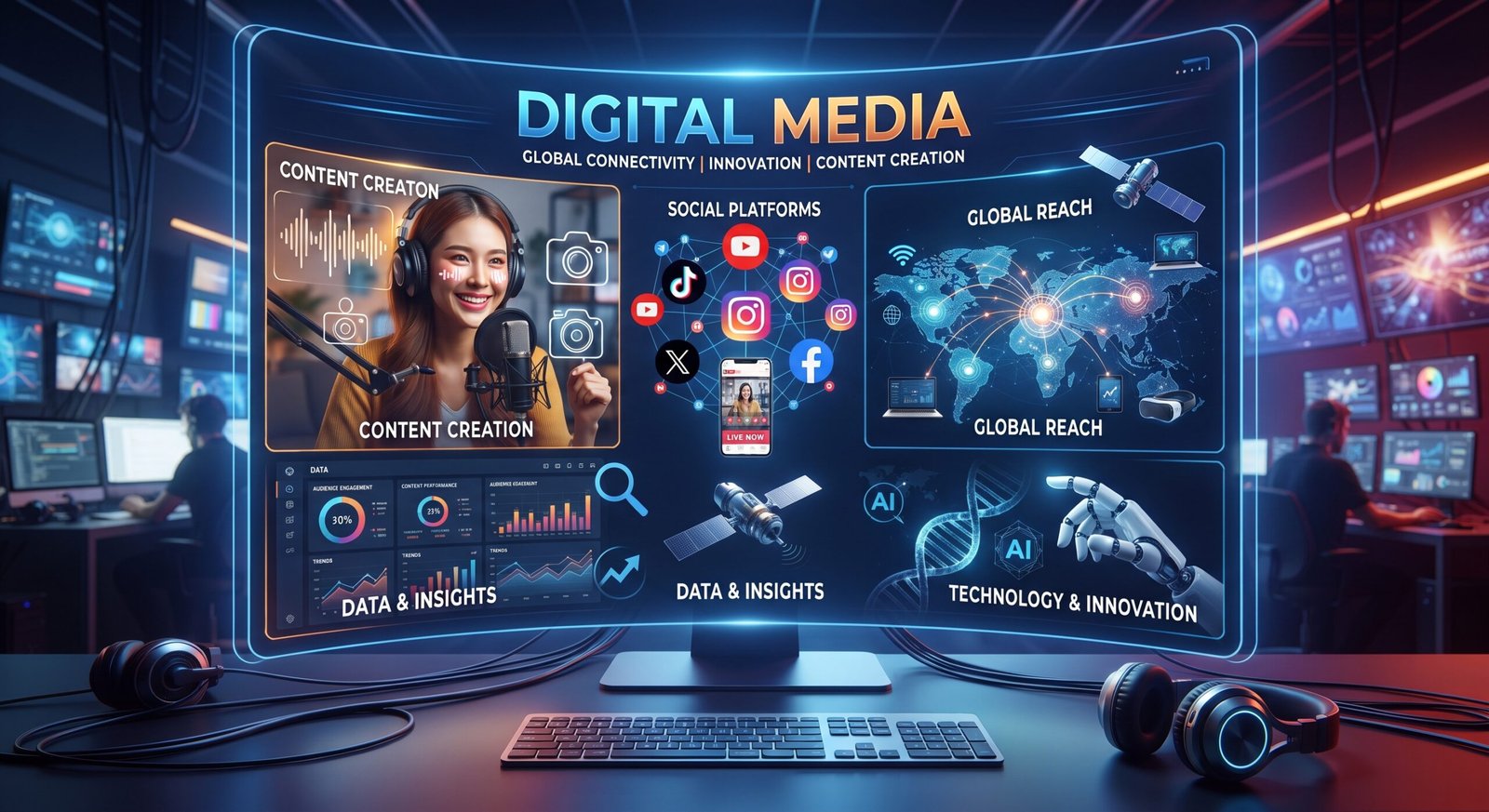
Digital media has become part of almost every area of modern life. People use smartphones to watch videos, social platforms to communicate, websites to find information, streaming services to enjoy entertainment, and digital publications to follow current events. Businesses also depend on online channels to reach customers, build brands, and promote their products or services.
Unlike traditional media, digital content can be created, distributed, updated, and measured quickly. A single video, article, podcast, or social media post can potentially reach audiences across different countries within minutes.
But digital media is much more than social networking. It includes a broad ecosystem of websites, search engines, streaming platforms, mobile applications, podcasts, online newspapers, email campaigns, digital advertising, and interactive content.
Understanding how these channels work can help individuals make better choices online and help businesses create more useful and trustworthy digital experiences.
What Is Digital Media?
Digital media is any content that is created, distributed, accessed, or consumed through digital devices and technologies. This includes computers, smartphones, tablets, smart TVs, gaming systems, and other connected devices.
Common examples include:
- Websites and blogs
- Social media posts
- Online videos
- Podcasts
- Digital magazines and newspapers
- E-books
- Mobile applications
- Email newsletters
- Online advertisements
- Digital photography and graphics
- Streaming content
One of the defining characteristics of digital media is its interactive nature. Users do not simply receive information; they can comment, share, search, react, subscribe, create content, and communicate directly with publishers or brands.
Major Types of Digital Media
Digital media covers many formats, each serving a different purpose.
1. Social Media
Platforms such as social networks allow individuals, creators, organizations, and businesses to communicate with audiences directly.
Content may include:
- Short-form videos
- Images
- Stories
- Live streams
- Text updates
- Polls and discussions
Social media is especially useful for community building, brand awareness, and real-time communication.
2. Websites and Blogs
Websites remain one of the most important digital information sources. Businesses use them to explain products and services, while publishers use blogs and online publications to educate and entertain readers.
A well-structured website can also attract visitors through search engines by providing useful answers to specific questions.
3. Video and Streaming
Video has become one of the most engaging digital formats. Tutorials, interviews, documentaries, entertainment programs, product demonstrations, and short videos can all be distributed online.
Streaming has also changed how audiences consume television and entertainment. Instead of relying only on fixed broadcast schedules, viewers can often choose what they want to watch and when they want to watch it.
For readers looking for television-related information, a dedicated TV Guide Tonight resource can be useful for checking programming and planning what to watch.
4. Podcasts and Digital Audio
Podcasts allow people to consume information while commuting, exercising, working, or relaxing. Topics range from news and business to technology, education, sports, and entertainment.
Digital audio also includes music streaming, online radio, audiobooks, and other on-demand formats.
5. Digital Publications
Online magazines, newspapers, newsletters, and independent publications have made information accessible across geographical boundaries.
Readers can follow topics that interest them without waiting for a physical publication to arrive.
Why Digital Media Is Important
Digital media has changed the speed and scale of communication.
Traditional media often requires physical production or scheduled broadcasting. Digital platforms can publish information almost instantly and update it whenever necessary.
This creates several important advantages:
| Feature | Digital Media Advantage |
| Speed | Content can be published quickly |
| Accessibility | Audiences can access content from many devices |
| Interaction | Users can comment, share, and respond |
| Measurement | Publishers can analyze audience behavior |
| Global Reach | Content can reach audiences worldwide |
| Flexibility | Content can be updated or repurposed |
For consumers, this means more choices. For businesses and publishers, it creates more opportunities to reach specific audiences.
Digital Media in Entertainment
Entertainment is one of the areas most affected by digital technology. Movies, television programs, music, games, celebrity news, and other forms of entertainment are now available through numerous digital channels.
Audiences can discover new content through search engines, recommendations, social platforms, streaming services, and online publications.
Digital entertainment also encourages participation. Fans can discuss shows, publish reviews, create videos, follow celebrities, and join online communities.
A strong entertainment website can therefore serve more than one purpose. It can provide news, guides, reviews, explanations, interviews, and helpful resources in one place.
Readers interested in broader entertainment coverage can explore Entertainment content for additional topics and updates.
Digital Media for Businesses and Marketing
Businesses use digital media to connect with potential and existing customers throughout the buying journey.
A company might publish an educational blog post to attract people searching for information. It can then use social media, email, video, or online advertising to maintain engagement.
Some common digital marketing channels include:
Search Engine Optimization
SEO helps useful web pages become easier to discover through search engines. Successful SEO focuses on satisfying the reader rather than simply repeating keywords.
Social Media Marketing
Brands can use social platforms to demonstrate products, answer questions, share updates, and build communities.
Content Marketing
Articles, videos, guides, case studies, and other resources can demonstrate expertise while helping audiences solve real problems.
Email Marketing
Email remains useful for maintaining relationships with subscribers, sharing updates, and delivering personalized content.
Digital Advertising
Businesses can use online advertising to reach audiences based on factors such as interests, search behavior, demographics, or previous interactions, depending on the platform and applicable privacy rules.
Benefits of Digital Media
The growth of digital media offers significant benefits to both consumers and organizations.
Easy Access to Information
People can find educational resources, news, tutorials, reviews, and entertainment from almost anywhere with an internet connection.
Faster Communication
Messages, announcements, and updates can reach large audiences almost instantly.
Greater Audience Reach
A small business or independent creator can potentially reach an international audience without needing a traditional distribution network.
More Personalization
Many digital platforms use user preferences and interactions to personalize recommendations and experiences.
Better Performance Measurement
Businesses can measure metrics such as website visits, engagement, conversions, and audience retention. This data can help them improve future campaigns.
Challenges and Risks of Digital Media
Digital media also creates challenges that users and publishers need to understand.
Misinformation
False or misleading information can spread rapidly. Readers should consider the source, check important claims, and compare information with reliable references.
Privacy Concerns
Online services can collect different types of user information. Understanding privacy settings and reading relevant policies can help people make informed choices.
Information Overload
The huge amount of available content can make it difficult to identify what is genuinely useful.
Digital Fatigue
Constant notifications, scrolling, and screen exposure can make digital experiences overwhelming. Setting boundaries can help users maintain a healthier relationship with technology.
Changing Algorithms
Social and search platforms frequently adjust how content is displayed. Publishers should therefore prioritize useful, original, audience-focused content instead of depending entirely on one platform.
How to Create Effective Digital Content
Creating successful digital content starts with understanding the audience.
A practical process includes:
- Identify the audience: Know who you are trying to help.
- Understand the search or information need: Determine what readers actually want to know.
- Choose the right format: Use an article, video, podcast, infographic, or another format based on the topic.
- Provide genuine value: Answer questions clearly and avoid unnecessary filler.
- Use clear structure: Headings, short paragraphs, lists, and examples make content easier to consume.
- Verify important information: Accuracy helps build trust.
- Review performance: Use appropriate analytics to understand what works.
- Update useful content: Refresh information when facts, products, or trends change.
The best digital content does not simply chase clicks. It gives people a reason to stay, learn, return, or take a useful next step.
The Future of Digital Media
Digital media will continue to evolve as technology changes. Artificial intelligence, immersive experiences, personalization, interactive video, voice interfaces, and new forms of digital storytelling are likely to influence how audiences discover and consume information.
Artificial intelligence is already helping organizations with tasks such as content analysis, recommendations, automation, translation, and audience insights. However, human judgment remains important for accuracy, originality, context, and editorial quality.
The future will likely favor organizations that combine technology with strong communication principles. Content must still be useful, understandable, trustworthy, and relevant to real people.
Key Takeaways
- Digital media includes websites, social media, videos, podcasts, apps, digital publications, and online advertising.
- It has transformed communication, entertainment, education, and marketing.
- Digital platforms allow content to be distributed quickly and measured effectively.
- Businesses can use digital media to build awareness, educate audiences, and generate customers.
- Users should remain aware of misinformation, privacy issues, and excessive screen consumption.
- High-quality digital content should prioritize usefulness, accuracy, originality, and audience needs.
- Emerging technologies will continue to reshape how people create and consume digital content.
FAQs
What is digital media?
Digital media is content created, distributed, or consumed through digital technologies and devices.
What are examples of digital media?
Examples include websites, social media, videos, podcasts, mobile apps, digital newspapers, and online advertisements.
Why is digital media important?
It makes communication faster, information more accessible, and audience engagement easier to measure.
How do businesses use digital media?
Businesses use it for marketing, customer communication, brand building, content marketing, advertising, and sales.
What is the difference between digital and traditional media?
Digital media is distributed through digital technologies, while traditional media commonly includes print, broadcast television, radio, and other offline formats.
What is the future of digital media?
The field is expected to become increasingly interactive, personalized, AI-assisted, and integrated with emerging technologies.
Conclusion
Digital media has fundamentally changed how people communicate, learn, shop, work, and enjoy entertainment. Its biggest strength is flexibility: the same digital ecosystem can support a short social post, an in-depth article, a podcast, a streaming program, or an interactive application.
For users, the key is to consume information thoughtfully and recognize trustworthy sources. For businesses and publishers, the priority should be creating content that genuinely helps the audience rather than focusing only on clicks or visibility.
