
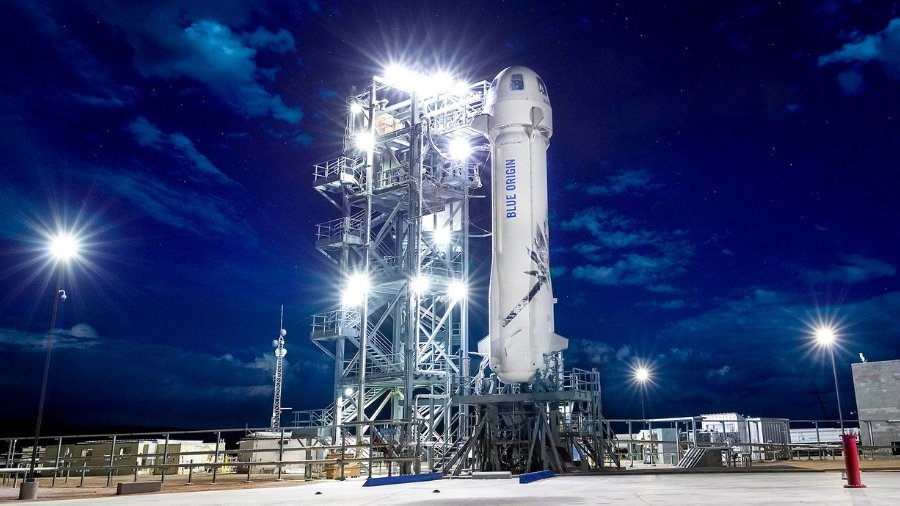
Space exploration is changing rapidly, with private aerospace companies playing a growing role alongside government agencies. One of the most recognizable names in this industry is Blue Origin, the aerospace company founded by Jeff Bezos.
Rather than focusing on a single rocket or mission, Blue Origin is developing a broader space transportation ecosystem. Its work includes reusable launch vehicles, rocket engines, lunar landers, spacecraft, orbital infrastructure, and space-based connectivity.
The company has already demonstrated human suborbital spaceflight through New Shepard and has expanded into orbital launch services with New Glenn. In 2026, Blue Origin is also putting significant resources into lunar exploration and infrastructure for future higher-frequency launches.
This guide explains what Blue Origin is, how its major programs work, what it has accomplished, and where the company is heading next.
What Is Blue Origin?
Blue Origin is a private aerospace company focused on developing technologies that make spaceflight more reusable, reliable, and accessible.
The company describes its long-term mission as building a road to space for the benefit of Earth. Its vision extends beyond launching rockets. Blue Origin wants to develop the infrastructure and transportation systems needed for a future in which millions of people can live and work in space.
Its current portfolio includes:
| Program | Main Purpose |
| New Shepard | Reusable suborbital human spaceflight |
| New Glenn | Reusable orbital launch vehicle |
| Blue Moon | Lunar landing systems |
| Blue Ring | Orbital mobility and spacecraft services |
| TeraWave | Space-based communications |
| BE-series engines | Rocket propulsion |
Blue Origin’s approach places a strong emphasis on reusability. The idea is straightforward: if major parts of a launch vehicle can be recovered and flown again, the cost and waste associated with spaceflight can potentially be reduced over time.
Who Founded Blue Origin?
Jeff Bezos founded Blue Origin and has continued to provide long-term financial support for the company’s development. Amazon’s corporate biography also identifies Bezos as the founder of the aerospace company.
Blue Origin’s development philosophy has traditionally emphasized patient engineering, extensive testing, and incremental progress. That approach is particularly visible in the company’s rocket-engine and reusable-vehicle programs.
Blue Origin’s Mission and Philosophy
Blue Origin’s central objective is to build a road to space that ultimately benefits Earth.
The company argues that reusable launch systems can help reduce the cost of accessing space, while future space infrastructure could allow some industrial activities to move away from Earth’s environment.
This long-term philosophy influences several areas of its work:
- Reusable rockets
- Reusable rocket engines
- Lunar transportation
- Orbital spacecraft
- Space-based infrastructure
- Human spaceflight
- Scientific research
Blue Origin’s strategy therefore goes beyond commercial launches. It is attempting to create several connected technologies that can support a larger space economy.
Major Blue Origin Programs
New Shepard
New Shepard is Blue Origin’s fully reusable suborbital rocket system designed for human flight.
The vehicle carries a pressurized crew capsule and booster. During a typical mission, the capsule travels beyond the Kármán line, allowing passengers to experience several minutes of weightlessness before returning to Earth. Blue Origin says the capsule can accommodate six people and operates autonomously without pilots.
New Shepard has also been used for scientific research and technology demonstrations. As of January 2026, the program had completed 38 flights and carried 98 humans above the Kármán line.
However, Blue Origin announced in January 2026 that it would pause New Shepard flights for no less than two years while redirecting resources toward its human lunar program.
New Glenn
New Glenn is Blue Origin’s much larger orbital rocket.
Standing more than 320 feet, or approximately 98 meters, tall, New Glenn is designed to carry substantial payloads into orbit. Its first stage uses seven BE-4 engines, while its second stage uses two BE-3U engines. The first stage is designed for reuse and is intended to land on the Jacklyn recovery platform in the Atlantic Ocean.
New Glenn reached orbit for the first time on January 16, 2025. Although the mission achieved its primary orbital objective, the booster was not recovered during that flight.
The second New Glenn mission in November 2025 successfully deployed NASA’s ESCAPADE spacecraft and landed the reusable first stage on Jacklyn.
The third mission, NG-3, launched on April 19, 2026, carrying AST SpaceMobile’s BlueBird 7 satellite toward low Earth orbit.
Blue Moon
Blue Moon is Blue Origin’s lunar lander program.
NASA selected Blue Origin in 2023 to develop a human landing system for the agency’s Artemis V mission. The contract includes development and testing of a lunar lander, with an uncrewed demonstration mission planned before the crewed Artemis V mission. NASA announced the award at a total value of $3.4 billion.
Blue Origin is also working with NASA on larger cargo-lander concepts capable of delivering significant equipment and supplies to the lunar surface.
The program is important because sustained lunar exploration requires more than a single landing. Future missions will need reliable transportation, cargo delivery, surface systems, and infrastructure.
Blue Origin Rocket Engines
Rocket engines are one of Blue Origin’s most important areas of expertise.
Its engine family includes:
- BE-3: Used by New Shepard
- BE-3U: Designed for New Glenn’s upper stage
- BE-4: Powers New Glenn’s first stage
- BE-7: Developed for Blue Moon lunar landers
New Glenn’s seven BE-4 engines produce more than 3.8 million pounds-force of combined thrust, according to Blue Origin. The engine uses liquefied natural gas and liquid oxygen as propellants.
The company’s engine-development experience is significant because reliable propulsion is fundamental to every part of its space strategy.
Blue Ring and TeraWave
Blue Origin’s ambitions extend beyond rockets.
Blue Ring is being developed as an orbital spacecraft platform designed to provide mobility and other services for payloads in space.
The company has also introduced TeraWave, a planned space-based communications network designed to provide high-capacity connectivity. Blue Origin lists TeraWave among its major current programs alongside New Glenn and Blue Moon.
These projects show that Blue Origin is attempting to participate in multiple parts of the emerging commercial space industry rather than relying exclusively on rocket launches.
Blue Origin’s 2026 Direction
2026 has been an important year of both progress and engineering challenges for Blue Origin.
In May 2026, the company experienced a significant anomaly during a New Glenn integrated vehicle hotfire test at Launch Complex 36 in Florida. Blue Origin later reported that the anomaly originated at the main oxygen valve on one of the BE-4 engines. The company said it was developing modified valve hardware and conducting additional testing.
Blue Origin has said it intends to return New Glenn to flight before the end of 2026.
The company is also expanding its launch infrastructure. In August 2026, Blue Origin announced construction of Launch Complex 36B, which will support the larger 9×4 New Glenn configuration, while LC-36A remains associated with the 7×2 vehicle.
Another important development is Blue Origin’s partnership with NASA at the Stennis Space Center. The companies agreed to use the historic B-Test Complex for New Glenn second-stage hotfire testing, giving Blue Origin another facility for propulsion testing.
Why Blue Origin Matters
Blue Origin matters because commercial spaceflight is becoming increasingly important to scientific research, communications, national security, and lunar exploration.
Its work could contribute to several areas:
- Lower launch costs: Reusable rockets can reduce the need to build an entirely new first stage for every mission.
- Human spaceflight: New Shepard has demonstrated reusable suborbital passenger flights.
- Lunar exploration: Blue Moon is being developed to support NASA’s Artemis objectives.
- Commercial satellites: New Glenn provides another option for large orbital payloads.
- Space infrastructure: Blue Ring and TeraWave expand Blue Origin’s ambitions beyond launch vehicles.
- Technology development: Reusable engines and spacecraft can create capabilities useful across multiple missions.
The company still faces substantial technical and operational challenges. Rocket development is inherently difficult, and Blue Origin’s 2026 New Glenn hotfire anomaly demonstrates that testing and redesign remain essential parts of the process.
That makes the company’s progress worth following not simply because of its connection to Jeff Bezos, but because its technologies could influence the broader commercial space industry.
Key Takeaways
- Blue Origin is a private aerospace company founded by Jeff Bezos.
- Its mission is to build a road to space for the benefit of Earth.
- New Shepard is its reusable suborbital human-spaceflight system.
- New Glenn is its larger reusable orbital launch vehicle.
- New Glenn reached orbit on its first mission in January 2025.
- New Glenn’s second mission successfully landed its reusable booster in November 2025.
- NG-3 launched in April 2026 with AST SpaceMobile’s BlueBird 7 satellite.
- Blue Origin is developing Blue Moon for NASA’s Artemis lunar exploration program.
- The company also develops BE-series rocket engines, Blue Ring, and TeraWave.
- Blue Origin paused New Shepard flights for at least two years in 2026 to focus more resources on lunar development.
- As of August 2026, Blue Origin is working toward returning New Glenn to flight after a hotfire-test anomaly.
FAQs
What is Blue Origin known for?
Blue Origin is best known for reusable spaceflight technology, including New Shepard and New Glenn. It is also developing Blue Moon lunar landers, rocket engines, orbital spacecraft, and space-based communications systems.
Is Blue Origin owned by Jeff Bezos?
Jeff Bezos founded Blue Origin and has been its principal financial backer. He founded the company as part of his long-term interest in space exploration.
What is the difference between Blue Origin and New Shepard?
Blue Origin is the aerospace company. New Shepard is one of its spacecraft systems. New Shepard is designed for reusable suborbital human spaceflight, while Blue Origin has other programs such as New Glenn and Blue Moon.
Has Blue Origin reached orbit?
Yes. New Glenn reached its intended orbit during its first mission on January 16, 2025. The mission achieved its primary orbital objective, although the booster was not recovered on that flight.
Does Blue Origin go to the Moon?
Blue Origin is developing lunar landing technology through its Blue Moon program. NASA selected the company to develop a human landing system for Artemis V.
Is Blue Origin still flying New Shepard?
Not currently as of August 2026. Blue Origin announced in January 2026 that New Shepard flights would be paused for no less than two years while resources were redirected toward human lunar capabilities.
What is New Glenn used for?
New Glenn is designed to launch large payloads into orbit. Its customer and mission portfolio includes NASA, commercial satellite operators, telecommunications companies, and U.S. government missions.
Conclusion
Blue Origin has developed from a private aerospace venture into a company working across several major areas of the space industry.
Its reusable New Shepard system demonstrated human suborbital flight, while New Glenn has moved the company into orbital launch services. At the same time, Blue Moon positions Blue Origin as an important participant in NASA’s long-term lunar exploration plans.
The company is now entering a more demanding phase. Increasing launch cadence, improving rocket reliability, expanding launch infrastructure, and advancing lunar systems will determine how effectively Blue Origin can turn its long-term vision into operational capability.
As of August 2026, the company is preparing for New Glenn’s return to flight while continuing to develop lunar, orbital, communications, and propulsion technologies. Its progress will be closely watched because the outcome could have implications well beyond one company—potentially shaping how commercial spaceflight develops in the years ahead.
Learn About: Merfez
