
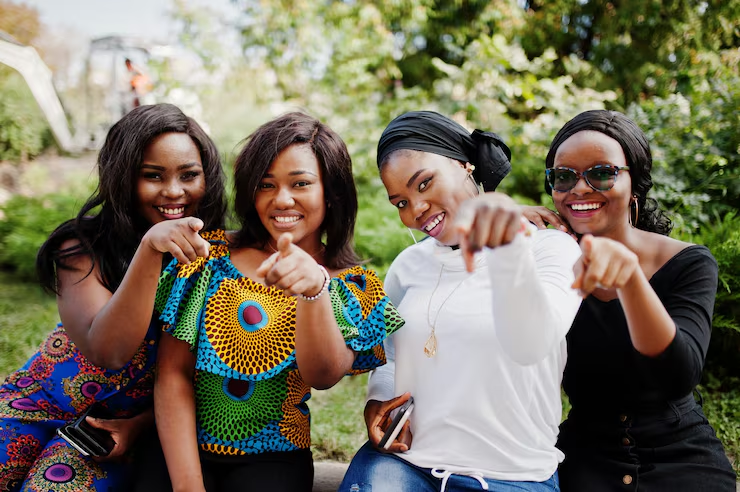
Africa is one of the world’s most culturally diverse continents, with a rich mixture of languages, traditions, histories, and communities. As a result, the term African girls represents a remarkably broad and diverse group of young women.
From North Africa to Southern Africa and from West Africa to East Africa, young women grow up in different environments and cultural settings. Some live in major cities surrounded by modern technology and international influences, while others live in smaller communities where traditional customs remain an important part of everyday life.
African girls are also active in many areas of modern society. They study at schools and universities, participate in sports, build businesses, explore technology, create art and music, and develop careers in a wide range of industries.
Understanding this diversity provides a more accurate and respectful picture of young women Understanding African Girls
The phrase African girls does not describe one particular personality, appearance, culture, or lifestyle. Africa contains many different countries and communities, and each has its own traditions and social environment.
A young woman from Ghana may have a different upbringing from someone in Kenya, Egypt, Nigeria, Morocco, South Africa, Senegal, Ethiopia, or Tanzania.
Even within the same country, experiences can vary because of differences in family background, location, education, language, economic circumstances, and personal interests.
This diversity is important because broad stereotypes often fail to represent the real experiences of individuals.
Cultural Diversity Across Africa
African culture is not a single culture. Instead, it includes countless traditions that have developed over generations.
Languages, clothing, music, food, celebrations, family customs, and artistic traditions can all vary between regions.
West Africa
West African countries are known for their rich musical traditions, colorful textiles, storytelling, food cultures, and vibrant celebrations.
Young women in the region may combine traditional cultural influences with contemporary fashion, entertainment, education, and digital trends.
East Africa
East Africa also contains a wide range of cultures and languages. Countries such as Kenya, Tanzania, Uganda, Ethiopia, and Rwanda have their own distinct histories and traditions.
Urban centers increasingly connect young people with international education, technology, fashion, and entertainment.
North Africa
North African societies have been influenced by African, Arab, Amazigh, Mediterranean, and other historical traditions.
Young women may experience a combination of local cultural customs and modern global influences in areas such as education, fashion, business, and media.
Southern Africa
Southern Africa includes diverse communities with different languages, histories, and cultural traditions.
Young women across the region participate in education, professional careers, music, fashion, sports, entrepreneurship, and creative industries.
Education and Personal Development
Education plays an important role in helping girls and young women develop skills and pursue their goals.
Across Africa, young women study subjects ranging from medicine and law to engineering, business, technology, education, and creative arts.
Higher education can provide access to professional careers, research opportunities, entrepreneurship, and international networks.
However, educational opportunities are not equally available everywhere. Economic conditions, infrastructure, geographical location, and social barriers can affect access to quality education.
Supporting education for girls can therefore have benefits that extend beyond the individual.
Popular Areas of Study
Young African women can be found studying and working in fields such as:
- Medicine and healthcare
- Business and finance
- Computer science
- Engineering
- Education
- Law
- Journalism
- Agriculture
- Design
- Environmental science
- Information technology
Education also gives young women opportunities to develop confidence, communication skills, and independence.
Fashion and Personal Style
Fashion is another area where African creativity and cultural identity can be seen.
Traditional fabrics, contemporary clothing, jewelry, hairstyles, and international fashion trends can all influence personal style.
African designers and fashion creators have also gained increasing attention internationally.
Traditional Meets Modern
Many young women combine traditional elements with modern clothing. For example, traditional fabrics may be incorporated into contemporary dresses, jackets, skirts, or accessories.
Social media has also made it easier for fashion trends to move between African cities and international communities.
Most importantly, individual style differs from person to person. There is no single way that African girls dress or present themselves.
African Girls and Technology
Technology is becoming increasingly important in education, communication, business, and entertainment.
Young African women are using smartphones, computers, online learning platforms, and social media for a variety of purposes.
Some are learning programming, creating digital businesses, working remotely, producing videos, or developing online communities.
Digital Opportunities
Technology can provide opportunities in:
- Digital marketing
- Software development
- Graphic design
- Online education
- E-commerce
- Content creation
- Freelancing
- Financial technology
Internet access and digital skills can help young women connect with opportunities beyond their local communities.
Sports and Entertainment
African girls and young women participate in many different sports, including athletics, football, basketball, tennis, swimming, and boxing.
Women athletes can become important role models by demonstrating discipline, determination, and professional achievement.
Entertainment is another growing area of participation. Young women work as singers, actresses, dancers, writers, photographers, filmmakers, and digital creators.
Social media has made it easier for emerging talent to reach audiences around the world without relying entirely on traditional media organizations.
African Girls in Creative Industries
Creative industries provide opportunities for young women to express their ideas and cultural identities.
Music, photography, fashion, film, literature, and digital media can also help showcase African perspectives to international audiences.
Entrepreneurship and Career Opportunities
Entrepreneurship is an important part of modern economic development across Africa.
Young women are building businesses in areas such as fashion, beauty, food, agriculture, technology, education, retail, and professional services.
Small businesses can provide income while also creating employment opportunities within local communities.
Skills That Can Help
Young women interested in entrepreneurship can benefit from developing:
- Financial literacy
- Communication skills
- Digital marketing knowledge
- Customer service skills
- Leadership abilities
- Basic business planning
- Networking skills
- Technology skills
Mentorship and access to funding can also help new entrepreneurs turn ideas into sustainable businesses.
Challenges and Opportunities
Although many positive changes are taking place, some African girls continue to face significant challenges.
These can vary greatly depending on the country and community.
Possible barriers include:
- Limited access to education
- Economic hardship
- Gender discrimination
- Limited healthcare access
- Unequal employment opportunities
- Limited internet access
- Social restrictions
- Online harassment
These challenges should not be used to define all African girls. Instead, they should be understood as specific issues that affect some communities and require practical solutions.
Creating Better Opportunities
Supporting young women can involve improving access to education, technology, healthcare, professional training, mentorship, and safe environments.
Families, schools, governments, businesses, and community organizations can all contribute to creating better opportunities.
The Importance of Positive Representation
Representation matters because the way people are portrayed in media and online content can influence how others understand them.
Content about African girls should avoid stereotypes based on appearance, personality, nationality, or culture.
A better approach is to highlight real experiences, achievements, creativity, education, ambitions, and cultural diversity.
For example, instead of presenting African girls as one group with identical characteristics, content can explore the different experiences of young women from specific countries or communities.
This creates more informative and trustworthy content.
Key Takeaways
- African girls come from many different countries, cultures, and communities.
- Africa has enormous linguistic and cultural diversity.
- Education provides important opportunities for young women.
- African fashion combines traditional influences with modern trends.
- Technology is creating new educational and professional opportunities.
- Young women are active in sports, entertainment, business, and creative industries.
- Some communities continue to face educational, economic, and social challenges.
- Respectful representation should focus on individuality rather than stereotypes.
FAQs
1. What does African girls mean?
The phrase generally refers to girls or young women from African countries. It includes people from many different cultural, linguistic, national, and social backgrounds.
2. Are all African girls culturally the same?
No. Africa is highly diverse. Cultural traditions, languages, family structures, lifestyles, and social experiences can differ significantly between countries and communities.
3. What are African girls interested in?
Interests vary from person to person. Education, fashion, sports, music, technology, entrepreneurship, entertainment, travel, and creative activities are among many possible interests.
4. What opportunities are available to African girls?
Depending on their location and circumstances, opportunities can include education, professional careers, technology, entrepreneurship, sports, creative industries, vocational training, and online work.
5. Why is education important for African girls?
Education can help young women develop knowledge and practical skills while opening doors to higher education, employment, entrepreneurship, and greater economic independence.
6. How does technology affect young African women?
Technology can provide access to online education, communication, entrepreneurship, remote work, digital entertainment, and professional networks.
7. How should African girls be represented in online content?
They should be represented respectfully as individuals with different cultures, personalities, experiences, interests, and ambitions. Content should avoid stereotypes and overly broad generalizations.
8. Are African girls involved in entrepreneurship?
Yes. Young women across African countries participate in entrepreneurship and operate businesses in areas including technology, fashion, agriculture, food, retail, education, and professional services.
Conclusion
African girls represent a diverse and dynamic group of young women whose experiences are shaped by different cultures, languages, communities, and personal circumstances.
Their stories extend far beyond traditional stereotypes. They are students, athletes, entrepreneurs, artists, technology professionals, creators, leaders, and future innovators.
As Africa continues to experience social, economic, technological, and cultural change, young women will remain an important part of that transformation.
The most accurate way to understand African girls is to appreciate their diversity while recognizing their individual identities, talents, ambitions, and achievements. Respectful representation can help create a more balanced understanding of young women and the many cultures found across Africa.
Learn More About: London Fashion Week
