
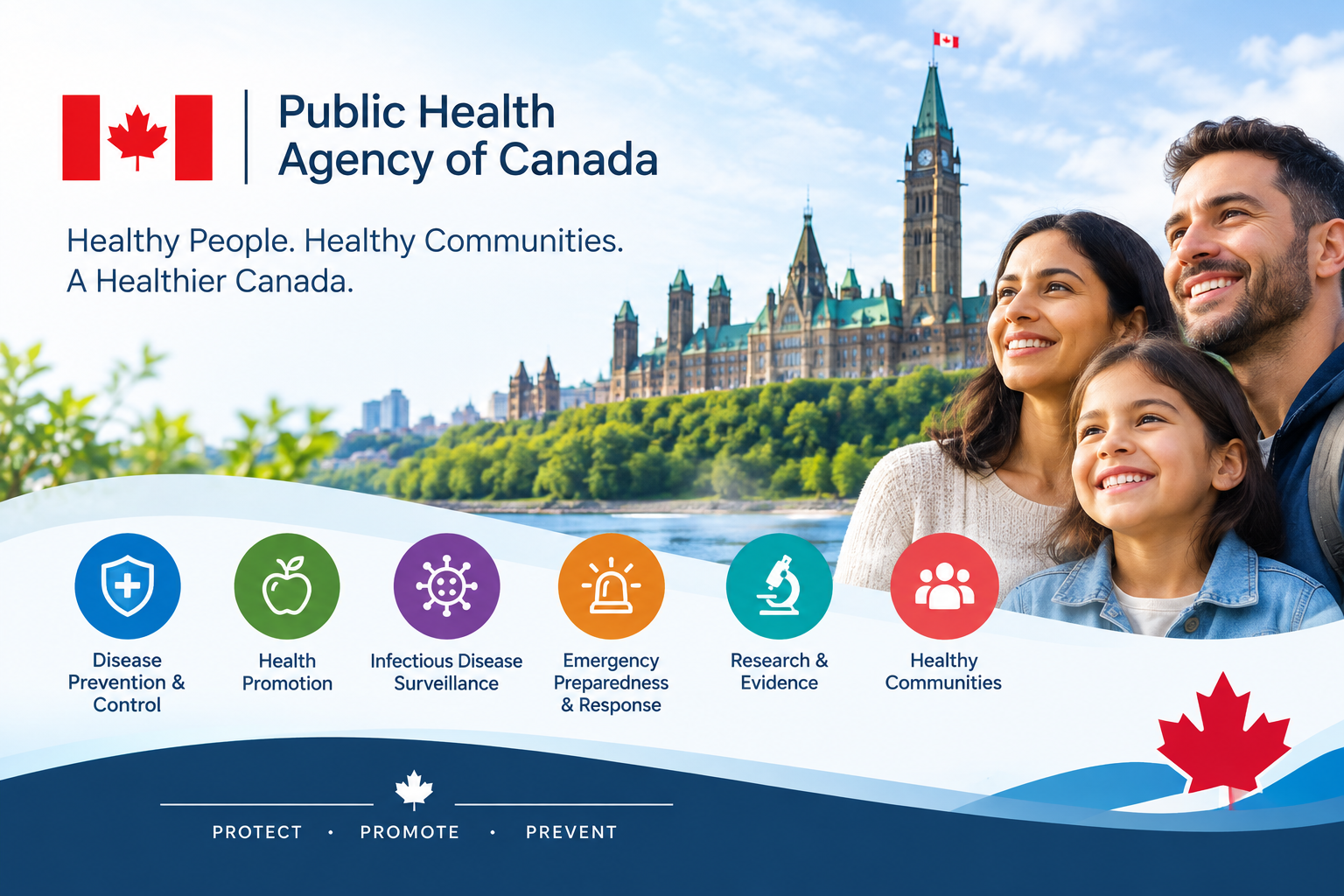
The Public Health Agency of Canada (PHAC) is a federal agency responsible for promoting and protecting public health across Canada. Its work includes preventing infectious and chronic diseases, reducing injuries, monitoring health risks, promoting healthy living, and preparing for and responding to public health emergencies.
What Is the Public Health Agency of Canada?
The Public Health Agency of Canada (PHAC) is a federal government agency that focuses on protecting and improving the health of people and communities across Canada. It is part of Canada’s federal Health Portfolio and works with governments, health professionals, organizations, communities, and other partners.
PHAC was established in 2004 following concerns about Canada’s ability to respond effectively to major public health threats, including lessons from the 2003 SARS outbreak. The Public Health Agency of Canada Act later established the agency as a legal entity in 2006.
Unlike a health-care provider that treats individual patients, PHAC works largely at the population level. Its activities are designed to prevent illness, monitor health risks, support healthier communities, and strengthen Canada’s ability to respond to emergencies.
What Does the Public Health Agency of Canada Do?
PHAC has several major responsibilities. Its mandate includes promoting health, preventing and controlling chronic and infectious diseases, preventing injuries, and preparing for and responding to public health emergencies.
Its work also includes:
- Monitoring and assessing public health risks
- Supporting disease prevention and control
- Promoting healthy behaviours
- Supporting immunization efforts
- Preparing for infectious disease outbreaks
- Providing public health information
- Supporting emergency preparedness
- Conducting and supporting health research and surveillance
- Working with provincial, territorial, municipal, and international partners
The agency also helps strengthen collaboration across Canada’s public health system and shares Canadian public health knowledge with international partners.
Key Areas of Public Health Work
Infectious Disease Prevention
One of PHAC’s important responsibilities is preventing and controlling infectious diseases. This includes surveillance, public health guidance, education, and collaboration with partners when diseases pose risks to communities.
The agency’s work covers areas such as respiratory infections, tuberculosis, sexually transmitted and blood-borne infections, foodborne illnesses, and other infectious diseases.
Chronic Disease and Injury Prevention
Public health is not limited to infectious diseases. PHAC also works to prevent and reduce chronic diseases and injuries.
Its broader health-promotion activities support healthier behaviours and address factors that can influence health outcomes. Programs and initiatives cover areas such as chronic disease prevention, healthy living, nutrition, and community health.
Immunization
Vaccination and immunization are another important area of public health. PHAC provides information and supports national approaches to immunization, including programs and partnerships designed to improve vaccination efforts.
The agency’s public resources also provide information about vaccines for children, adults, pregnancy, travel, and seasonal illnesses.
Health Promotion
PHAC supports efforts that encourage healthier lives and communities. This includes public education, health information, community programs, and initiatives focused on improving health and reducing preventable health problems.
The agency’s stated mission is to improve the health of people and communities in Canada through science, innovation, service delivery, and collaborative action.
Health Surveillance and Disease Prevention
Health surveillance allows public health organizations to monitor diseases, health conditions, and emerging risks. PHAC conducts surveillance across infectious diseases as well as chronic diseases and other health conditions.
This information can help public health professionals understand patterns, identify potential risks, and support decisions about public health action. PHAC’s public resources include health data, monitoring and surveillance information, research, and information about determinants of health.
Surveillance is particularly important during outbreaks and other situations where health risks can change quickly. Reliable information can help governments and health organizations coordinate their responses.
Emergency Preparedness and Response
A central part of PHAC’s mandate is preparing for and responding to public health emergencies. These emergencies can include infectious disease outbreaks and other events that create significant risks to population health.
PHAC works with partners to strengthen emergency preparedness, response capabilities, and public health coordination. Its responsibilities include federal leadership in managing public health emergencies and supporting national collaboration.
The agency’s public health resources also cover pandemic preparedness, biosafety and biosecurity, border and travel health, and other areas connected with health security.
Public Health Programs and Services
PHAC supports a wide range of programs and activities. These include health promotion, chronic disease prevention, communicable disease initiatives, immunization, laboratory science, emergency preparedness, biosecurity, and border and travel health.
Examples of areas covered by its programs include:
| Area | Main Focus |
| Health promotion | Supporting healthier individuals and communities |
| Chronic disease prevention | Reducing preventable chronic health conditions |
| Communicable diseases | Preventing and controlling infectious diseases |
| Immunization | Supporting vaccination and immunization efforts |
| Emergency preparedness | Preparing for public health emergencies |
| Biosecurity | Managing risks related to pathogens and toxins |
| Surveillance | Monitoring diseases, conditions, and health trends |
| Border and travel health | Addressing health risks connected with travel |
These programs demonstrate that public health involves much more than responding to outbreaks. It also includes prevention, research, education, monitoring, and long-term health promotion.
Public Health Agency of Canada vs. Health Canada
PHAC and Health Canada are both part of Canada’s federal Health Portfolio, but they have different areas of focus.
PHAC focuses heavily on population health, disease prevention, health promotion, surveillance, and public health emergencies.
Health Canada has broader responsibilities involving health protection and regulation, including areas such as health products, food-related health risks, and other regulatory matters. The two organizations work together on issues that affect Canadians’ health.
Understanding this distinction can make it easier to identify which federal organization is responsible for a particular health-related issue.
Why the Public Health Agency of Canada Matters
Public health affects entire communities rather than only individual patients. Preventing disease, monitoring health threats, preparing for emergencies, and sharing reliable information can all contribute to healthier communities.
PHAC’s role is especially important when a health issue crosses provincial or territorial boundaries. Because public health responsibilities are shared across different levels of government, coordination and information sharing are essential. PHAC works with provincial and territorial governments, municipalities, health professionals, non-governmental organizations, international organizations, and other partners.
Its population-level approach also means that prevention is a major part of its work. Instead of focusing only on treating illness after it occurs, public health aims to reduce risks before they become larger problems.
Frequently Asked Questions
What is the Public Health Agency of Canada?
The Public Health Agency of Canada is a federal government agency responsible for promoting and protecting public health in Canada. Its work includes disease prevention, health promotion, surveillance, and emergency preparedness and response.
When was PHAC created?
PHAC was established in 2004 and became a legal entity through the Public Health Agency of Canada Act in 2006. Its creation followed concerns about Canada’s ability to respond effectively to public health threats.
What diseases does PHAC monitor?
PHAC monitors a broad range of infectious diseases and chronic health conditions. Its surveillance activities include areas such as respiratory viruses, tuberculosis, foodborne diseases, sexually transmitted infections, diabetes, cancer, and cardiovascular diseases.
Does PHAC provide medical treatment?
PHAC is primarily a population-level public health agency rather than a provider of individual medical treatment. Its work focuses on prevention, surveillance, health promotion, public health information, and emergency preparedness.
What is PHAC’s role during a public health emergency?
PHAC provides federal public health leadership and supports preparedness and response activities during public health emergencies. It works with partners across Canada to coordinate public health efforts and address threats to population health.
Is PHAC part of the Canadian government?
Yes. PHAC is a federal agency within Canada’s Health Portfolio. It works with other federal organizations as well as provincial, territorial, municipal, and external partners.
Where can Canadians find PHAC health information?
Canadians can find public health information through the official Government of Canada public health website, including information about diseases, vaccines, outbreaks, healthy living, travel health, food-related health risks, and emergency preparedness.
Conclusion
The Public Health Agency of Canada plays a central federal role in protecting and promoting public health. Its responsibilities extend from infectious disease prevention and health surveillance to chronic disease prevention, immunization support, health promotion, and emergency preparedness.
By working with governments, health professionals, communities, organizations, and international partners, PHAC supports a coordinated approach to public health across Canada. Its population-level focus complements the work of Canada’s health-care and regulatory organizations and helps address health risks before and during major public health events.
Learn More About: Public Health England
