
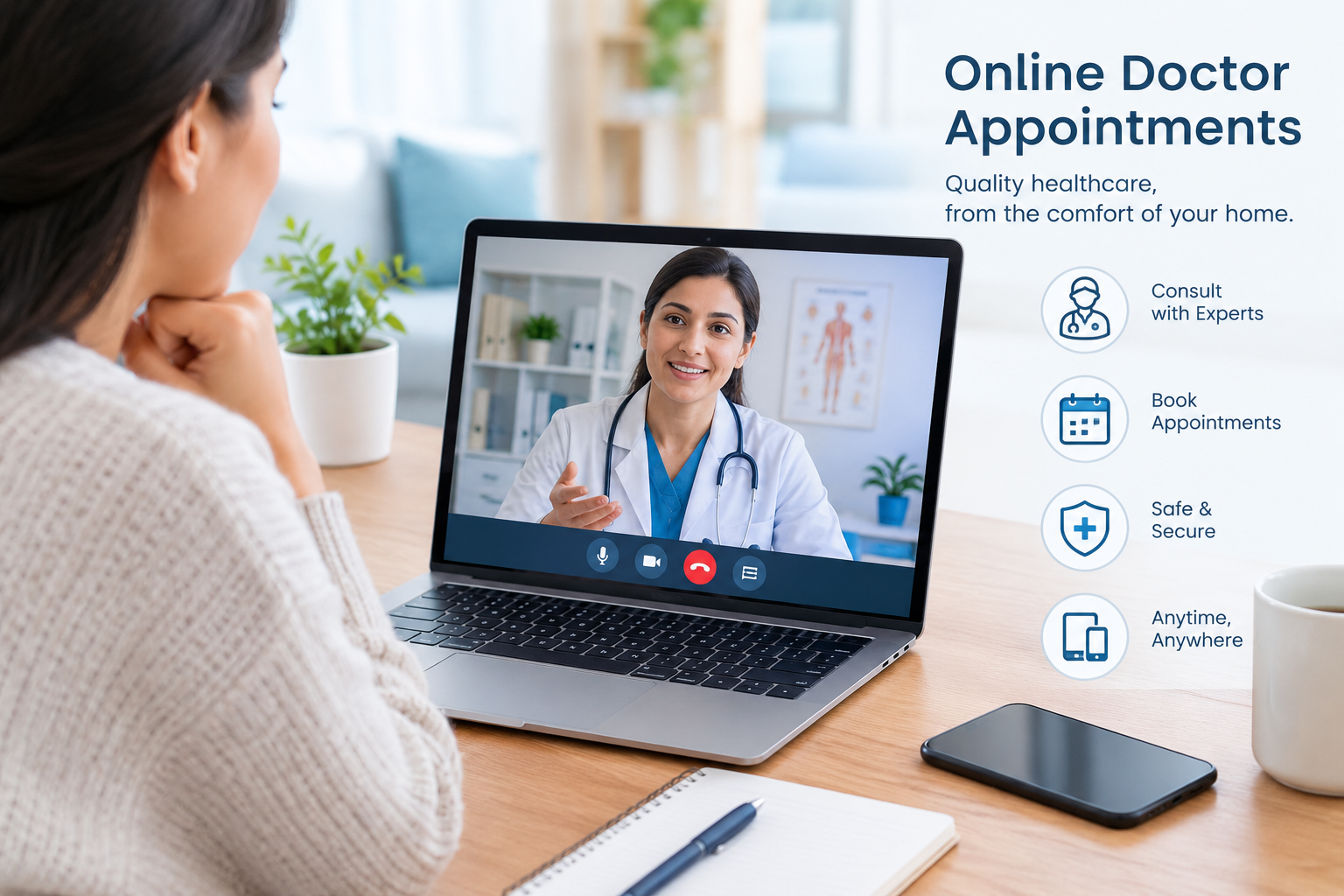
Finding time to visit a doctor can be difficult when work, family responsibilities, travel, or distance get in the way. Online doctor appointments offer a convenient alternative by allowing patients to connect with healthcare professionals through a computer, tablet, or smartphone.
Depending on the healthcare provider and the type of care needed, an online appointment may involve a video consultation, phone call, secure messaging, or another virtual service. These appointments can make it easier to discuss symptoms, ask questions, follow up on an existing condition, or determine whether an in-person visit is necessary.
What Are Online Doctor Appointments?
Online doctor appointments are healthcare consultations conducted remotely rather than in a traditional medical office. Patients can schedule a time with a doctor or another qualified healthcare professional and communicate through an online platform.
A typical virtual appointment may include:
- Video or audio consultation
- Discussion of symptoms and medical history
- Review of existing test results or health information
- Advice about next steps
- Follow-up care
- Medication-related discussions when appropriate
- Referral for in-person care when necessary
The exact services available depend on the healthcare provider, location, medical issue, and applicable healthcare rules.
How Do Online Doctor Appointments Work?
The process is generally straightforward, although individual healthcare platforms may have different procedures.
1. Choose a Healthcare Provider
Start by finding a doctor or healthcare service that offers virtual appointments. Consider the provider’s specialty, availability, location, and the type of care you need.
2. Select an Appointment Time
Choose an available date and time that works for you. Some services allow patients to book appointments through an online scheduling system.
3. Provide Basic Information
You may be asked to provide information such as your name, contact details, reason for the appointment, and relevant medical information.
4. Join the Consultation
For a video appointment, you will typically receive instructions or a link for joining the consultation. A stable internet connection and a suitable device can make the appointment easier.
5. Discuss Your Health Concerns
During the appointment, explain your symptoms, concerns, medications, and relevant medical history as accurately as possible. The healthcare professional can then determine what advice or further care may be appropriate.
When Are Virtual Doctor Visits Useful?
Online consultations can be useful for many situations where a physical examination or immediate hands-on treatment is not required.
Common examples include:
- Follow-up appointments
- General health questions
- Discussing certain symptoms
- Reviewing test or laboratory results
- Medication discussions
- Routine healthcare consultations
- Some minor illnesses
- Certain mental and behavioral health services
- Questions about ongoing treatment
However, virtual care is not suitable for every medical concern. A healthcare professional may recommend an in-person appointment when a physical examination, diagnostic test, procedure, or other hands-on assessment is needed.
Benefits of Booking a Doctor Online
One of the main advantages of online doctor appointments is convenience. Patients can communicate with healthcare professionals without always needing to travel to a clinic.
Convenient Access
Patients may be able to attend an appointment from home, work, or another appropriate private location. This can be particularly useful for people who have difficulty traveling.
Less Travel Time
A virtual appointment can eliminate or reduce the need to travel to a medical facility. This may make routine consultations easier to fit into a busy schedule.
Easier Follow-Up Care
Patients who already have an established relationship with a healthcare provider may find virtual follow-ups convenient when an in-person examination is unnecessary.
Access to Remote Healthcare
People living far from certain healthcare facilities may be able to access some services remotely, depending on provider availability and local regulations.
Flexible Scheduling
Some healthcare platforms provide online scheduling, making it easier to view available appointment times and select a suitable option.
What Should You Prepare Before an Online Appointment?
Preparing in advance can help you make better use of your consultation.
Before the appointment, consider writing down:
- Your main health concern
- When your symptoms started
- Any changes in your symptoms
- Current medications
- Known allergies
- Relevant medical history
- Questions you want to ask
- Recent test or medical information, if relevant
For a video consultation, check your internet connection, microphone, camera, and device before the appointment begins.
Choose a quiet and private location where you can speak openly with the healthcare professional.
Are Online Doctor Appointments Secure?
Healthcare providers and platforms may use security and privacy measures to protect patient information, but patients should still take care when using virtual healthcare services.
Before booking an appointment, check whether the service clearly explains how patient information is handled. Use the provider’s official website or trusted healthcare platform rather than clicking unfamiliar links.
It is also important to use a private internet connection and avoid discussing sensitive medical information where other people can easily hear you.
Privacy and healthcare requirements can vary depending on the country, region, provider, and platform.
Online Consultation vs. In-Person Appointment
Both virtual and in-person appointments have an important role in healthcare.
| Online Doctor Appointment | In-Person Appointment |
| Can be attended remotely | Requires travel to a healthcare facility |
| Useful for some consultations and follow-ups | Allows physical examination |
| Can reduce travel time | Better suited to many hands-on assessments |
| May be convenient for routine questions | Can support procedures and diagnostic examinations |
| Availability depends on provider and location | Availability depends on the healthcare facility |
The appropriate option depends on the patient’s health concern and the healthcare professional’s assessment.
When Should You Seek In-Person or Emergency Care?
An online appointment should not replace emergency medical care when someone may have a serious or life-threatening condition.
Seek appropriate urgent or emergency medical assistance for serious symptoms such as severe difficulty breathing, major injuries, loss of consciousness, or other symptoms that require immediate attention.
If you are unsure whether your symptoms require urgent care, contact an appropriate healthcare service for guidance rather than relying solely on an online appointment.
How to Choose an Online Doctor Service
When comparing online healthcare options, look beyond convenience.
Consider:
- Qualified healthcare professionals: Check who provides the consultations and whether their credentials are clearly presented.
- Available services: Make sure the platform offers the type of consultation you need.
- Appointment availability: Look for appointment times that fit your schedule.
- Privacy information: Review how the service handles personal and medical information.
- Communication options: Check whether consultations are provided through video, phone, messaging, or another method.
- Follow-up options: Find out how additional care is handled if the doctor recommends further evaluation.
- Local requirements: Healthcare rules and prescribing practices can differ by location.
Frequently Asked Questions
Are online doctor appointments available 24/7?
Some healthcare services offer appointments outside traditional office hours, while others operate during specific hours. Availability depends on the provider and location.
Can a doctor diagnose a condition online?
A healthcare professional may be able to assess certain conditions remotely, but not every condition can be diagnosed through an online consultation. Some situations require a physical examination or medical testing.
Can I get a prescription through an online appointment?
In some circumstances, a healthcare professional may prescribe medication following a virtual consultation. Whether this is possible depends on the medical situation, provider, and applicable laws and regulations.
Do I need a video appointment?
Not always. Some providers offer telephone or secure messaging consultations in addition to video appointments. The available options depend on the healthcare service.
Can online appointments replace regular doctor visits?
Not in every situation. Virtual care can be useful for certain consultations and follow-ups, but some healthcare needs require an in-person examination or procedure.
What should I do if my internet connection fails?
If your connection fails during an appointment, follow the provider’s instructions for reconnecting or contacting the clinic. Some services may offer another communication method.
Can I use an online appointment for a child?
Some healthcare providers offer virtual appointments for children, but requirements and suitability vary. A parent or guardian may need to participate depending on the child’s age and the provider’s policies.
Are online doctor appointments suitable for emergencies?
No. Online appointments are generally not a substitute for emergency medical services. For a potentially life-threatening situation, seek appropriate emergency assistance immediately.
Conclusion
Online doctor appointments provide a practical way to access certain healthcare services without always traveling to a medical facility. They can be particularly useful for follow-up care, general consultations, health questions, and situations that do not require an immediate physical examination.
Before booking, consider the type of care you need, the provider’s qualifications, privacy practices, availability, and whether virtual care is appropriate for your situation. When an in-person examination or urgent treatment is necessary, an online appointment should not delay appropriate medical care.
Learn More About: NHS Online Services
