
A company business description is a clear explanation of what a business does, what products or services it offers, who it serves, and what makes it valuable to its customers. It helps people understand a company’s purpose, industry, and main activities without needing to explore every detail of its operations. Whether a business operates locally or serves customers worldwide, a well-written description can make its identity easier to understand.
A strong business description is useful for company websites, business directories, professional profiles, marketing materials, proposals, and online listings. It introduces a company to potential customers, partners, investors, and other interested readers. The most effective descriptions use simple language, focus on relevant information, and communicate the company’s value without making exaggerated claims.
What Is a Company Business Description?
A company business description is a short or detailed overview of a business, depending on where it will be published and its intended purpose. It typically explains the company’s core activities, target audience, products or services, and the problems it helps customers solve.
For example, a digital marketing agency might describe itself as a company that helps businesses improve their online visibility through content marketing, search engine optimization, and digital advertising. This gives readers a quick understanding of the agency’s services and the type of customers it supports.
A business description is different from a company mission statement. A mission statement explains why the business exists and what it aims to achieve, while a business description focuses on what the company actually does.
The description should reflect the company’s real activities rather than relying on broad statements such as “we provide the best solutions” or “we are a leading company.” Specific information is more helpful because it allows readers to understand the business and decide whether its services meet their needs.
Why Is a Business Description Important?
A well-written company description serves several purposes. It communicates essential information, establishes a professional identity, and helps potential customers determine whether a business is relevant to them.
It Helps Customers Understand Your Business
People often want to understand a company quickly before contacting it or making a purchase. A clear description answers basic questions about what the company offers, who it serves, and how its products or services may be useful.
When this information is easy to find, visitors can make more informed decisions about whether to explore the company’s website or get in touch.
It Builds a Professional Business Identity
A consistent business description helps present the company professionally across different platforms. Using similar information on the company website, business directories, social media profiles, and professional networks makes it easier for people to recognize the business.
The wording can be adjusted to suit each platform, but the central facts should remain consistent.
It Supports Marketing and Business Communication
Business descriptions are frequently used in proposals, presentations, company profiles, sales materials, and partnership introductions. A clear description helps explain the company’s role without requiring a lengthy explanation every time someone encounters the business.
It can also provide a foundation for other marketing content, including website introductions, service pages, and brand messaging.
It Can Support Search Visibility
A business description may help search engines and online directories understand a company’s services, industry, and location when relevant information is included naturally.
For example, a plumbing company serving Manchester may mention plumbing repairs, boiler installation, and its service area. These details help people understand what the business offers and whether it operates in their location.
However, a business description alone does not guarantee higher search rankings. Search visibility also depends on factors such as website quality, relevance, technical accessibility, and competition.
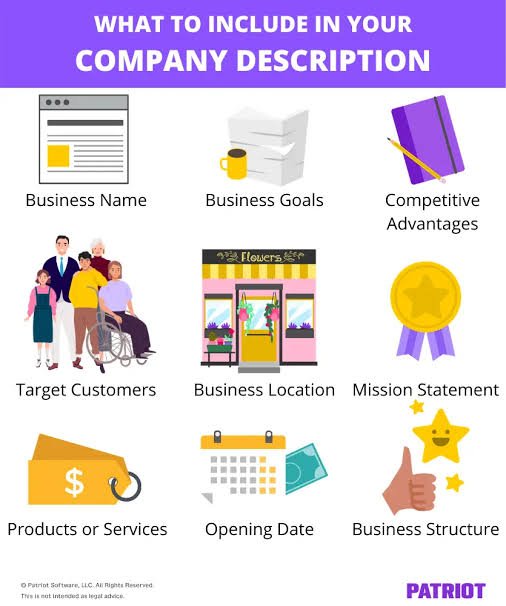
What Should a Company Business Description Include?
The right information depends on the company’s industry, audience, and purpose. Most effective descriptions include several essential elements.
1. Company Name and Industry
Start by identifying the business and the industry in which it operates. This gives readers immediate context.
For example, a description might begin with “BrightPath Technologies is a software development company specializing in business applications.”
The opening should communicate the company’s identity without unnecessary background information.
2. Main Products or Services
Explain what the company provides. Focus on its primary products, services, or areas of expertise instead of listing every activity.
A construction company might mention residential construction, commercial renovations, and project management. A consulting firm might focus on business strategy, operational improvement, and organizational planning.
Choose services that accurately represent the company’s main work.
3. Target Audience
Describe the types of customers the company serves. Depending on the business, these may include individuals, startups, small businesses, large enterprises, nonprofit organizations, or public institutions.
Identifying the target audience makes the description more relevant to the people reading it.
4. Customer Needs and Business Value
Explain how the company’s products or services help customers. This could involve saving time, improving operational efficiency, maintaining equipment, managing business processes, or creating better customer experiences.
Keep the benefits realistic and connected to the services actually offered.
5. Location or Service Area
Include the business location when it is relevant. Local service providers often benefit from mentioning their city or region, while international companies may describe the markets or countries they serve.
For online businesses, the description may emphasize remote services or worldwide availability if those claims are accurate.
6. Distinguishing Features
If the company has meaningful differences from competitors, mention them briefly. These might include industry specialization, customized services, a particular production method, specialist expertise, or a clearly defined service model.
Avoid unsupported claims about being the largest, fastest, or best provider unless they can be substantiated and are appropriate for the context.
How to Write an Effective Company Business Description
Writing a useful business description does not require complicated language. The goal is to communicate the most important information clearly and concisely.
Step 1: Define the Company’s Core Purpose
Before writing, identify the company’s main activity. Ask what it sells, what services it provides, and what customer need it addresses.
If the company operates in several industries, prioritize the activity most important to its current business strategy. A focused description is generally easier to understand than one that attempts to cover everything.
Step 2: Identify the Intended Reader
Consider who will read the description. Potential customers may want to understand services and benefits, while investors may be more interested in the business model, market, and operations.
A company directory may require a short factual summary, whereas a website’s About page can include more background and detail.
Step 3: Use Clear and Specific Language
Choose words that describe actual business activities. Replace vague phrases such as “innovative solutions for success” with clear explanations of what the company does.
For example, “We help small businesses manage their websites and online advertising” communicates more than “We empower businesses through next-generation digital solutions.”
The best wording depends on the audience, but clarity should remain the priority.
Step 4: Explain the Value to Customers
After identifying the company’s services, briefly explain why they matter. Connect each benefit to a real customer need.
For instance, an accounting firm might explain that it helps small businesses organize financial records, prepare tax documentation, and monitor cash flow.
This gives readers a practical understanding of how the company can help.
Step 5: Keep the Length Appropriate
A business description should be long enough to explain the company but short enough to maintain attention.
A short directory description may need only a few sentences. A company profile or website introduction can include more information about the business’s background, services, and customers.
There is no single ideal word count for every platform. Follow any applicable character limits or publishing guidelines.
Step 6: Review for Accuracy and Readability
Before publishing, verify the company’s name, services, location, and other factual details. Remove repeated ideas, unnecessary jargon, and claims that cannot be supported.
Reading the description aloud can help identify awkward sentences and wording that sounds unnatural.
Company Business Description Examples
The following examples illustrate how descriptions can be adapted to different industries. They are illustrative samples, not descriptions of verified companies.
Technology Company
A technology company provides software development, IT consulting, and digital solutions for businesses seeking to improve their operations. Its services may include custom applications, system integration, and technical support tailored to clients’ requirements.
Digital Marketing Agency
A digital marketing agency helps businesses reach relevant audiences through services such as search engine optimization, content marketing, social media management, and online advertising. Its work focuses on developing digital strategies that align with each client’s marketing objectives.
E-Commerce Business
An e-commerce company sells products through an online store, allowing customers to browse available items, compare options, and place orders digitally. Depending on its business model, the company may specialize in clothing, electronics, home goods, beauty products, or other categories.
Construction Company
A construction company provides building and renovation services for residential or commercial properties. Its activities may include project planning, construction management, structural work, and property improvements, depending on its expertise and licensing.
Consulting Firm
A consulting firm provides professional advice and practical support to organizations seeking to address business challenges. Its services may cover strategy, operations, financial planning, human resources, or technology implementation.
These examples show why descriptions should be tailored to the company’s actual industry and services rather than copied from a generic template.
Where Can You Use a Company Business Description?
A business description can appear in several places, with small adjustments based on the format and audience.
| Platform | Main purpose |
| Company website | Explain the business, its services, and its value |
| Google Business Profile | Help local customers understand the business and its offerings |
| LinkedIn company page | Present the company’s identity and professional focus |
| Business directories | Provide a concise, factual company overview |
| Business proposals | Introduce the company to prospective clients or partners |
| Marketing materials | Communicate the brand’s main activities and benefits |
| Investor presentations | Explain the business model and market focus |
The same core description can serve as a starting point for these platforms. However, each version should follow the platform’s requirements and provide the information most relevant to its audience.
Common Mistakes to Avoid When Writing a Business Description
Even a well-established company can struggle to communicate its value if its description is unclear or overly promotional.
One common mistake is using vague language without explaining actual services. Phrases such as “complete business solutions” may sound professional, but they do not tell readers what the company offers.
Another mistake is including too much information. Long lists of minor services can distract from the company’s main activities and make its identity harder to understand.
Keyword stuffing is also unhelpful. Repeating the company name, location, or service keywords unnaturally can make the description difficult to read. Relevant terms should appear naturally within meaningful sentences.
Businesses should also avoid exaggerated promises and unsupported claims. Statements about guaranteed results, market leadership, or exceptional performance should only be used when they are accurate and appropriately supported.
Finally, an outdated description can create confusion. When a company introduces new services, changes its target market, or expands into new locations, its description should be reviewed to ensure it remains accurate.
Frequently Asked Questions
What is a company business description?
A company business description is an overview of a business that explains its main activities, products or services, target customers, and purpose. It helps readers quickly understand what the company does.
How long should a business description be?
The ideal length depends on where it will appear. A short business listing may require only a few sentences, while a company profile or website page can provide more detail.
Is a business description the same as an About Us page?
No. A business description is usually a concise explanation of the company’s activities and offerings. An About Us page may include the company’s history, values, mission, team, and achievements in addition to describing its services.
Can a business description help with SEO?
Yes, it can provide useful context about the company’s services, industry, and location. However, it is only one part of a broader SEO strategy and cannot guarantee search ranking improvements.
What is the difference between a business description and a mission statement?
A business description explains what a company does and whom it serves. A mission statement explains the company’s purpose and the broader goal it aims to achieve.
Should a business description include keywords?
Yes, relevant keywords can be included naturally when they accurately describe the company’s services or industry. They should never be added repeatedly at the expense of clarity.
Can I use the same description on different platforms?
Yes, the same core description can be adapted for multiple platforms. Adjust the length and emphasis to fit each platform’s requirements while keeping the factual information consistent.
Who should write a company business description?
A business owner, marketing professional, communications specialist, or copywriter can write one. The writer should understand the company’s activities, audience, and goals to produce an accurate and useful description.
Conclusion
A company business description is an important tool for explaining what a business does, who it serves, and how its products or services provide value. A strong description uses clear language, highlights relevant services, identifies the intended audience, and avoids unsupported claims.
By keeping the information accurate, specific, and appropriate for its intended platform, a company can create a professional description that helps customers, partners, and other readers understand its business. The key is to focus on what the company genuinely offers and communicate that information in a straightforward, reader-friendly way.
Learn About: Small Business Owners
