
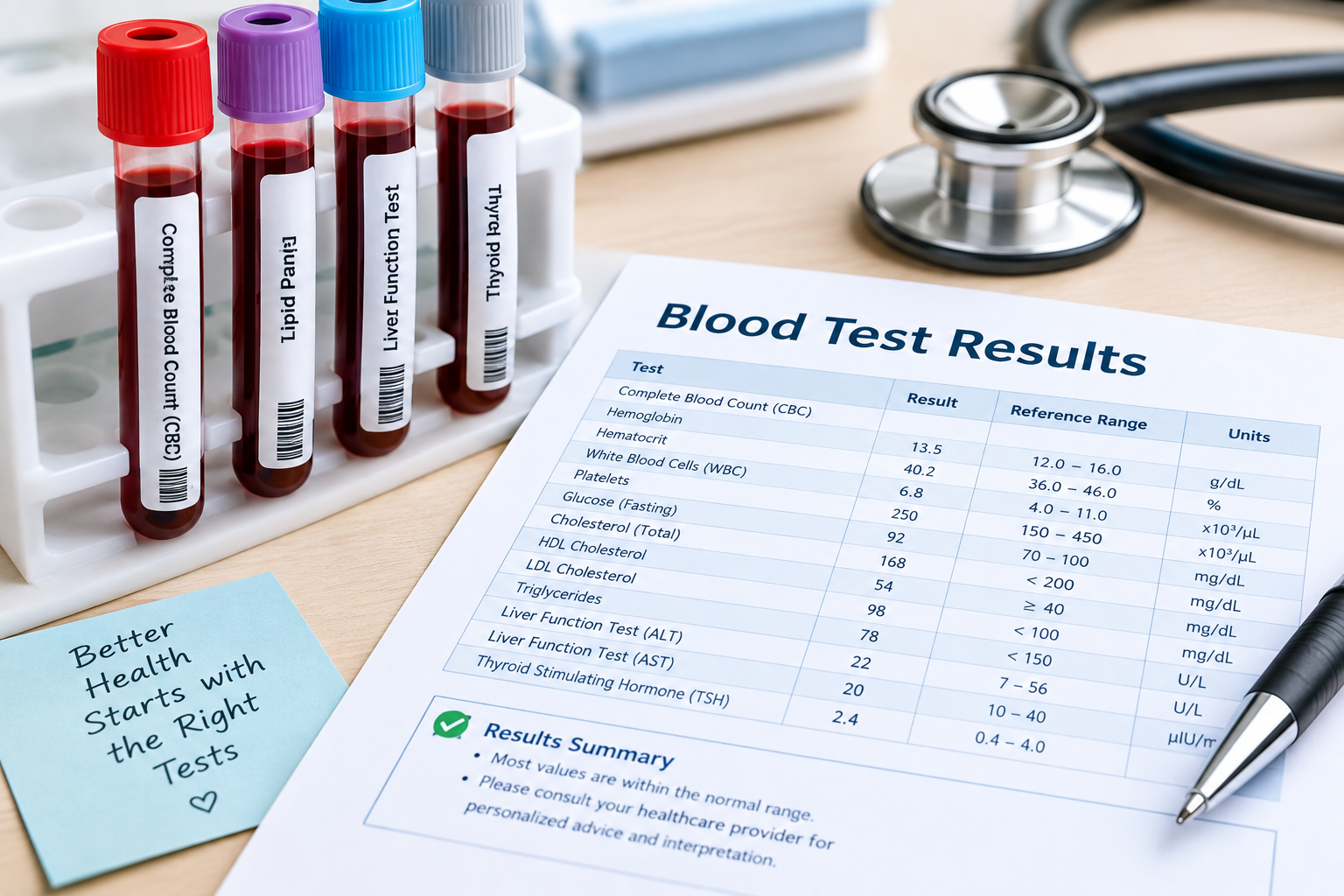
Blood tests and results are among the most common ways healthcare professionals learn what is happening inside the body. A blood test can provide useful information about blood cells, organ function, hormones, nutrients, inflammation, blood sugar, cholesterol, and many other areas of health.
When you receive your blood test results, a long list of medical terms, numbers, abbreviations, and reference ranges can sometimes feel confusing. Understanding what these results generally mean can make your report easier to read, but individual results should always be considered in the context of your overall health.
What Are Blood Tests?
Blood tests involve taking a small sample of blood, usually from a vein in the arm, and sending it to a laboratory for analysis. Depending on the test ordered, the laboratory can measure different substances or examine different types of blood cells.
A healthcare professional may order a single test or several tests at the same time. A group of tests may be used to investigate symptoms, monitor an existing condition, check how a treatment is working, or assess general health.
The information provided by blood tests can help healthcare professionals identify patterns that may require further investigation. The results are not normally considered in isolation. A person’s symptoms, examination findings, medical history, medications, and previous results can all influence how the findings are interpreted.
Why Do Healthcare Professionals Order Blood Tests?
There are many reasons for having blood tests. Some are used as part of routine health assessments, while others are requested because a person has particular symptoms or a known medical condition.
Blood tests may be used to:
- Check general health
- Investigate unexplained symptoms
- Monitor an existing health condition
- Check blood sugar levels
- Assess cholesterol and other blood fats
- Examine kidney and liver function
- Measure certain vitamins and minerals
- Check hormone levels
- Look for signs of infection or inflammation
- Monitor the effects of certain medicines
- Help guide further testing or treatment
The exact tests chosen depend on the reason for testing and the information the healthcare professional needs.
Common Types of Blood Tests
Different blood tests provide different types of information. Some of the most commonly requested tests include the following.
Complete Blood Count
A complete blood count, often called a CBC or full blood count, measures different components of the blood. These can include red blood cells, white blood cells, hemoglobin, hematocrit, and platelets.
Healthcare professionals may use this test when investigating issues such as tiredness, infections, bleeding, or other symptoms.
Blood Glucose Tests
Blood glucose tests measure the amount of glucose, or sugar, in the blood. They can be used to check for diabetes or monitor blood sugar in people who already have the condition.
Depending on the situation, testing may involve fasting blood glucose, a random glucose measurement, or other forms of glucose testing.
Cholesterol and Lipid Tests
A lipid panel can measure different types of fats in the blood, including cholesterol and triglycerides. These results can help healthcare professionals assess cardiovascular risk alongside other factors such as blood pressure, smoking status, age, and medical history.
Liver Function Tests
Liver blood tests measure substances associated with liver function and injury. They may include measurements such as ALT, AST, alkaline phosphatase, bilirubin, albumin, and other markers.
An abnormal result does not necessarily identify a specific liver condition by itself. Additional information or testing may be needed.
Kidney Function Tests
Blood tests can help assess how well the kidneys are functioning. Common measurements include creatinine and estimated glomerular filtration rate (eGFR). Electrolytes such as sodium and potassium may also be checked.
Thyroid Blood Tests
Thyroid tests are used to evaluate thyroid function. Common measurements include thyroid-stimulating hormone (TSH) and, when appropriate, thyroid hormones such as free T4.
How to Read Blood Test Results
A typical blood test report contains several pieces of information. You may see the name of the test, your result, the unit of measurement, and a reference range.
For example:
| Report Item | What It Means |
| Test name | The substance or blood component being measured |
| Result | Your measured value |
| Unit | The measurement used by the laboratory |
| Reference range | A range used by the laboratory for comparison |
| Flag | May indicate a result outside the laboratory’s stated range |
The first step is to identify what each test measures. The next is to compare the result with the reference range printed on your own report.
Avoid comparing your result with a reference range found on a random website or another person’s report. Laboratories can use different testing methods and reference ranges.
What Do Reference Ranges Mean?
A reference range provides a comparison point for laboratory results. It is not necessarily a simple definition of what is “healthy” or “unhealthy” for every individual.
Reference ranges can vary according to factors such as:
- The laboratory and testing method
- Age
- Sex
- Pregnancy
- Time of testing
- Certain medications
- Other individual circumstances
A result slightly outside the reference range may not necessarily indicate a serious problem. Similarly, a result within the range does not guarantee that everything is normal.
This is why blood test results should be interpreted in context rather than by looking at one number alone.
Why Blood Test Results Can Change
Blood test results can change for many reasons, including normal biological variation. Temporary changes may occur because of food and drink, hydration, physical activity, illness, stress, medications, or the timing of the test.
For some tests, fasting may be required. If you were given preparation instructions, follow them carefully and tell the healthcare professional or laboratory staff if you were unable to follow them.
Results can also change over time because a person’s health changes. When monitoring a condition, healthcare professionals may therefore compare current results with previous tests rather than relying on one report.
What Does an Abnormal Result Mean?
Seeing an “H,” “L,” “high,” “low,” or another warning next to a result can be concerning. However, an abnormal result does not automatically mean that you have a disease.
A healthcare professional may consider:
- How far the result is outside the reference range
- Whether other results are also abnormal
- Your symptoms
- Your medical history
- Current medications
- Previous laboratory results
- Physical examination findings
- Whether additional testing is necessary
Sometimes an unexpected result may need to be repeated to confirm it. In other situations, it may lead to additional tests or further evaluation.
You should avoid diagnosing yourself based solely on a laboratory report.
Preparing for Blood Tests
Preparation depends on the specific test. Some blood tests require no special preparation, while others may require fasting or other instructions.
Before your appointment, check whether you need to:
- Avoid eating for a specified period
- Drink water as instructed
- Avoid strenuous exercise
- Take or temporarily avoid certain medicines only if specifically instructed
- Bring information about medications or supplements
- Follow any other instructions provided by your healthcare professional or laboratory
Never stop a prescribed medicine simply because you are having a blood test unless the healthcare professional has specifically told you to do so.
When to Discuss Your Results
It is a good idea to discuss your blood test results with the healthcare professional who ordered them, particularly if you do not understand a result or several results appear outside the reference range.
Ask questions such as:
- What does this result measure?
- Is this result expected for me?
- Does it need to be repeated?
- Could my medications affect the result?
- Do I need any additional tests?
- When should I have another blood test?
If you have severe or rapidly worsening symptoms, seek appropriate medical care rather than waiting for routine interpretation of laboratory results.
Frequently Asked Questions
1. How long do blood test results take?
The timing varies depending on the type of test and the laboratory. Some routine results may become available relatively quickly, while specialized tests can take longer.
2. Can I understand my blood test results myself?
You can learn what individual measurements mean and compare them with the laboratory’s reference ranges. However, proper interpretation often requires your symptoms, medical history, medications, and other results.
3. Does an abnormal blood test always mean I am sick?
No. Results can be outside a reference range for several reasons, including normal variation, temporary changes, medications, or other factors. A healthcare professional should interpret unexpected results in context.
4. What does a reference range mean?
A reference range is a range provided by a laboratory for comparison with your measured result. It should not be treated as a universal definition of health for every person.
5. Why do I sometimes need to fast before a blood test?
Fasting can be required for certain tests because eating and drinking can temporarily affect some measurements. Your healthcare provider or laboratory should tell you if fasting is necessary.
6. Can medications affect blood test results?
Yes. Some medicines can influence certain laboratory measurements. Tell your healthcare professional about medicines and supplements you take, and do not stop prescribed treatment without medical advice.
7. Should I worry if one result is slightly high or low?
Not necessarily. A single mildly abnormal result may have several explanations and may not indicate a serious problem. The result needs to be considered alongside other information.
Conclusion
Blood tests and results can provide valuable information about many aspects of health, but a laboratory report is only one part of the overall picture. Understanding the test name, your measured result, the laboratory’s reference range, and the reason the test was ordered can help you make sense of the report. If a result is unexpectedly high, low, or otherwise flagged, avoid jumping to conclusions.
A healthcare professional can explain what the findings mean in the context of your symptoms, medical history, medications, and other results.
Learn More About: CBC
