
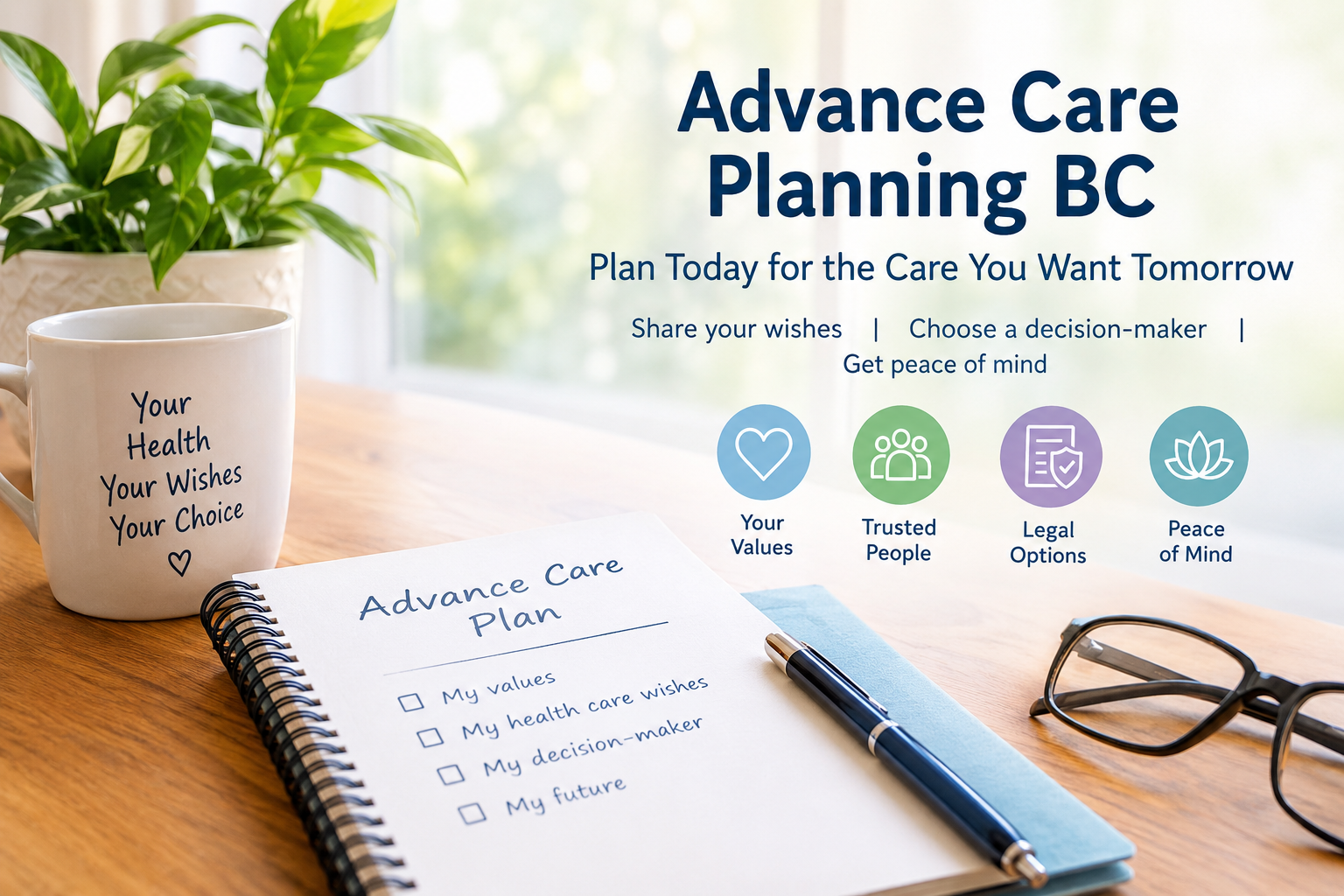
Planning for future health care can feel difficult, but knowing that your wishes will be understood can provide peace of mind. Advance Care Planning BC helps people think about the care they would want if they were unable to make or communicate their own health care decisions. It involves reflecting on your values, discussing your wishes with people you trust, and considering who could support you when important decisions need to be made. Starting these conversations early can help ensure that your preferences are known and give your loved ones clearer guidance during unexpected or challenging situations.
What Is Advance Care Planning BC?
Advance Care Planning BC is the process of thinking about and communicating the health care you would want if you became unable to make or communicate your own decisions. It gives you an opportunity to consider your values, beliefs, treatment preferences, and priorities before an unexpected illness, injury, or change in health occurs.
Advance care planning is not only for people who are seriously ill or approaching the end of life. Adults in British Columbia can benefit from having these conversations while they are healthy and able to make their own decisions. A clear plan can help family members, friends, and health care providers understand what matters to you if you cannot speak for yourself.
The goal is not to predict every possible medical situation. Instead, it is to prepare for future decisions by identifying the kind of care that fits your values and making sure the right people know your wishes.
Why Advance Care Planning Matters
Medical decisions can become difficult when a person suddenly loses the ability to communicate. Family members may be asked questions about treatment without knowing exactly what the person would have wanted.
Advance care planning can make these situations easier by starting the conversation before a crisis happens.
A thoughtful plan can help you:
- Express what is important to you when receiving health care.
- Discuss your wishes with people you trust.
- Identify someone who may make decisions for you when necessary.
- Provide useful information to health care professionals.
- Reduce uncertainty for family members during stressful circumstances.
- Revisit your choices as your circumstances or preferences change.
Your plan can be as detailed or simple as appropriate. What matters most is that the people who may need to support you understand your wishes.
What Can You Include in an Advance Care Plan?
Advance care planning is more than completing a form. It begins with personal reflection and conversations.
Consider questions such as:
- What makes life meaningful to you?
- What abilities or activities are particularly important to maintain?
- What concerns would you have about receiving medical treatment?
- Who understands your values and would be comfortable speaking on your behalf?
- What would you want your loved ones and health care providers to know if you could not communicate?
You may also want to think about your preferences concerning serious illness, emergency treatment, life-sustaining treatments, and end-of-life care. The appropriate decisions depend on your personal circumstances and should be discussed with qualified health care or legal professionals when necessary.
Choosing a Substitute Decision-Maker
One of the most important parts of advance care planning is considering who could make health care decisions for you if you were unable to make them yourself.
A substitute decision-maker should ideally be someone who:
- Knows you well.
- Understands your values and wishes.
- Is willing to speak with health care providers.
- Can make difficult decisions under pressure.
- Will respect your preferences rather than simply making decisions based on their own views.
Talk openly with the person you are considering. Explain what matters to you and give them opportunities to ask questions.
Choosing someone does not mean that person will automatically make every health care decision. The circumstances and legal requirements surrounding substitute decision-making in British Columbia matter, so it is important to understand how the relevant provincial rules apply to your situation.
Understanding Representation Agreements in British Columbia
A Representation Agreement is a legal document used in British Columbia that can allow a representative to assist with certain health and personal care decisions, depending on the type of agreement and the authority provided.
Because legal documents can have significant consequences, anyone considering a Representation Agreement should make sure they understand what authority the document provides and whether it reflects their wishes.
The details can be particularly important when planning for situations in which a person may no longer be capable of making certain decisions independently.
Advance Directives in British Columbia
An Advance Directive is another tool that can communicate specific health care instructions. It can provide direction about certain health care decisions if a person is incapable of making the decision at the time it needs to be made.
Advance Directives and Representation Agreements serve different purposes, so they should not be treated as interchangeable documents.
If you are considering either option, take time to understand the requirements and how the documents interact with British Columbia’s health care decision-making framework.
How to Start Advance Care Planning
You do not need to complete everything in one sitting. A practical approach is to work through the process step by step.
1. Think About What Matters Most
Start by considering your values, priorities, and quality-of-life preferences. You do not need to predict every possible medical scenario.
2. Talk With Someone You Trust
Have an honest conversation with family members, friends, or another trusted person who may need to understand your wishes.
3. Discuss Your Wishes With Your Health Care Team
If you have an ongoing medical condition or specific concerns about future treatment, your health care provider can help explain possible situations and treatment options.
4. Consider the Appropriate Legal Documents
Depending on your circumstances, you may want to explore an Advance Directive, Representation Agreement, or another appropriate planning document.
5. Keep Important Information Accessible
Make sure the people who may need to act on your behalf know that you have an advance care plan and understand where relevant documents can be found.
6. Review the Plan Regularly
Your preferences can change as your health, relationships, circumstances, or understanding of medical treatments changes.
When Should You Review Your Advance Care Plan?
An advance care plan should not necessarily be treated as a document that is completed once and forgotten.
Consider reviewing your plan after major life events, such as:
- A significant change in your health.
- A new diagnosis or major medical treatment.
- Marriage, separation, divorce, or another important relationship change.
- The death or unavailability of the person you previously trusted to help make decisions.
- A significant change in your personal values or wishes.
- A major change in your living circumstances.
Regular conversations can be just as important as written documents. If your wishes change, make sure the people who may need to know about those changes are informed.
Advance Care Planning BC and Family Conversations
Talking about future health care can feel uncomfortable. Some people avoid the subject because they worry that discussing serious illness means expecting something bad to happen.
In reality, advance care planning is about preparing for uncertainty. The conversation can give your loved ones a clearer understanding of your priorities and reduce the need for them to guess what you would have wanted.
A simple starting point could be: “If I couldn’t make my own health care decisions someday, I would want you to understand what matters most to me.”
From there, the discussion can develop naturally.
Frequently Asked Questions
What is the purpose of advance care planning in BC?
Its purpose is to help people communicate their health care values and wishes and prepare for situations in which they may be unable to make or communicate their own decisions.
Is advance care planning only for older adults?
No. Any capable adult can benefit from thinking about future health care decisions. Unexpected illness or injury can happen at any age.
Do I need a lawyer to make an advance care plan?
Not necessarily. The planning process includes personal reflection and conversations, while certain legal documents may have specific requirements. Professional legal advice can be useful when you need help understanding those documents.
What is the difference between an Advance Directive and a Representation Agreement?
They are different legal planning tools with different purposes and authorities under British Columbia’s framework. The appropriate option depends on your circumstances and the decisions you want to plan for.
Can I change my advance care plan?
Your wishes can change over time. When they do, review your planning documents and communicate the changes to the people who need to know.
Who should know about my advance care plan?
People who may be involved in your future care or decision-making should understand your wishes. This may include trusted family members, friends, substitute decision-makers, and relevant health care providers.
What happens if I have not made an advance care plan?
If you become incapable of making a health care decision, British Columbia’s legal framework determines who may be able to make decisions on your behalf and how those decisions are made. Planning in advance can help communicate your wishes before such a situation occurs.
Where can I get reliable information about advance care planning in BC?
Advance Care Planning BC provides resources designed to help people understand advance care planning and have conversations about future health care. For questions involving your specific medical or legal circumstances, speak with an appropriate health care or legal professional.
Conclusion
Advance Care Planning BC gives people an opportunity to think ahead, communicate their health care wishes, and prepare trusted people to support them if they cannot speak for themselves. The process does not require predicting every future medical situation. Instead, it focuses on understanding what matters to you and making those priorities known.
Starting with a simple conversation can be an important first step. As your health and circumstances change, reviewing your plan can help ensure that your wishes remain understood and appropriately documented.
Learn More About: Home Health Care
