
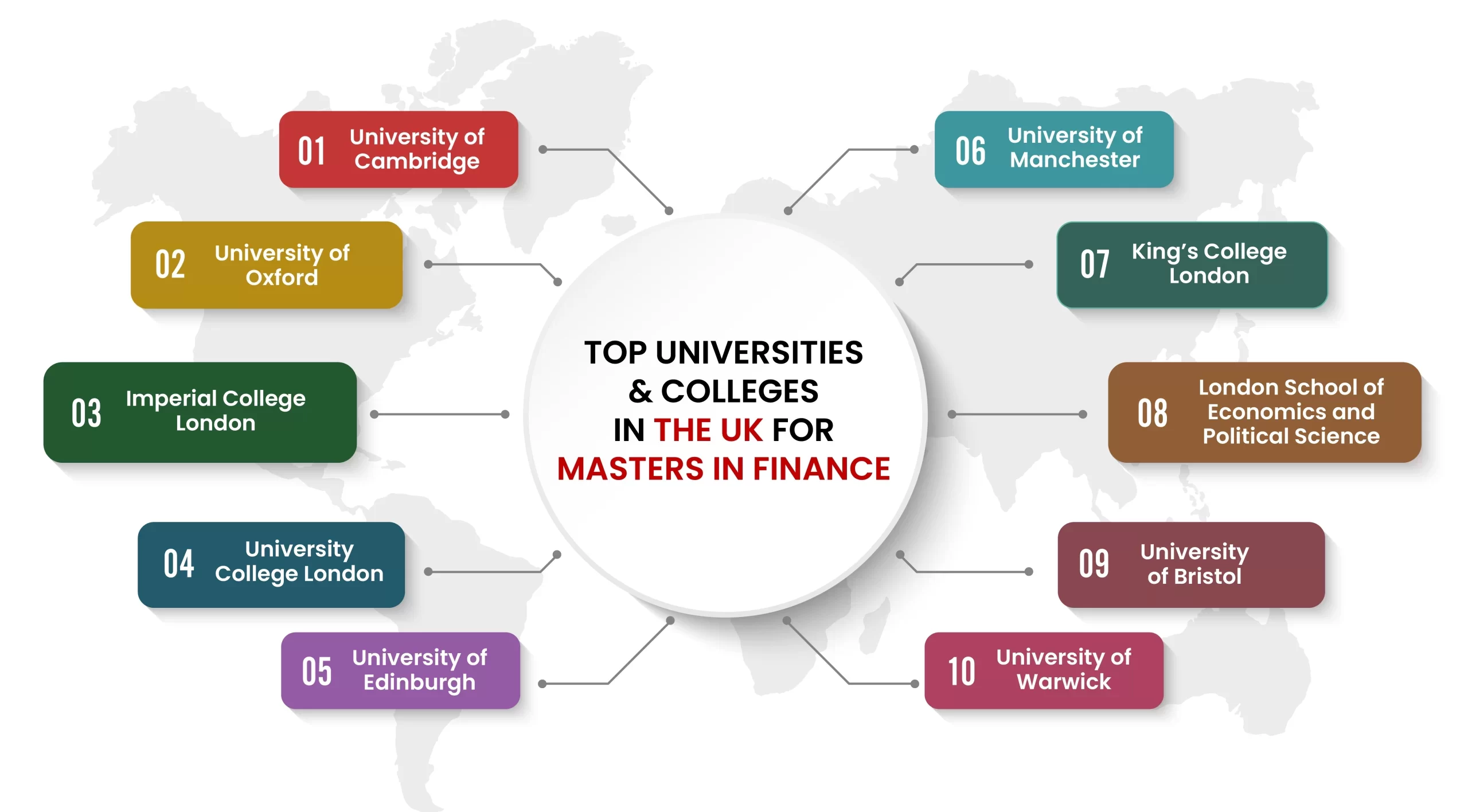
Finance masters programs are graduate-level degrees designed to develop advanced knowledge of financial markets, investment analysis, corporate finance, risk management, financial modeling, and related areas. Depending on the university, programs may be offered as a Master of Finance, MSc Finance, Master of Financial Economics, or a specialized finance degree. They can prepare graduates for careers in investment banking, asset management, corporate finance, financial analysis, risk, consulting, fintech, and other financial services roles.
What Are Finance Masters Programs?
Finance masters programs are postgraduate degrees for students who want deeper expertise in finance after completing a bachelor’s degree. They are generally more specialized than an undergraduate finance degree and can be particularly useful for people targeting analytical, investment, banking, corporate finance, or financial management roles.
The exact structure varies by university. Some programs focus heavily on quantitative finance and financial markets, while others place greater emphasis on corporate finance, investment management, financial economics, or financial technology.
Students considering these degrees should look beyond the program title. Two universities may both offer a master’s in finance while providing very different courses, teaching methods, internship opportunities, and career support.
Finance careers also increasingly combine traditional financial knowledge with technology, data analysis, communication, and practical experience. CFA Institute’s 2026 research found that finance professionals and graduates are placing growing importance on practical skills, adaptability, AI capabilities, and interpersonal skills.
Common Types of Finance Master’s Degrees
There is no single format for graduate finance education. Common options include:
| Degree type | Typical focus |
| Master of Finance | Broad advanced finance knowledge |
| MSc Finance | Finance theory, analysis, markets, and quantitative skills |
| Master of Financial Economics | Finance combined with economics and analytical methods |
| Master of Investment Management | Portfolio management, investments, and asset allocation |
| Master of Quantitative Finance | Mathematics, statistics, modeling, and financial technology |
| Master of Financial Technology | Finance combined with technology, data, and digital systems |
| Master of Risk Management | Financial, market, credit, and operational risk |
The right choice depends largely on the type of work you want to pursue. Someone interested in portfolio management may look for strong investment courses, while a student targeting quantitative roles may prioritize mathematics, programming, statistics, and financial modeling.
What Do You Study in a Finance Master’s Program?
Although course structures differ, many finance master’s programs cover several core areas.
Corporate Finance
Corporate finance examines how businesses make financial decisions. Topics can include capital structure, investment decisions, valuation, mergers and acquisitions, and corporate financial strategy.
Investment Analysis
Investment-focused courses can cover securities, portfolio construction, asset pricing, equity analysis, fixed income, and investment strategies.
Financial Markets
Students typically learn how financial markets operate and how different instruments and institutions interact. Depending on the program, this may include equities, bonds, derivatives, foreign exchange, and alternative investments.
Financial Modeling and Data Analysis
Quantitative skills are increasingly important in finance. Programs may teach financial modeling, statistics, forecasting, data visualization, or programming.
CFA Institute identifies financial modeling, statistical inference, forecasting, valuation, Python, R, SQL, and data visualization among skills relevant to modern financial careers.
Risk Management
Risk courses help students understand how organizations identify, measure, and manage financial uncertainty. Topics may include market risk, credit risk, liquidity risk, and risk modeling.
Ethics and Professional Practice
Finance programs may also address professional ethics, regulation, governance, and responsible decision-making. These subjects matter because financial professionals frequently work with sensitive information and decisions that can affect companies, investors, and clients.
Admission Requirements for Finance Master’s Degrees
Requirements vary considerably between universities and countries, so applicants should always check the specific program’s admissions page.
Common requirements may include:
- A bachelor’s degree or equivalent qualification
- Academic transcripts
- Proof of English proficiency for applicable international applicants
- A CV or résumé
- Personal statement or statement of purpose
- Academic or professional references
- Quantitative or mathematics preparation for certain programs
- GMAT or GRE scores where required by the university
Some quantitative programs expect applicants to have a stronger mathematics, statistics, economics, or programming background. Other programs may accept students from broader academic backgrounds.
Applicants should therefore review prerequisites before applying rather than assuming that every finance master’s degree has the same entry standards.
Career Opportunities After Graduation
A finance master’s degree can support several career directions. CFA Institute describes finance careers across quantitative and analytical, client-facing, and transaction-focused roles, including areas such as investment management, banking, research, consulting, and risk management.
Potential career paths include:
- Financial analyst
- Investment analyst
- Corporate finance analyst
- Risk analyst
- Portfolio analyst
- Investment banking analyst
- Treasury analyst
- Financial consultant
- Wealth management professional
- Asset management professional
- Fintech analyst
- Financial data analyst
The degree itself does not guarantee employment. Internships, technical skills, networking, relevant experience, communication ability, and knowledge of the specific finance sector can all affect career opportunities.
For students interested in investment careers, professional qualifications may also complement a master’s degree. The CFA Program, for example, develops skills in analysis, asset valuation, and money management and is associated with career paths including portfolio management, research, consulting, risk management, and investment banking.
How to Choose a Finance Master’s Program
Choosing between finance masters programs requires more than comparing university names. Consider the following factors.
1. Curriculum
Review the actual course list. Look for subjects that match your career interests rather than choosing solely because the program has a general finance title.
2. Quantitative Depth
If you want to work with financial models, investment analytics, or quantitative finance, examine the mathematics, statistics, programming, and data components.
3. Industry Exposure
Internships, practical projects, employer events, and opportunities to work with real financial data can make academic learning more practical.
4. Location and Career Market
Consider where you want to work after graduation. A program located near a major financial center may provide different networking and recruitment opportunities from a program in another region.
5. Program Length and Format
Compare full-time, part-time, and other available formats. Consider whether you want to enter the workforce quickly or have more time for internships and additional coursework.
6. Total Cost
Look beyond tuition. Consider accommodation, living expenses, insurance, transportation, books, visa expenses where applicable, and other university fees.
7. Career Support
Check what the university provides through career services, employer connections, internships, alumni networks, and recruiting events.
Master’s in Finance vs. MBA in Finance
A specialized master’s in finance and an MBA with a finance concentration can serve different purposes.
A Master’s in Finance is generally more focused on finance itself and can suit students who want specialized knowledge early in their careers.
An MBA in Finance usually provides broader business education covering areas such as management, strategy, marketing, operations, and leadership alongside finance. It can be particularly relevant to professionals seeking broader management responsibilities.
The better fit depends on your existing experience, academic background, career direction, and the type of role you want after graduation.
The Role of Technology and AI in Finance Education
Technology is changing the skills expected in financial services. Finance professionals increasingly work with data, automation, machine learning, and digital financial tools.
CFA Institute’s 2026 Graduate Outlook Survey found that graduates increasingly view practical skills and AI readiness as important to their future careers. The survey covered more than 9,000 current and recent graduates across 11 major markets.
For prospective students, this makes it useful to examine whether a finance master’s program teaches modern analytical tools alongside traditional finance concepts.
However, technical knowledge is only part of the picture. Communication, critical thinking, collaboration, adaptability, and ethical judgment remain important skills for finance professionals.
Frequently Asked Questions
Are finance masters programs worth it?
They can help students gain advanced finance knowledge, quantitative skills, and preparation for specialized financial careers.
Can I study finance without a finance bachelor’s degree?
Yes. Some programs accept students from economics, accounting, mathematics, engineering, and other related fields, depending on their requirements.
How long does a master’s in finance take?
Many full-time programs take about one year, although the duration varies by university, country, and study format.
What jobs can I get with a master’s in finance?
Graduates may pursue roles such as financial analyst, investment analyst, risk analyst, consultant, portfolio analyst, or fintech professional.
Is a master’s in finance better than an MBA?
They have different focuses. A finance master’s is more specialized, while an MBA provides broader business and management education.
Do finance master’s programs include programming?
Some programs include Python, R, SQL, financial modeling, or data analysis, especially those focused on quantitative finance or fintech.
Is certification necessary after a finance master’s?
No. Some graduates choose professional qualifications such as the CFA Program, while others enter employment or pursue different qualifications.
Conclusion
Finance masters programs can provide advanced preparation for careers involving financial analysis, investments, banking, corporate finance, risk, consulting, and financial technology. The most suitable program depends on your academic background, career objectives, preferred specialization, budget, location, and the practical skills you want to develop.
When comparing programs, examine the curriculum, quantitative content, technology training, career support, industry connections, total cost, and admissions requirements. A strong graduate education can provide a foundation, but practical experience, communication, analytical ability, adaptability, and continuous learning remain important parts of building a finance career.
Learn About: Finance Jobs
