
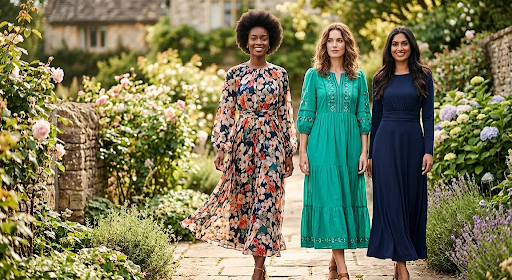
Maxi long dresses with sleeves are a timeless wardrobe choice for anyone who wants an outfit that feels elegant while still offering comfortable coverage. Unlike shorter dresses, maxi styles create a flowing silhouette that can work for everyday wear, special occasions, vacations, dinners, and formal events.
Sleeves also make these dresses more versatile throughout the year. Lightweight fabrics with loose sleeves can work well in warmer weather, while knitted or heavier fabrics with long sleeves are practical for cooler seasons.
The best maxi dress is not simply the longest one available. Fabric, proportions, neckline, sleeve shape, waist placement, and overall fit all influence how the dress looks and feels. This guide explains the main styles, how to choose one, and practical ways to style maxi long dresses with sleeves.
What Are Maxi Long Dresses with Sleeves?
A maxi dress is generally a long dress designed to reach around the ankles or lower legs. When sleeves are added, the design can provide additional coverage and create a more polished appearance.
Maxi dresses come in many silhouettes, including:
- Fitted styles
- A-line dresses
- Wrap dresses
- Empire-waist designs
- Relaxed and flowing dresses
- Tiered maxi dresses
- Shirt-style maxi dresses
The sleeve design can completely change the character of the outfit. For example, fitted long sleeves can create a sleek appearance, while puff sleeves can give a dress a more romantic look.
Popular Sleeve Styles for Maxi Dresses
Long Sleeves
Long sleeves are among the most versatile options. They are particularly suitable for autumn, winter, modest outfits, and occasions where more coverage is preferred.
A simple long-sleeve maxi dress in a solid color can be dressed up with jewelry and heels or made more casual with flats.
Three-Quarter Sleeves
Three-quarter sleeves stop below the elbow and above the wrist. They offer coverage without completely covering the arms, making them useful for transitional weather.
Bell Sleeves
Bell sleeves widen toward the wrist and add movement to a flowing maxi dress. They work particularly well with bohemian, festival, and relaxed styles.
Puff Sleeves
Puff sleeves add volume around the shoulders or upper arms. When paired with a simple skirt, they can become the main visual feature of the outfit.
Short Sleeves
Short-sleeve maxi dresses are useful for warm weather. Cotton, linen blends, and other breathable fabrics can make them comfortable for daytime wear.
Best Fabrics for Maxi Long Dresses with Sleeves
The fabric affects comfort, drape, appearance, and seasonality.
| Fabric | Best For | Main Benefit |
|---|---|---|
| Cotton | Everyday wear | Breathable and comfortable |
| Linen | Warm weather | Lightweight and airy |
| Chiffon | Formal occasions | Light, flowing appearance |
| Jersey | Casual outfits | Stretchy and comfortable |
| Velvet | Evening events | Rich and luxurious texture |
| Knit | Cooler weather | Warm and cozy |
| Satin | Parties and dinners | Smooth, polished finish |
When shopping, consider more than appearance. A beautiful dress may not be practical if the fabric is uncomfortable for the weather or occasion.
Choosing the Right Maxi Dress for Your Body Shape
There is no single body shape that determines which dress someone should wear. The most useful approach is to consider the silhouette and choose what makes you feel comfortable.
For a Defined Waist
Wrap dresses and belted maxi dresses can emphasize the waist. An adjustable waist also makes it easier to customize the fit.
For a Straight Silhouette
A-line and tiered dresses can introduce shape and movement. Details around the waist or skirt can also create visual dimension.
For a Curvier Figure
Wrap styles, V-necklines, and dresses with structured waistlines can create a balanced silhouette. Stretch fabrics may also provide additional comfort.
For a Relaxed Look
Loose maxi dresses with flowing fabrics are ideal when comfort is the priority. Choose a design that drapes naturally rather than one that feels excessively oversized.
Maxi Dresses for Different Occasions
Everyday Wear
For casual occasions, look for cotton, jersey, or lightweight blends. Simple patterns and practical sleeves make the dress easy to wear repeatedly.
Pair it with:
- Flat sandals
- Sneakers
- A crossbody bag
- Minimal jewelry
Work and Professional Settings
A structured maxi dress in a modest print or neutral shade can work in some professional environments. Consider a higher neckline, controlled sleeve volume, and a clean silhouette.
A cardigan or tailored blazer can provide another layer when appropriate.
Weddings and Formal Events
For formal occasions, consider fabrics such as chiffon, satin, or velvet. Elegant sleeves can add sophistication without requiring excessive embellishment.
Accessories such as delicate jewelry, a small clutch, and dress shoes can complete the look.
Vacation and Resort Wear
Flowing maxi dresses are popular for vacations because they can be comfortable while still looking polished. Lightweight materials, colorful prints, and breathable designs are practical choices for warm destinations.
How to Style Maxi Long Dresses with Sleeves
The right accessories can change the overall appearance of the same dress.
Add a Belt
A belt can define the waist and change the shape of a loose maxi dress. Choose a slim belt for a subtle effect or a wider belt for a more noticeable contrast.
Choose the Right Shoes
The shoe style should match the occasion.
- Sneakers: casual daytime outfits
- Sandals: summer and vacation looks
- Flats: comfortable everyday styling
- Ankle boots: autumn and winter outfits
- Heels: formal occasions
Use Simple Accessories
If the dress has bold sleeves or a strong print, keep the accessories relatively simple. A pair of earrings and a small handbag may be enough.
Layer Thoughtfully
A denim jacket can create a casual appearance, while a tailored blazer can make the outfit more structured. For colder weather, a long coat can work particularly well with a full-length dress.
Seasonal Styling Ideas
Spring
Choose lightweight fabrics, floral patterns, and three-quarter or full sleeves. Ballet flats or simple sandals can complete the outfit.
Summer
Short-sleeve maxi dresses in breathable fabrics are useful for warm days. Light colors and relaxed silhouettes can make the outfit feel airy.
Autumn
Long sleeves, earthy shades, ankle boots, and lightweight jackets are practical combinations.
Winter
Look for thicker fabrics or layer a maxi dress with thermal clothing, tights, boots, and a warm coat where appropriate.
Common Mistakes to Avoid
Even a beautiful maxi dress can be difficult to wear if the proportions are wrong.
Avoid these common issues:
- Ignoring the length: A dress that drags on the floor can be uncomfortable and may require alterations.
- Choosing fabric only for appearance: Consider breathability, weight, and care requirements.
- Over-accessorizing: Statement sleeves and bold prints may already provide enough visual interest.
- Ignoring the neckline: The neckline should complement the overall design and your comfort preferences.
- Buying without checking measurements: Clothing sizes can vary significantly between brands.
How to Choose the Right Size
Always check the retailer’s size chart instead of relying only on your usual size.
Measure key areas such as:
- Bust
- Waist
- Hips
- Shoulder width
- Overall dress length
Also check whether the fabric contains stretch. A fitted jersey dress may require different measurements from a structured woven dress.
If you are between sizes, look at the garment’s specific fit. A relaxed design may give you more flexibility, while a fitted dress generally requires more precise measurements.
FAQs
1. Are maxi long dresses with sleeves suitable for everyday wear?
Yes. Casual maxi dresses with sleeves can be excellent for everyday wear, especially when made from comfortable fabrics such as cotton or jersey. Flat shoes, sneakers, and simple accessories can create a practical daytime outfit.
2. Can I wear a long-sleeve maxi dress in summer?
Yes, depending on the fabric and sleeve construction. Lightweight cotton, linen, and breathable blends can be more comfortable in warm weather than heavy materials. Loose-fitting designs can also improve airflow.
3. What shoes go best with maxi dresses?
The best shoes depend on the dress and occasion. Sandals and sneakers work well for casual outfits, while boots can suit cooler weather and heels can complement formal dresses.
4. Are maxi dresses suitable for formal events?
Yes. Maxi dresses made from polished fabrics such as satin, chiffon, or velvet can be suitable for weddings, evening events, dinners, and other formal occasions. The neckline, sleeves, accessories, and footwear all influence the final look.
5. How can I make a loose maxi dress look more fitted?
A belt is one of the easiest solutions. You can also choose a dress with a defined waist, wrap construction, or adjustable tie. Layering with a structured jacket can also create a more defined silhouette.
6. What sleeve style is best for a modest maxi dress?
Long sleeves are an obvious choice for additional arm coverage, but three-quarter sleeves and relaxed sleeve designs can also provide comfortable coverage. The neckline, fabric opacity, and overall cut should also be considered.
7. How long should a maxi dress be?
A maxi dress generally falls around the ankles or lower legs, although the ideal length varies by design and personal preference. Make sure the hem does not drag on the ground when you walk.
Conclusion
Maxi long dresses with sleeves offer a combination of length, coverage, comfort, and style that makes them suitable for many wardrobes. From casual cotton designs to elegant evening dresses, there is a wide range of silhouettes, fabrics, sleeve styles, and patterns to choose from.
The key is to consider the occasion, weather, fabric, fit, and personal styling preferences before making a purchase. Once you find the right proportions, a maxi dress can easily be adapted with different shoes, accessories, belts, and layers for multiple looks.
Learn About: Style & Trend
