
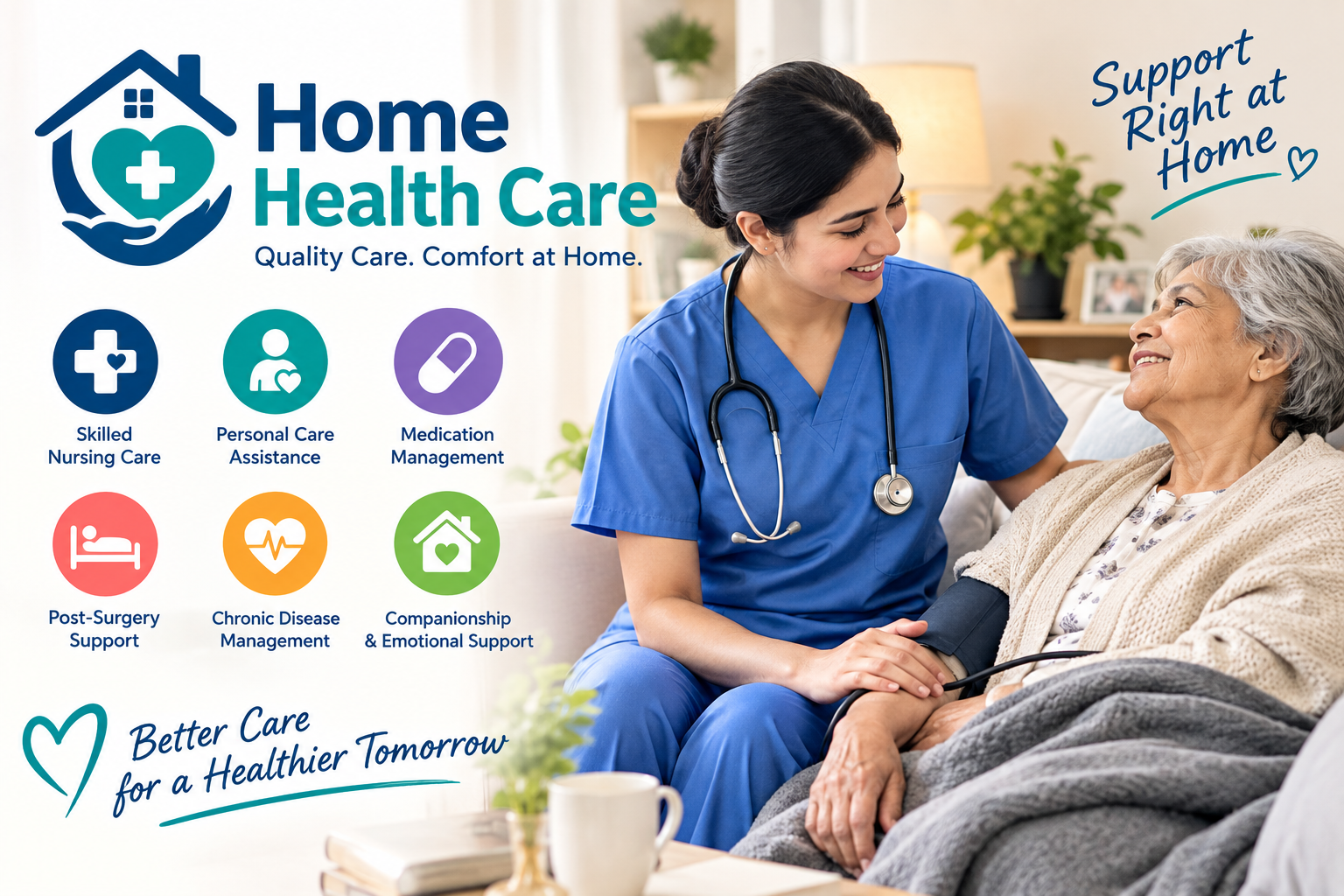
When someone needs ongoing medical support, assistance after an illness, or help managing daily activities, staying at home can often feel more comfortable than spending extended time in a healthcare facility. Home health care makes it possible for eligible individuals to receive different types of professional or personal support in their own homes.
Home-based care can be useful for older adults, people recovering from surgery or illness, individuals managing chronic conditions, and those who need assistance with everyday activities. The services available depend on a person’s health needs, care plan, location, and provider.
Understanding what home health care includes, who may benefit from it, how it differs from home care, and what to consider when selecting a provider can help families make informed decisions.
What Is Home Health Care?
Home health care refers to healthcare and related support delivered in a person’s home rather than exclusively in a hospital, clinic, or other facility.
The exact services vary according to the person’s condition and care plan. A patient may receive skilled medical care from a licensed professional, rehabilitation services, assistance with certain daily activities, or a combination of services.
Home health care may be arranged for a limited period during recovery or may form part of longer-term support, depending on the person’s circumstances.
A care plan should be based on individual needs rather than simply the number of visits or hours provided. Healthcare professionals may assess the person’s condition, home environment, medications, mobility, and ability to manage everyday tasks before recommending appropriate services.
What Services Does Home Health Care Include?
Home-based healthcare can cover several different types of support. Common services include:
Skilled Nursing
A home health nurse may provide services such as monitoring a patient’s condition, managing certain treatments, assisting with wound care, administering medications when appropriate, and communicating important changes to the patient’s healthcare team.
The exact nursing services depend on the patient’s medical needs and the professional’s scope of practice.
Physical, Occupational, and Speech Therapy
Some people require rehabilitation after an injury, surgery, illness, or other health event.
Depending on the care plan, therapy at home may focus on:
- Improving mobility and strength
- Supporting safer movement around the home
- Developing skills for everyday activities
- Addressing certain communication or swallowing difficulties
- Helping a person use adaptive techniques or equipment
Home-based therapy can also allow professionals to consider challenges within the person’s actual living environment.
Medication Support
Managing multiple medications can be difficult, particularly for people with complex treatment schedules. Home healthcare professionals may help with medication-related tasks that fall within their professional responsibilities and monitor patients for changes that should be reported to their healthcare provider.
Medication should always be taken according to the instructions of the prescribing healthcare professional.
Wound and Post-Surgical Care
Some patients need support while recovering from surgery or dealing with wounds. Depending on the care plan, home health professionals may monitor healing, provide appropriate wound care, and identify changes that require medical attention.
Assistance With Daily Activities
Some home-based care services focus less on medical treatment and more on helping people remain safe and independent.
Support may include help with activities such as:
- Bathing and grooming
- Dressing
- Preparing meals
- Light household tasks
- Mobility around the home
- Personal routines
These services are often associated with personal care or home care, rather than skilled home healthcare.
Who Can Benefit From Home Health Care?
Home health care may be appropriate for people with different needs. For example, it can support someone who is:
- Recovering after surgery or hospitalization
- Managing a chronic health condition
- Experiencing reduced mobility
- Living with a disability
- Receiving rehabilitation
- Needing skilled nursing at home
- An older adult requiring additional support
- Transitioning from a healthcare facility back to home
The need for home-based services should be determined according to the person’s individual circumstances. A healthcare professional can help identify which services are appropriate.
Home health care may also provide families with professional support when caring for a loved one becomes difficult to manage alone.
Home Health Care vs. Home Care
The terms home health care and home care are sometimes used interchangeably, but they can describe different types of support.
| Home Health Care | Home Care |
|---|---|
| Often includes skilled healthcare services | Primarily focuses on daily living and personal support |
| May involve nurses or therapists | May involve caregivers or personal care workers |
| Can support recovery and medical needs | Often supports independence and routine activities |
| Usually based on an individual care plan | Services can include companionship and household assistance |
The distinction is important because a family looking for a nurse, physical therapist, or other healthcare professional may need a different provider from someone seeking help with meals, bathing, housekeeping, or companionship.
In some situations, a person may receive both types of services.
Benefits of Receiving Care at Home
Receiving appropriate care at home can offer several practical advantages.
Familiar Environment
Home is a familiar setting. For some people, receiving care in their usual surroundings can make daily routines easier to maintain.
Personalized Support
Home-based services can be organized around an individual’s specific needs and care plan. This can allow caregivers and healthcare professionals to focus on the person’s particular challenges.
Support for Independence
Appropriate assistance can help people continue participating in everyday activities rather than relying entirely on others.
Family Involvement
Home care can make it easier for family members to remain involved in a person’s routine and communicate with healthcare professionals.
Convenient Access to Certain Services
For people who have difficulty traveling because of mobility limitations or recovery needs, receiving eligible services at home can reduce the practical challenges associated with repeated trips to a facility.
Home health care is not a substitute for emergency medical treatment. A serious or rapidly worsening medical problem requires appropriate urgent or emergency care.
How a Home Health Care Plan Works
The process generally begins with an assessment of the person’s needs. Depending on the situation and healthcare system, a physician or another qualified professional may be involved in determining whether home-based services are appropriate.
A care plan may consider:
- The person’s medical condition
- Current medications and treatments
- Mobility and physical abilities
- Personal care requirements
- Rehabilitation goals
- Safety concerns in the home
- Family or caregiver involvement
- The type and frequency of services needed
The plan should be reviewed when the person’s condition or needs change.
Clear communication is particularly important. Families should know who to contact when a patient’s condition changes and understand which concerns require immediate medical attention.
How to Choose a Home Health Care Provider
Choosing a provider requires more than comparing prices. Families should consider whether the service actually matches the person’s needs.
Check the Services Offered
Ask whether the provider offers the specific services required, such as skilled nursing, therapy, personal care, or post-hospital support.
Verify Qualifications and Licensing
Healthcare professionals should have the credentials required to practice in the relevant location. Families should also ask about the provider’s hiring, training, and supervision processes.
Ask About the Care Plan
A reputable provider should be able to explain how services are assessed, scheduled, documented, and adjusted when a patient’s needs change.
Discuss Availability
Find out whether services are available at the times needed and what happens if a scheduled caregiver or healthcare professional cannot attend.
Understand Communication Procedures
Ask who communicates with the family and healthcare team, how updates are provided, and how urgent concerns are handled.
Review Costs and Coverage
Before services begin, clarify the expected charges, payment arrangements, insurance coverage where applicable, and which services may involve additional costs.
What Does Home Health Care Cost?
The cost of home-based care varies considerably. Pricing can depend on the type of service, location, provider, frequency of visits, length of care, and whether services are medical or non-medical.
Skilled nursing and therapy generally have different pricing structures from personal care or companionship services.
Insurance programs, government benefits, private payment, or other funding arrangements may cover some services depending on eligibility and local rules. Families should confirm coverage directly with their insurer or relevant healthcare authority rather than assuming a service will be paid for.
Before signing an agreement, request a clear explanation of:
- Hourly or visit-based charges
- Minimum visit requirements
- Additional fees
- Cancellation policies
- Payment schedules
- Insurance or benefit coverage
- Services that are not included
A written estimate can help prevent misunderstandings later.
Key Takeaways
- Home health care allows eligible individuals to receive certain healthcare services at home.
- Services may include skilled nursing, therapy, wound care, medication-related support, and rehabilitation.
- Personal care and household assistance are generally different from skilled home healthcare.
- A care plan should reflect the individual’s health condition, abilities, and goals.
- Provider qualifications, availability, communication, and costs should be reviewed before choosing a service.
- Home-based care can complement professional medical treatment but does not replace emergency care.
FAQs
What is the main purpose of home health care?
The main purpose is to provide appropriate healthcare or supportive services in a person’s home while helping address medical needs, recovery, rehabilitation, safety, and independence.
Is home health care only for older adults?
No. People of different ages may receive home-based services. Eligibility and suitability depend on the person’s health condition, functional needs, treatment plan, and local healthcare requirements.
What is the difference between home health care and home care?
Home health care commonly involves skilled healthcare services such as nursing or therapy. Home care generally focuses on non-medical assistance such as personal care, household tasks, meals, and companionship. Some people may need both.
Can a nurse provide care at home?
Yes, home health services may include nursing care when the person qualifies for and requires skilled nursing. The specific services a nurse can provide depend on professional responsibilities, the patient’s care plan, and local regulations.
How long can someone receive home health care?
There is no single duration that applies to everyone. The length of care depends on the person’s condition, goals, eligibility, and ongoing need for services. A care plan can be reassessed as the person’s needs change.
How do I know whether home health care is right for my family?
Start by discussing the person’s needs with their healthcare professional. Consider whether they require skilled medical services, rehabilitation, personal assistance, or a combination of support. Then compare providers based on qualifications, services, availability, communication, and cost.
Conclusion
Home health care can provide valuable support for people who need healthcare services or assistance while remaining in their own homes. From skilled nursing and rehabilitation to certain forms of personal support, the right service depends on the individual’s needs and care plan.
Families can make better decisions by understanding the difference between skilled home healthcare and non-medical home care, checking provider qualifications, discussing costs in advance, and ensuring that communication arrangements are clear. When properly matched to a person’s needs, home-based care can become an important part of ongoing recovery, health management, and daily support.
Learn More About: Public Health England
