
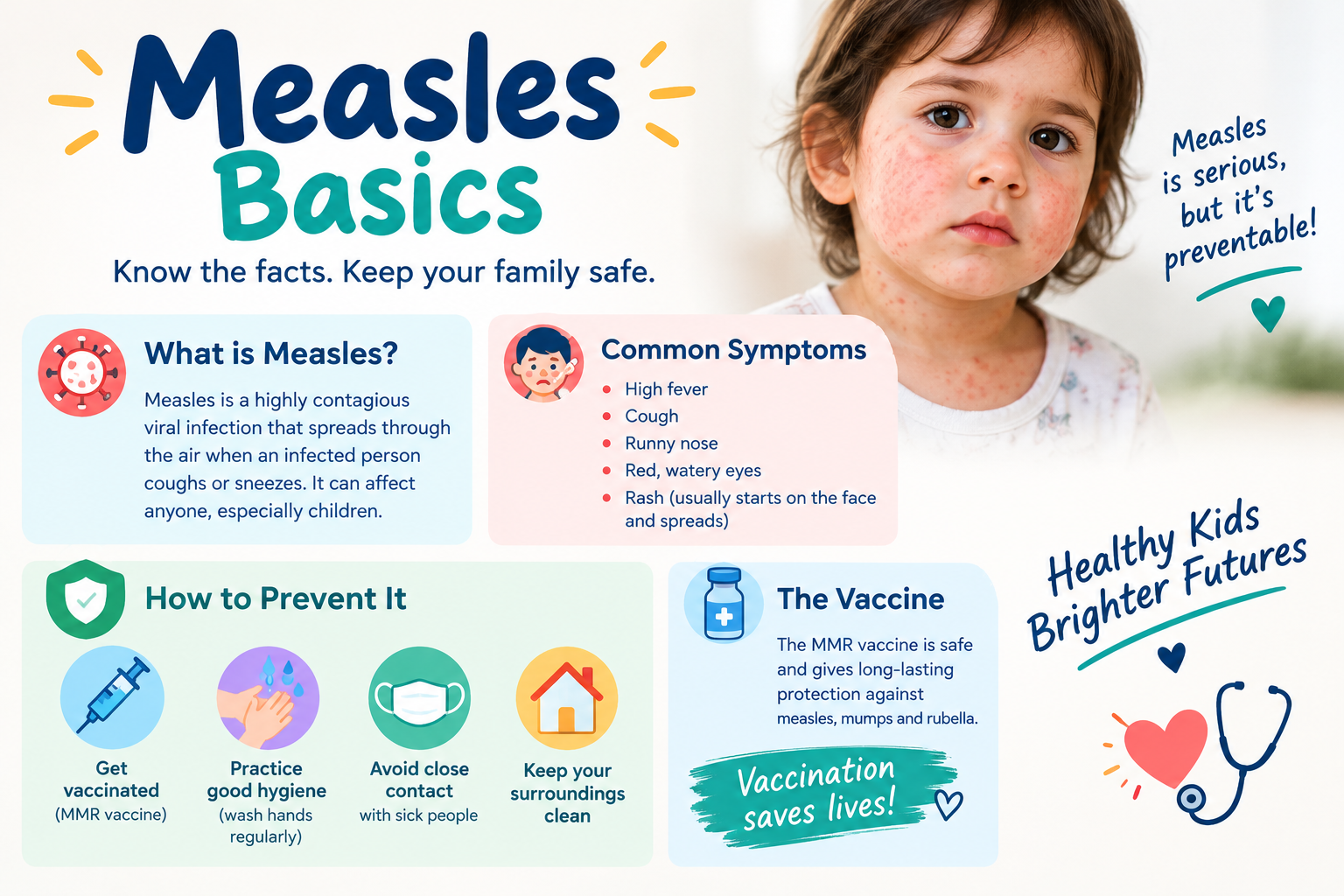
Understanding measles basics is important because measles is much more than a temporary skin rash. It is a highly contagious viral disease that can spread quickly among people who are not immune. The illness often begins with fever and respiratory symptoms before the familiar rash appears.
Knowing how measles spreads, what early symptoms look like, who is most vulnerable, and how vaccination helps can make it easier to recognize a possible infection and seek appropriate medical advice.
What Is Measles?
Measles, also called rubeola, is an infectious disease caused by the measles virus. It primarily affects the respiratory system before spreading throughout the body. Because the virus is extremely contagious, people without immunity can become infected after relatively brief exposure to an infected person.
Measles can affect people of any age, but serious complications are more common among young children, pregnant people, and individuals with weakened immune systems.
Unlike some illnesses that mainly cause mild symptoms, measles can lead to complications involving the lungs, brain, eyes, and other parts of the body.
How Does Measles Spread?
Measles spreads mainly through the air when an infected person coughs, sneezes, or breathes. The virus can remain infectious in the air for up to two hours after an infected person has left an area.
A person with measles can spread the virus before realizing they are sick. According to the CDC, people can generally transmit measles from four days before the rash appears through four days afterward.
This makes measles particularly difficult to control when an infected person is unaware of their illness.
People who have not developed immunity through vaccination or previous infection are at risk of becoming infected after exposure.
What Are the Symptoms of Measles?
Measles symptoms typically develop about 7–14 days after exposure, although timing can vary. Early symptoms often resemble other respiratory infections.
Early Symptoms
Common early signs include:
- High fever
- Cough
- Runny nose
- Red or watery eyes
- Feeling generally unwell
Small white spots called Koplik spots may also develop inside the mouth or cheeks a few days after the initial symptoms begin.
The Measles Rash
The characteristic rash usually develops several days after the initial symptoms.
It commonly:
- Begins on the face or along the hairline.
- Spreads toward the neck and upper body.
- Progresses downward to the trunk, arms, legs, and feet.
- May become more widespread as the illness develops.
The rash is usually accompanied by fever and other symptoms.
Because many conditions can cause fever and a rash, a suspected measles infection should be assessed by a healthcare professional rather than diagnosed from appearance alone.
Measles Complications and Risk Factors
Measles can cause complications ranging from relatively common problems to serious, potentially life-threatening conditions.
Common complications include:
- Ear infections
- Diarrhea
- Respiratory infections
More serious complications can include pneumonia and encephalitis, which is inflammation of the brain.
Measles can also affect pregnancy. Infection during pregnancy may be associated with pregnancy complications, including premature delivery and low birth weight.
Who Has a Higher Risk of Complications?
Although anyone without immunity can become infected, severe disease is particularly concerning in:
- Children younger than 5
- Pregnant people
- Adults
- People with weakened immune systems
- Malnourished children, particularly those with vitamin A deficiency
The risk of serious illness is also influenced by a person’s overall health and access to appropriate medical care.
Another important aspect of measles is its effect on the immune system. Research has linked measles infection with immune amnesia, a temporary reduction in the immune system’s ability to recognize certain infections it previously remembered.
How Is Measles Diagnosed?
Healthcare professionals consider a person’s symptoms, vaccination or immunity history, possible exposure, and physical findings when evaluating suspected measles.
Because other illnesses can produce similar symptoms, laboratory testing may be used to confirm infection. The CDC notes that laboratory confirmation is important for sporadic suspected cases and outbreaks.
If measles is suspected, it is important to call a healthcare provider before visiting a clinic or hospital. This allows healthcare staff to take precautions that reduce the chance of exposing other patients and staff.
How Is Measles Treated?
There is no specific antiviral treatment routinely used to cure measles. Treatment generally focuses on supportive care, such as maintaining hydration, managing symptoms, and monitoring for complications.
Some complications may require additional medical treatment. For example, bacterial infections that occur alongside measles may require antibiotics when medically appropriate.
Vitamin A may be recommended by healthcare professionals for children with measles, particularly because vitamin A deficiency can increase the severity of illness. It should be given according to professional medical guidance rather than taken in high doses independently.
Anyone with suspected measles should follow medical advice and avoid exposing people who may not be immune.
How Can Measles Be Prevented?
Vaccination is the most effective way to prevent measles. The MMR vaccine protects against measles, mumps, and rubella.
Two doses provide stronger protection than one. The CDC reports that two doses of measles vaccine are about 97% effective at preventing measles after exposure, while one dose is about 93% effective.
Vaccination also helps reduce transmission and protects people who cannot receive certain vaccines or who may be particularly vulnerable to infection.
Because vaccination schedules vary by country and individual circumstances, people should follow the recommendations of their local health authorities and healthcare professionals.
What to Do After Measles Exposure
If you believe you have been exposed to someone with measles, contact a healthcare professional promptly. Do not simply wait for symptoms to appear.
A healthcare provider can review your vaccination history, previous immunity, exposure circumstances, and whether additional measures may be appropriate.
If symptoms develop, particularly fever followed by cough, runny nose, red eyes, and a spreading rash, contact a healthcare provider before going to a healthcare facility.
Emergency medical attention may be necessary when someone develops severe breathing problems, significant changes in alertness, or other serious symptoms.
Key Takeaways
- Measles is a highly contagious viral infection that spreads mainly through the air.
- Early symptoms commonly include fever, cough, runny nose, and red or watery eyes.
- The characteristic rash usually begins on the face and spreads downward.
- Measles can cause serious complications, including pneumonia and encephalitis.
- Young children, pregnant people, and individuals with weakened immune systems can face higher risks.
- The MMR vaccine is the primary way to prevent measles.
- Anyone who suspects measles exposure should contact a healthcare professional promptly.
FAQs
1. What are the first signs of measles?
The first symptoms commonly include fever, cough, runny nose, and red or watery eyes. Small white Koplik spots may appear inside the mouth before the characteristic rash develops.
2. How does measles spread?
Measles spreads primarily through the air when an infected person coughs, sneezes, or breathes. The virus can remain infectious in an indoor airspace for up to two hours after the infected person leaves.
3. Is measles dangerous?
Yes. Although some people recover without severe complications, measles can cause pneumonia, encephalitis, dehydration, and other serious health problems. Severe disease is particularly concerning in young children and certain higher-risk groups.
4. Can you get measles if you are vaccinated?
Vaccination provides strong protection, but no vaccine provides absolute protection in every individual. Two doses of measles vaccine are about 97% effective at preventing measles after exposure.
5. Is there a specific medicine that cures measles?
There is no specific treatment that directly eliminates measles. Medical care generally focuses on hydration, symptom relief, monitoring, and treating complications when they occur.
6. What should I do if I think I have measles?
Contact a healthcare provider before going to a clinic or hospital. This allows the facility to prepare appropriately and reduce the possibility of exposing other people.
7. How long can someone with measles spread the virus?
A person with measles can generally spread the virus from about four days before the rash appears through four days afterward.
Conclusion
Knowing the measles basics makes it easier to recognize the illness, understand how it spreads, and take sensible precautions after exposure. Measles commonly begins with fever and respiratory symptoms before progressing to its characteristic rash, but the infection can sometimes lead to serious complications.
Vaccination remains the key preventive measure. If you or someone in your household develops symptoms or has been exposed to measles, contacting a healthcare professional promptly is important for appropriate evaluation, guidance, and infection-control measures.
Learn About: The Power of Hydration
