
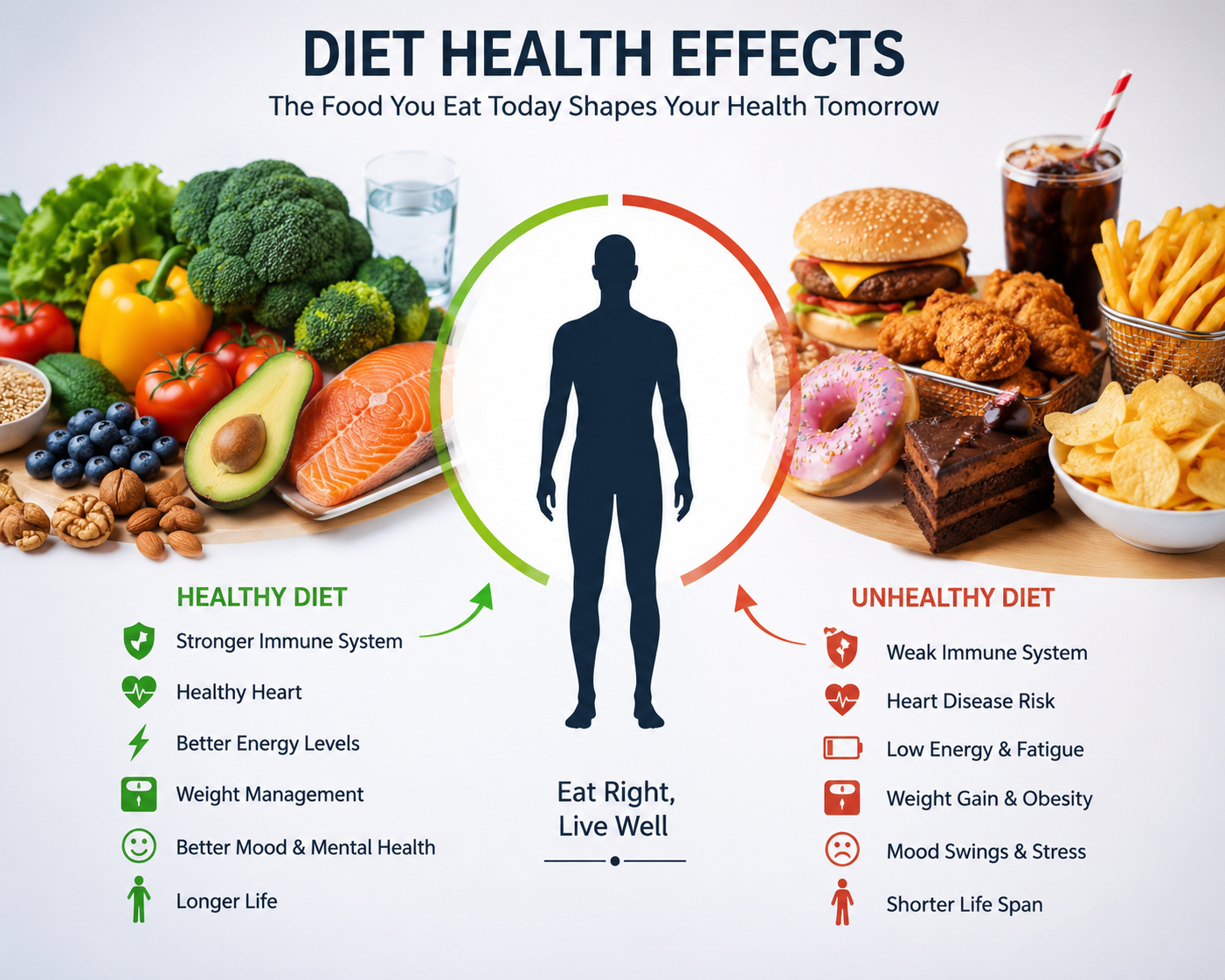
What you eat regularly can have a bigger impact on your health than an occasional meal or snack. Food provides the energy and nutrients your body needs to function, repair tissues, maintain muscles, support the immune system, and keep important processes working properly.
The effects of diet are not limited to body weight. Your eating pattern can influence heart health, digestion, blood sugar, energy levels, bone strength, and the risk of chronic conditions.
A healthy diet does not mean following a strict menu or avoiding every food you enjoy. It is more about creating a balanced eating pattern that provides enough nutrients while keeping foods high in added sugar, sodium, and unhealthy fats in moderation.
What Are Diet Health Effects?
Diet health effects are the ways that your regular food and beverage choices influence physical health, mental well-being, energy, body weight, and disease risk.
The effects usually develop from eating patterns rather than one individual food. For example, eating a dessert occasionally does not automatically make a diet unhealthy. The bigger picture is how often you eat nutrient-rich foods compared with foods that are high in added sugars, sodium, and unhealthy fats.
According to the World Health Organization, healthy diets are based on four important principles: adequacy, balance, moderation, and diversity.
This means a healthy eating pattern should provide essential nutrients without regularly providing excessive amounts of calories, sugar, salt, or unhealthy fats.
Positive Effects of a Healthy Diet
A balanced diet can support many areas of health. The CDC notes that healthy eating can support healthy bones, muscles, immunity, digestion, and weight management while lowering the risk of conditions such as heart disease, type 2 diabetes, and some cancers.
1. Supports Heart Health
Your diet can influence blood pressure, cholesterol, body weight, and other factors connected with cardiovascular health.
Foods such as vegetables, fruits, whole grains, beans, nuts, seeds, and fish can provide fiber, vitamins, minerals, and healthier fats. At the same time, reducing excessive sodium and saturated and trans fats can help create a more heart-friendly eating pattern.
WHO recommends limiting salt intake to less than 5 grams per day for adults because excessive sodium consumption can contribute to raised blood pressure.
2. Helps Maintain a Healthy Weight
Diet plays an important role in weight management because the amount and quality of food you eat affect your overall energy intake.
Meals containing vegetables, fruits, whole grains, legumes, and protein can be filling while providing important nutrients. Highly processed foods can be easier to overconsume, particularly when they are high in calories, added sugars, or unhealthy fats.
A sustainable approach is usually more useful than extreme restriction. Instead of eliminating entire food groups without a medical reason, focus on portions, food quality, and consistency.
3. Supports Digestive Health
Your digestive system depends heavily on the foods you eat. Fiber from vegetables, fruits, whole grains, beans, lentils, nuts, and seeds can support normal bowel function.
Drinking enough fluids also matters. Water helps support digestion and can help prevent constipation when combined with adequate dietary fiber.
For a practical look at why hydration matters for digestion, energy, and everyday health, you can also read this guide on the power of hydration and why water matters.
4. Helps Support Blood Sugar Control
The type and amount of carbohydrates in your diet can affect blood glucose levels.
Whole grains, beans, vegetables, and whole fruits generally provide more fiber than many refined or highly processed carbohydrate foods. Fiber can slow digestion and help make meals more satisfying.
On the other hand, regularly consuming large amounts of sugary drinks, sweets, and other foods high in free sugars can make it harder to maintain a balanced diet.
WHO recommends keeping free sugars below 10% of total daily energy intake, with further reduction potentially providing additional health benefits.
5. Provides Essential Nutrients
Your body needs a wide range of nutrients to function properly. These include protein, carbohydrates, fats, vitamins, minerals, and fiber.
Eating a variety of foods makes it easier to obtain different nutrients rather than relying heavily on one food or supplement.
For example:
| Food Group | Examples | Key Contributions |
|---|---|---|
| Vegetables | Spinach, carrots, tomatoes | Vitamins, minerals, fiber |
| Fruits | Apples, oranges, berries | Fiber, vitamins, antioxidants |
| Whole grains | Oats, brown rice, whole-wheat bread | Fiber and carbohydrates |
| Legumes | Beans, lentils, chickpeas | Protein, fiber, minerals |
| Protein foods | Eggs, fish, poultry, yogurt | Protein and essential nutrients |
| Nuts and seeds | Almonds, walnuts, chia seeds | Healthy fats, protein, minerals |
How an Unhealthy Diet Can Affect Health
Poor dietary patterns can gradually affect different systems in the body. An unhealthy diet is associated with increased risk of conditions such as cardiovascular disease, diabetes, obesity, and some cancers.
Common dietary factors that may contribute to poor health include:
- Excessive sodium
- High intake of added or free sugars
- Too many foods high in saturated fats
- Industrial trans fats
- Low intake of vegetables and fruits
- Low dietary fiber
- Frequent consumption of highly processed foods
- Excessive calorie intake
This does not mean every processed food is automatically harmful. Some processed foods can still be nutritious. The important question is what makes up most of your overall eating pattern.
Diet and Heart Health
Heart health is one of the clearest areas where diet can make a long-term difference.
A heart-supportive eating pattern generally emphasizes vegetables, fruits, whole grains, legumes, nuts, seeds, fish, and other nutritious protein sources. It also limits excessive sodium, added sugars, saturated fats, and trans fats.
Replacing foods high in saturated fats with sources of unsaturated fats can be a useful dietary change. Examples include using plant-based oils instead of large amounts of butter or other fats high in saturated fat.
The goal is not to remove fat completely. Fat is an essential nutrient, but the type and amount matter.
Diet, Digestion, and Gut Health
Your digestive system interacts with the foods you eat every day. Fiber-rich foods can help support regular bowel movements and contribute to a healthier overall eating pattern.
Good choices include:
- Oats and whole grains
- Lentils and beans
- Apples and pears
- Berries
- Leafy vegetables
- Carrots
- Nuts and seeds
Hydration works alongside fiber. If you increase fiber significantly but do not consume enough fluids, you may experience digestive discomfort.
A simple habit is to add one fiber-rich food to each main meal rather than making a sudden, dramatic dietary change.
Diet and Weight Management
Weight management is influenced by many factors, including food intake, physical activity, sleep, stress, medications, genetics, and health conditions.
That is why there is no single diet that works perfectly for everyone.
If weight management is your goal, start with practical changes such as:
- Build meals around nutrient-dense foods.
- Include a protein source with meals.
- Add vegetables or fruit regularly.
- Choose whole grains more often.
- Reduce sugary drinks.
- Pay attention to portion sizes.
- Stay physically active.
- Get adequate sleep.
- Drink enough fluids.
- Give your routine time to become consistent.
Weight-loss supplements should not be viewed as replacements for these habits. If you are researching products such as TrimRX, it is important to understand what they contain and what role they can realistically play. This TrimRX guide discusses ingredients, expectations, possible side effects, and why supplements should complement rather than replace healthy eating and exercise.
The Role of Hydration
Food is only one part of a healthy lifestyle. Hydration also matters.
Water supports several normal body functions, including temperature regulation, digestion, circulation, and the transportation of nutrients. Fluid requirements vary depending on factors such as activity, climate, body size, and health status.
Rather than becoming focused on one exact water target, pay attention to your individual needs and increase fluids when you are losing more through sweating, exercise, vomiting, or diarrhea.
Water-rich foods such as cucumbers, watermelon, oranges, tomatoes, and strawberries can also contribute to daily fluid intake.
How to Build a Healthier Eating Pattern
You do not need to completely change your diet overnight. Small improvements can be easier to maintain.
Start With Your Current Meals
Look at what you already eat and identify one or two easy changes.
For example, if breakfast normally includes refined bread and a sugary drink, you might add eggs, yogurt, fruit, or whole-grain options. If lunch is usually low in vegetables, add a salad or cooked vegetables.
Make Simple Swaps
Try replacing:
- Sugary drinks with water or unsweetened beverages
- Refined grains with whole grains more often
- Deep-fried foods with baked or grilled alternatives
- Highly salty snacks with nuts, fruit, or unsalted options
- Desserts every day with smaller portions or less frequent servings
Think About the Whole Pattern
A healthy diet is not about perfection. One meal rarely determines your health. Your regular habits matter much more.
If you occasionally eat a favorite dessert, enjoy it without guilt and return to your normal eating pattern at the next meal.
People with specific medical conditions, allergies, pregnancy-related nutritional needs, or prescribed dietary restrictions should speak with a qualified healthcare professional before making major dietary changes.
Key Takeaways
- Diet health effects can influence heart health, digestion, blood sugar, body weight, immunity, and long-term disease risk.
- Healthy diets emphasize variety, balance, moderation, and adequate nutrition.
- Vegetables, fruits, whole grains, legumes, nuts, seeds, and quality protein can form the foundation of a nutritious eating pattern.
- Excessive sodium, free sugars, unhealthy fats, and highly processed foods should be limited.
- Hydration is an important part of overall health and works alongside a balanced diet.
- Sustainable dietary habits are generally more practical than extreme restrictions.
- Supplements should not replace nutritious food, physical activity, sleep, or other healthy lifestyle habits.
FAQs
1. What are the main diet health effects?
The main effects include changes in energy, digestion, weight, blood sugar, blood pressure, heart health, nutrient status, and long-term disease risk. The impact depends on the overall eating pattern and individual health factors.
2. Can a healthy diet reduce disease risk?
Yes. Healthy dietary patterns are associated with a lower risk of several chronic conditions, including heart disease, type 2 diabetes, obesity, and some cancers.
3. What foods should I eat more often?
Focus on a variety of vegetables, fruits, whole grains, beans, lentils, nuts, seeds, and nutritious protein sources. Choosing a wide range of foods helps provide different nutrients.
4. What foods should I limit?
It is generally helpful to limit foods and drinks that are consistently high in free sugars, sodium, saturated fats, and trans fats. Highly processed foods can also be limited when they make up a large portion of the diet.
5. Does drinking water affect health?
Yes. Adequate hydration supports normal body functions, including temperature regulation, digestion, circulation, and nutrient transport. Individual fluid needs vary.
6. Is dieting the same as healthy eating?
Not necessarily. A diet can refer simply to a person’s usual eating pattern. Healthy eating focuses on meeting nutritional needs through a balanced and varied selection of foods rather than relying on extreme restriction.
7. Can supplements replace a healthy diet?
No. Supplements may have a role in certain situations, but they should not be considered a replacement for a balanced diet. Anyone considering a supplement should check the ingredients, follow the label directions, and seek professional advice when appropriate.
Conclusion
The effects of diet reach far beyond the number on a bathroom scale. What you eat regularly can influence your heart, digestive system, energy levels, blood sugar, weight, nutrient intake, and long-term health.
The good news is that improving your eating pattern does not require perfection. Start with practical changes: eat more vegetables and fruits, choose whole grains and fiber-rich foods, include nutritious sources of protein, stay hydrated, and reduce excessive sugar, sodium, and unhealthy fats.
Most importantly, focus on habits you can maintain. A balanced eating pattern practiced consistently is far more valuable than a short-term diet that is difficult to follow.
