
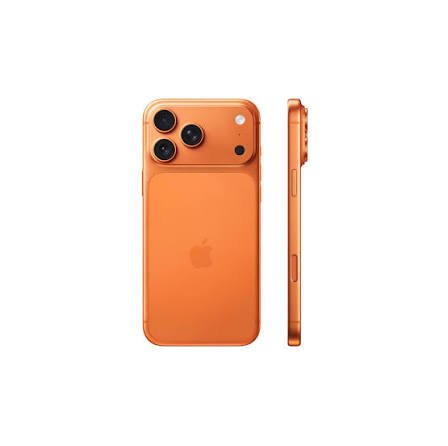
The Apple iPhone 17 brings several meaningful upgrades to Apple’s standard iPhone lineup. Instead of focusing only on headline-grabbing changes, Apple has improved areas that users interact with every day, including the display, performance, cameras, battery life, durability, and connectivity.
The result is an iPhone designed for people who want premium performance without necessarily moving to the Pro models. The iPhone 17 combines Apple’s A19 chip with a brighter 6.3-inch display, ProMotion technology, upgraded cameras, and Apple Intelligence.
But is the iPhone 17 worth considering, especially if you’re upgrading from an older iPhone? This guide explains its most important features and specifications so you can make an informed decision.
What Is the Apple iPhone 17?
The Apple iPhone 17 is Apple’s 2025 standard iPhone model. It sits below the iPhone 17 Pro and iPhone 17 Pro Max while offering several upgrades that previously felt more closely associated with premium models.
Apple gives the iPhone 17 a 6.3-inch OLED display with ProMotion up to 120Hz, an A19 processor, 256GB or 512GB storage options, and a 48MP dual Fusion rear camera system.
It also introduces an 18MP Center Stage front camera, which is designed to make selfies, group photos, and video calls more flexible.
For everyday users, these upgrades matter because they improve common activities such as browsing, photography, streaming, gaming, video calls, and multitasking.
Apple iPhone 17 Key Specifications
| Feature | Apple iPhone 17 |
| Display | 6.3-inch Super Retina XDR OLED |
| Refresh Rate | ProMotion up to 120Hz |
| Processor | A19 chip |
| Rear Cameras | 48MP Fusion Main + 48MP Fusion Ultra Wide |
| Front Camera | 18MP Center Stage |
| Storage | 256GB / 512GB |
| Operating System | iOS 26 |
| Battery | Up to 30 hours video playback |
| Charging | USB-C, MagSafe, Qi2 |
| Water Resistance | IP68 |
| Weight | 177 grams |
| Connectivity | 5G, Wi-Fi 7, Bluetooth 6 |
These specifications are based on Apple’s published technical specifications.
Display and Design
One of the biggest improvements is the display.
The iPhone 17 features a 6.3-inch Super Retina XDR OLED display with a 2622-by-1206 resolution at 460 pixels per inch. More importantly, ProMotion supports adaptive refresh rates of up to 120Hz, making scrolling, animations, and compatible games feel smoother.
The display also supports an Always-On feature and Dynamic Island.
Brighter Outdoor Viewing
Outdoor visibility is another strong point. Apple rates the display at up to 3,000 nits of peak outdoor brightness, which can make the screen easier to see under bright conditions.
The front is protected by Ceramic Shield 2, while the phone uses an aluminium design and a colour-infused glass back.
Apple also gives the device an IP68 rating for splash, water, and dust resistance. As with any water-resistant smartphone, this rating shouldn’t be treated as a guarantee against liquid damage.
Performance and A19 Chip
At the heart of the iPhone 17 is Apple’s A19 chip.
It includes a six-core CPU, five-core GPU with Neural Accelerators, and a 16-core Neural Engine. The chip is built to handle demanding everyday tasks while also supporting Apple’s intelligence and graphics features.
For most users, that means fast app launches, responsive multitasking, smooth video editing, and strong gaming performance.
Apple says the A19 also brings hardware-accelerated ray tracing, giving supported games more advanced lighting and graphical effects.
You don’t need to be a mobile gaming enthusiast to benefit from the processor. A powerful chip can also help the phone remain responsive as applications become more demanding over time.
Camera System
Photography is another major area where the iPhone 17 receives an upgrade.
The rear setup includes a 48MP Fusion Main camera and a 48MP Fusion Ultra Wide camera. The main camera supports high-resolution 24MP and 48MP photography, while the Ultra Wide camera also supports 24MP and 48MP images.
The system provides:
- 2x optical-quality telephoto capability
- Up to 10x digital zoom
- Sensor-shift optical image stabilization
- Night mode
- Smart HDR 5
- Photographic Styles
- Next-generation portraits
- 4K Dolby Vision video recording
The upgraded Ultra Wide camera is particularly useful for landscapes, architecture, group photos, and situations where you need a wider perspective.
18MP Center Stage Front Camera
The front camera is an 18MP Center Stage camera with autofocus and features designed for both photography and video calls.
Center Stage can help keep subjects framed during supported calls and lets users capture photos in different orientations without needing to reposition the phone.
For creators and people who frequently use video calls, this is a practical upgrade rather than simply a specification-sheet improvement.
Battery Life and Charging
Battery performance is one of the areas where the iPhone 17 makes a noticeable difference.
Apple rates the device for up to 30 hours of video playback and up to 27 hours of streamed video playback. Actual battery life varies according to settings, network conditions, apps, and usage.
The phone supports USB-C charging and can reach up to 50% charge in around 20 minutes when paired with a 40W or higher adapter and a USB-C charging cable, according to Apple’s testing conditions.
For people who spend long hours away from a charger, this combination of battery efficiency and fast charging can be more valuable than a slightly thinner design.
If you’re researching accessories or charging options for your phone, you can also explore this helpful resource on chargers and charging accessories.
Software and Apple Intelligence
The Apple iPhone 17 runs iOS 26, Apple’s current operating system for the device.
Apple Intelligence is also integrated into the iPhone 17, bringing AI-powered capabilities into supported apps and experiences. The A19’s Neural Engine and GPU Neural Accelerators help provide the hardware foundation for these features.
The broader iOS experience remains one of the phone’s strongest advantages. Users get features such as Face ID, privacy controls, iCloud integration, AirDrop, FaceTime, Apple Pay, and the wider Apple ecosystem.
Apple also emphasizes privacy protections around its intelligence features, making privacy an important part of the company’s approach to on-device and cloud-assisted processing.
Storage and Connectivity
The iPhone 17 starts with 256GB of storage, with a 512GB option also available.
That starting capacity is useful for people who take lots of photos and videos, download games, or keep large media libraries.
Connectivity is another area that has received an update. Apple’s N1 wireless networking chip enables Wi-Fi 7, Bluetooth 6, and Thread support.
The phone also uses USB-C rather than Apple’s older Lightning connector.
One point buyers should check before purchasing is SIM compatibility. Apple’s specifications state that the iPhone 17 uses eSIM technology and is not compatible with physical SIM cards in supported markets. Availability and cellular features can vary by region and carrier.
For readers interested in technology-related tips and digital content beyond smartphones, Read the Content offers another useful resource to explore.
Who Should Buy the iPhone 17?
The iPhone 17 makes the most sense for users who want a modern iPhone with strong performance and cameras without necessarily paying for every Pro-level feature.
It can be a particularly good fit for:
- People upgrading from older iPhones who want a major display and performance improvement.
- Photography enthusiasts who want higher-resolution main and Ultra Wide cameras.
- Content creators who regularly record video or take selfies.
- Heavy phone users who value longer battery life.
- Gamers who want a powerful processor and hardware-accelerated graphics.
- Apple ecosystem users who already rely on services such as AirDrop, FaceTime, iCloud, and Apple Watch.
If you already own a recent high-end iPhone, however, the upgrade may be less dramatic. The best choice depends on how much you value the newer display, cameras, battery improvements, and Apple Intelligence features.
Key Takeaways
- The Apple iPhone 17 has a 6.3-inch Super Retina XDR OLED display.
- ProMotion supports adaptive refresh rates up to 120Hz.
- Apple’s A19 chip provides strong performance and graphics capabilities.
- The rear system combines 48MP Main and 48MP Ultra Wide cameras.
- The front camera is an 18MP Center Stage camera.
- Storage options are 256GB and 512GB.
- Apple rates battery life at up to 30 hours of video playback.
- The phone uses USB-C and supports MagSafe and Qi2 wireless charging.
- iPhone 17 runs iOS 26 and supports Apple Intelligence.
- It offers IP68 water and dust resistance.
FAQs
Is the Apple iPhone 17 worth buying?
Yes, especially if you’re upgrading from an older iPhone and want a better display, cameras, performance, and battery life.
How big is the iPhone 17 display?
The iPhone 17 has a 6.3-inch Super Retina XDR OLED display.
What chip does the iPhone 17 use?
It uses Apple’s A19 chip with a six-core CPU and five-core GPU.
How much storage does the iPhone 17 have?
It comes with 256GB or 512GB storage options.
Does the iPhone 17 have a 120Hz display?
Yes. Its ProMotion display supports adaptive refresh rates up to 120Hz.
How long does the iPhone 17 battery last?
Apple rates it for up to 30 hours of video playback, although real-world battery life varies.
Does the iPhone 17 support USB-C?
Yes. The iPhone 17 uses a USB-C connector for charging and connectivity.
Conclusion
The Apple iPhone 17 is a substantial upgrade to Apple’s standard iPhone lineup. Its 120Hz ProMotion display, A19 chip, improved 48MP camera system, 18MP Center Stage camera, stronger battery performance, and Apple Intelligence support make it a well-rounded smartphone for everyday users and creators alike.
The biggest advantage is that these improvements aren’t limited to one area. The display is smoother, the cameras are more capable, performance is faster, and battery life has improved. Combined with iOS 26 and Apple’s broader ecosystem, the iPhone 17 offers a premium experience without requiring users to choose a Pro model.
