
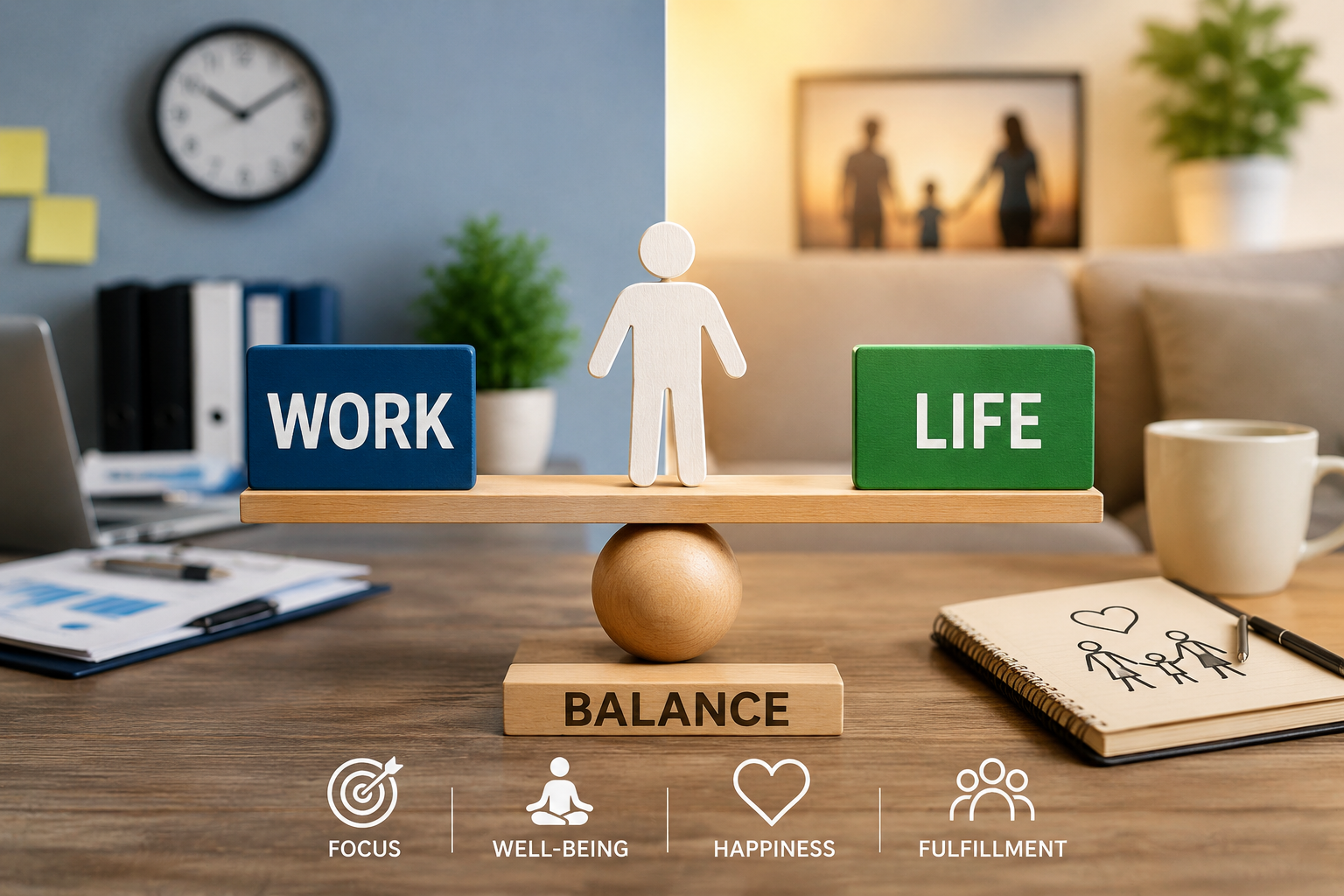
Modern work can easily spill into evenings, weekends, and personal time. Emails arrive after office hours, remote workers may find it difficult to switch off, and busy professionals often feel pressure to stay productive all the time. This is why work-life balance has become an important part of a sustainable career and a fulfilling personal life.
Work-life balance doesn’t mean spending exactly the same number of hours working and relaxing. Instead, it means creating a practical routine where work is managed effectively while personal needs, relationships, rest, and interests also receive enough attention.
A better balance can support productivity, reduce unnecessary stress, improve focus, and make everyday life more satisfying. The right approach will look different for every person, depending on their job, responsibilities, schedule, and priorities.
What Is Work-Life Balance?
Work-life balance is the ability to manage work responsibilities alongside personal activities, relationships, rest, and other important areas of life.
It doesn’t require a perfect 50/50 split. Some weeks may demand more attention at work, while other periods may allow more time for family, hobbies, or relaxation.
The goal is to create a sustainable pattern rather than constantly operating in work mode.
A balanced routine may include:
- Clear working hours
- Sufficient sleep and recovery time
- Time with family and friends
- Regular physical activity
- Personal hobbies and interests
- Reasonable workloads
- Breaks during the workday
- Boundaries between work and personal time
Why Work-Life Balance Matters
A healthy balance can benefit both employees and organizations. When people have enough time to recover from work, they may return with better concentration and energy.
1. Better Productivity
Working longer doesn’t automatically mean producing better results. Fatigue can make it harder to concentrate, make decisions, or complete tasks efficiently.
Taking meaningful breaks and protecting personal time can help employees maintain their effectiveness.
2. Improved Mental Well-Being
Constant work pressure can leave people feeling overwhelmed. Creating boundaries gives the mind an opportunity to disconnect from professional responsibilities.
3. Stronger Relationships
Family and friendships require attention. A schedule dominated by work can gradually reduce opportunities for meaningful interaction.
4. Greater Job Satisfaction
People are more likely to view their careers positively when work fits into their lives instead of controlling them.
5. Lower Risk of Burnout
Burnout can develop when prolonged workplace demands are combined with inadequate recovery. Maintaining reasonable boundaries is one practical way to support long-term well-being.
Signs of Poor Work-Life Balance
Sometimes imbalance develops gradually, making it difficult to recognize. Common warning signs include:
- Frequently working beyond scheduled hours
- Checking work messages late at night
- Feeling guilty when taking time off
- Regularly skipping meals or breaks
- Having little time for family or friends
- Losing interest in hobbies
- Feeling tired even after resting
- Thinking about work constantly
- Struggling to disconnect during weekends
- Feeling that there is never enough time for yourself
One busy week doesn’t necessarily indicate a serious problem. The bigger concern is when these patterns continue for an extended period.
Common Causes of Work-Life Imbalance
Several workplace and personal factors can contribute to an unhealthy routine.
Heavy Workloads
Too many responsibilities and unrealistic deadlines can push employees to work longer than planned.
Poor Time Management
Without clear priorities, people may spend large amounts of time on low-value tasks while important work remains unfinished.
Always-On Technology
Smartphones, messaging platforms, and email make it easy for work to follow people home.
Lack of Workplace Boundaries
If employees are expected to respond immediately at all hours, separating work from personal life becomes difficult.
Remote Work Challenges
Working from home can provide flexibility, but the absence of physical separation between home and the workplace can make switching off harder.
How to Improve Work-Life Balance
Improving balance doesn’t necessarily require major life changes. Small, consistent adjustments can make a meaningful difference.
1. Set Clear Working Hours
Decide when your workday starts and ends whenever your job allows it. Try to avoid routinely extending those hours without a genuine need.
For remote workers, shutting down the computer at the end of the workday can create a useful psychological boundary.
2. Prioritize Important Tasks
Don’t treat every task as equally urgent.
A simple approach is to divide tasks into:
| Priority | Action |
| High | Complete first |
| Medium | Schedule |
| Low | Handle when time allows |
| Unnecessary | Remove or delegate |
This can prevent small tasks from consuming the time needed for more important responsibilities.
3. Take Regular Breaks
Short breaks can help you reset your attention. Stand up, walk around, drink water, or simply step away from your screen for a few minutes.
The purpose isn’t to avoid work. It’s to return to it with a clearer mind.
4. Learn to Say No
Accepting every request can quickly overload your schedule. When appropriate, explain your current priorities and discuss what can realistically be completed.
Saying no to an unnecessary task isn’t the same as refusing to be helpful.
5. Protect Personal Time
Treat personal commitments as seriously as professional appointments.
Schedule time for:
- Family
- Exercise
- Hobbies
- Friends
- Meals
- Rest
- Personal projects
When these activities are always postponed, work can gradually consume the entire schedule.
6. Reduce Unnecessary Notifications
Constant alerts can interrupt concentration and keep your brain focused on work even when you’re supposed to be relaxing.
Consider turning off nonessential work notifications outside working hours.
7. Use Vacation and Time Off
Time away from work is part of maintaining a sustainable routine. Taking planned time off can provide an opportunity to rest and return with renewed energy.
8. Review Your Schedule Weekly
Spend a few minutes at the end of each week asking:
- What took most of my time?
- Which tasks could have been avoided?
- Did I get enough personal time?
- What can I change next week?
This simple review can reveal patterns that aren’t obvious during a busy day.
Work-Life Balance for Remote Workers
Remote work offers flexibility, but it can also blur the line between professional and personal life.
A practical remote-work routine might look like this:
Start of day → Dedicated workspace → Focused work → Short breaks → Lunch → Priority tasks → End-of-day shutdown → Personal time
Creating a dedicated workspace, maintaining predictable hours, and avoiding work from the bedroom can help establish stronger boundaries.
It’s also useful to communicate availability clearly to coworkers so they know when you’re working and when you’re offline.
Role of Employers in Supporting Work-Life Balance
Work-life balance isn’t solely an individual responsibility. Organizations also influence workload, expectations, schedules, and workplace culture.
Employers can support healthier working patterns by:
- Setting realistic deadlines
- Providing adequate staffing
- Respecting reasonable working hours
- Encouraging employees to take leave
- Offering flexible work arrangements where possible
- Avoiding unnecessary meetings
- Clarifying communication expectations
- Recognizing performance rather than simply long hours
A workplace that consistently rewards overwork may make personal boundaries difficult to maintain.
Work-Life Balance vs. Work-Life Integration
These terms are related but aren’t identical.
Work-life balance focuses on creating boundaries between professional and personal responsibilities.
Work-life integration takes a more flexible approach, allowing work and personal activities to overlap when practical.
For example, someone working remotely might handle a personal appointment during the afternoon and complete work later. This can work well when the person has genuine control over their schedule.
Neither approach is automatically better. The right model depends on the person’s job, responsibilities, personality, and preferred routine.
Key Takeaways
- Work-life balance is about creating a sustainable relationship between professional and personal responsibilities.
- It doesn’t require an equal division of time.
- Clear boundaries can make it easier to disconnect from work.
- Prioritizing important tasks can reduce unnecessary workload.
- Breaks, rest, hobbies, and relationships are important parts of a healthy routine.
- Remote workers may need extra boundaries between home and work.
- Employers also have an important role in creating sustainable working conditions.
- Small, consistent changes are often more practical than trying to completely redesign your life.
FAQs
1. What is work-life balance?
Work-life balance means managing work responsibilities while making enough room for personal life, rest, relationships, and other priorities.
2. Why is work-life balance important?
It can support productivity, job satisfaction, personal well-being, and healthier relationships while helping people avoid prolonged overwork.
3. How can I improve my work-life balance?
Start by setting working hours, prioritizing tasks, limiting unnecessary notifications, taking breaks, and protecting personal time.
4. Is work-life balance the same for everyone?
No. The ideal balance depends on a person’s career, family responsibilities, schedule, priorities, and personal preferences.
5. How can remote workers maintain work-life balance?
Remote workers can establish fixed working hours, use a dedicated workspace, communicate availability, and create a clear end-of-day routine.
6. Can work-life balance improve productivity?
Yes. Adequate rest and clear priorities can help people maintain concentration and avoid the fatigue associated with prolonged overwork.
Conclusion
Work-life balance isn’t about creating a perfect schedule where every part of life receives exactly the same amount of time. It’s about building a routine that is sustainable and leaves room for both professional responsibilities and personal priorities.
Setting boundaries, organizing your workload, taking meaningful breaks, and protecting time away from work can make daily life more manageable. Employers also play an important role by creating realistic workloads and respecting healthy workplace boundaries.
The best approach is one you can maintain consistently. Even a few practical changes—such as ending work at a set time, reducing unnecessary notifications, or protecting an hour for yourself each day—can be a useful starting point.
Learn About: Daily Activities
