
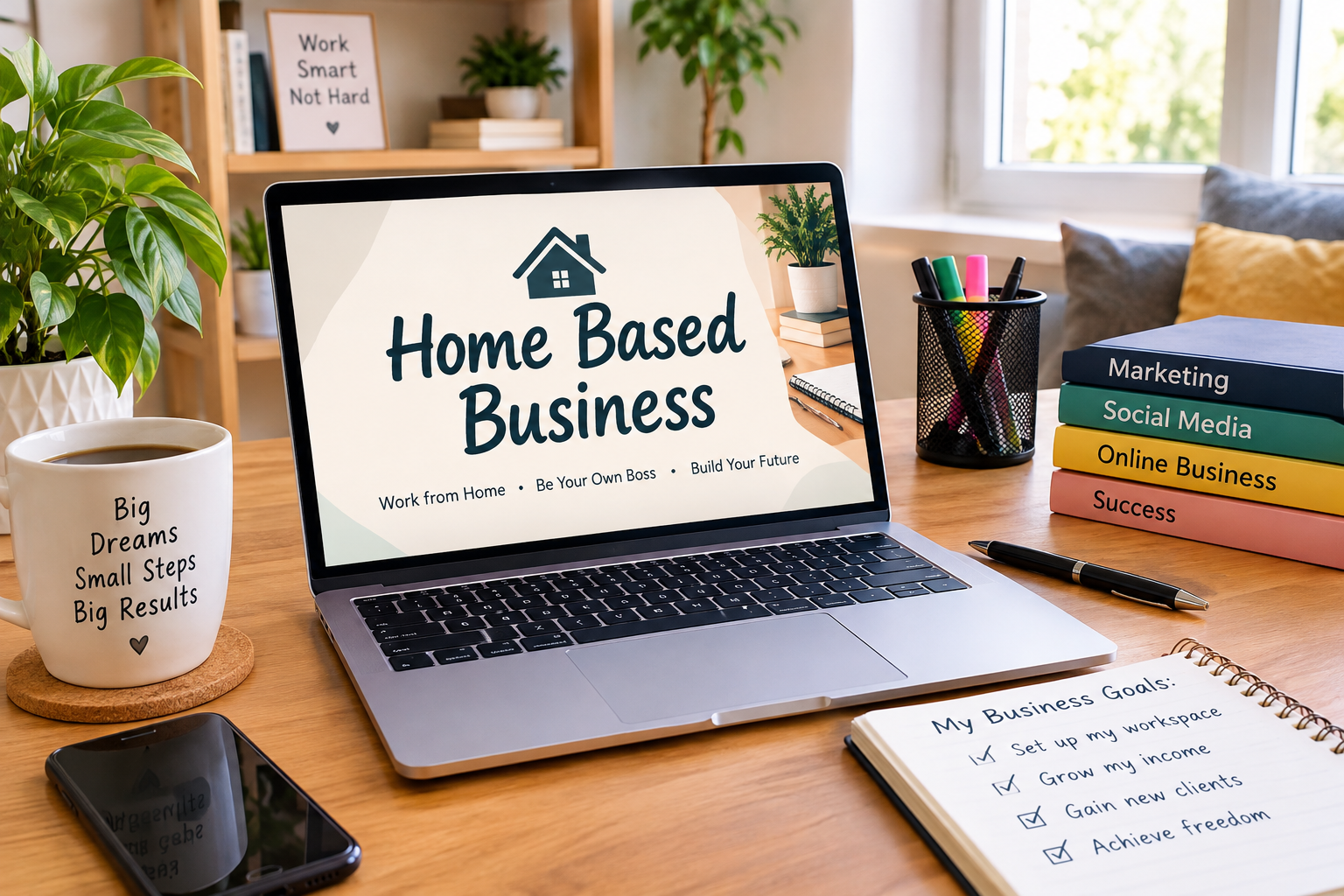
A home based business can be an attractive way to turn a skill, hobby, or professional experience into an income-generating venture. Unlike a traditional business that may require office space, employees, and significant upfront expenses, many home-based businesses can begin with a computer, internet connection, basic equipment, and a well-defined service or product.
However, working from home does not automatically make a business profitable. You still need to identify a genuine customer need, determine how you will make money, understand your costs, and create a practical plan for finding customers.
This guide explains what a home based business is, explores profitable ideas, discusses the advantages and challenges, and provides a step-by-step approach to getting started.
What Is a Home Based Business?
A home based business is a business that is operated mainly from a person’s home. The owner may sell products, provide professional services, work with clients remotely, or manage an online store without maintaining a separate commercial office.
The business model can vary considerably. Some businesses operate entirely online, while others may involve making products at home, providing local services, or meeting customers elsewhere.
Examples include:
- Freelance writing
- Virtual assistance
- Online tutoring
- Graphic design
- Consulting
- Web development
- Digital marketing
- E-commerce
- Handmade products
- Photography
- Bookkeeping
- Translation services
The best option depends on your skills, available time, startup budget, and the customers you want to serve.
Why Start a Home Based Business?
Starting from home can provide several practical advantages.
Lower Operating Costs
One of the biggest benefits is that you may not need to rent an office or retail location. Depending on the type of business, you may be able to start with equipment you already own.
Lower overhead can make it easier to test an idea before making a larger financial commitment.
Flexible Working Hours
Many home-based entrepreneurs have greater control over their schedules. This can be useful for people who need to balance business activities with family responsibilities, education, or another job.
Flexibility does not mean working fewer hours, though. A successful business may require consistent effort, especially during the early stages.
Ability to Reach Customers Online
The internet allows many home-based businesses to serve customers outside their local area.
For example, a freelance writer in one country can work with a company in another country, while an online tutor can potentially teach students in different cities or regions.
Easier to Test a Business Idea
A home environment can provide a relatively low-cost way to validate an idea. Instead of investing heavily at the beginning, you can start with a small offer and see whether customers are willing to pay for it.
15 Home Based Business Ideas
The following ideas cover different skills, budgets, and business models.
| Business Idea | Best For | Typical Startup Needs |
|---|---|---|
| Freelance Writing | Strong writers | Computer, internet |
| Virtual Assistance | Organized professionals | Computer, internet |
| Online Tutoring | Teachers and subject experts | Computer, webcam |
| Graphic Design | Creative professionals | Design software |
| Web Development | Technical professionals | Computer, software |
| Digital Marketing | Marketing specialists | Computer, internet |
| Consulting | Experienced professionals | Expertise, website |
| E-commerce | Product sellers | Products, online store |
| Handmade Products | Craft makers | Materials, packaging |
| Bookkeeping | Finance professionals | Accounting software |
| Translation | Multilingual speakers | Computer, language skills |
| Online Coaching | Experienced coaches | Video platform, website |
| Photography | Skilled photographers | Camera, editing tools |
| Print-on-Demand | Designers | Design tools, online store |
| Content Creation | Creators and educators | Camera or smartphone |
1. Freelance Writing
If you have strong writing skills, freelance writing can be started from home with relatively little equipment. Services can include blog writing, website copy, product descriptions, newsletters, and business content.
2. Virtual Assistance
Virtual assistants help businesses with tasks such as scheduling, email management, research, customer support, and administrative work.
This can be suitable for people who are organized and comfortable working with online tools.
3. Online Tutoring
People with expertise in subjects such as mathematics, languages, science, or test preparation can offer tutoring sessions online.
A reliable internet connection, computer, webcam, and suitable teaching platform may be enough to begin.
4. Graphic Design
Graphic designers can work with businesses on logos, social media graphics, presentations, advertisements, packaging, and other visual materials.
5. Web Development
Web development can be a strong home-based option for people with programming and website-building skills. Clients may include small businesses, agencies, startups, and individual professionals.
6. E-Commerce
An online store allows you to sell physical or digital products through an e-commerce website or marketplace. Product selection, pricing, customer service, inventory, and fulfillment all need careful management.
How to Choose the Right Home Based Business
Choosing an idea simply because it appears profitable can lead to disappointment. Instead, evaluate the opportunity from several angles.
Consider Your Skills
Start with skills you already possess. For example, someone with accounting experience might explore bookkeeping rather than starting a business that requires completely new expertise.
Identify a Real Customer Problem
Ask:
- Who needs this product or service?
- What problem does it solve?
- Why would someone pay for it?
- Who are the existing competitors?
- What could make your offer different?
A clear customer problem gives your business a stronger foundation.
Check the Startup Costs
List everything you may need, including:
- Equipment
- Software
- Website or domain
- Marketing
- Packaging
- Inventory
- Professional services
- Business registration or permits, where applicable
Then compare those costs with your realistic expected revenue.
How to Start a Home Based Business
1. Choose a Specific Business Model
Avoid starting with an overly broad idea. Define exactly what you will sell and who you want to serve.
For example, instead of saying, “I provide marketing,” you could focus on a specific service such as content writing for small technology companies.
2. Research Your Target Market
Learn about potential customers and competing businesses. Look at their needs, pricing, complaints, and the solutions they currently use.
Your research should help you determine whether there is enough demand for your offer.
3. Create a Simple Business Plan
You do not necessarily need a lengthy document. A practical plan can include:
- Business idea
- Target customer
- Products or services
- Pricing
- Startup costs
- Marketing channels
- Revenue goals
- Expected expenses
4. Set Up Your Work Environment
Create a dedicated workspace where possible. A professional environment can make it easier to concentrate and maintain boundaries between personal and business activities.
5. Build an Online Presence
Depending on your business, this might include a website, professional social media profile, online portfolio, or e-commerce store.
Your online presence should clearly explain what you offer, who you serve, and how potential customers can contact you.
6. Start Finding Customers
Potential marketing channels include:
- Search engines
- Social media
- Email outreach
- Referrals
- Networking
- Online marketplaces
- Industry communities
- Partnerships
Focus on channels where your target customers actually spend time.
Common Challenges of Running a Home Based Business
Working from home has benefits, but it also comes with challenges.
Distractions
Household responsibilities, social media, family interruptions, and other distractions can affect productivity.
Unpredictable Income
Some home-based businesses, particularly freelance and service businesses, may experience inconsistent revenue at first.
Maintaining an emergency fund and tracking cash flow can help reduce financial pressure.
Work-Life Boundaries
When your home is also your workplace, it can be difficult to stop working. Setting defined working hours can help maintain healthier boundaries.
Customer Acquisition
Having a good product or skill does not guarantee customers. Marketing and relationship-building are often just as important as delivering the actual service.
Tips for Growing Your Home Based Business
Once you have consistent customers, focus on improving the business rather than simply working more hours.
Improve your offer: Use customer feedback to make your service or product more useful.
Track your finances: Monitor revenue, expenses, profit, and cash flow regularly.
Build repeat business: Reliable service and good communication can encourage customers to return.
Document your processes: Create simple procedures for repetitive tasks so they become easier to manage.
Invest strategically: Spend money on tools, training, or marketing when there is a clear business reason for doing so.
Protect your reputation: Honest communication, accurate claims, dependable delivery, and good customer service help build long-term trust.
FAQs
1. What is the best home based business to start?
There is no single best option for everyone. A strong choice is usually one that matches your existing skills, requires manageable startup costs, and solves a problem for customers who are willing to pay.
2. Can I start a home based business with little money?
Yes. Some service-based businesses, such as writing, virtual assistance, tutoring, consulting, and certain freelance services, can be started with equipment you already have.
However, you should still account for potential costs such as software, marketing, internet access, professional services, and applicable registration requirements.
3. Is a home based business profitable?
It can be profitable, but profitability depends on factors such as demand, pricing, operating expenses, competition, customer acquisition, and the quality of the product or service.
Starting from home may reduce certain overhead costs, but it does not guarantee profit.
4. Do I need a website for a home based business?
Not always. Some businesses can begin through marketplaces, social platforms, referrals, or other channels. However, a professional website can make it easier to explain your services, showcase your work, and provide customers with reliable information.
5. How can I get my first customers?
Start with people and channels relevant to your target market. You can use referrals, professional networking, direct outreach, online communities, social media, marketplaces, and useful content to introduce your business.
6. Should I quit my job to start a home based business?
Not necessarily. For many people, testing the business part-time can reduce financial risk. Once revenue becomes more consistent, you can evaluate whether transitioning to full-time entrepreneurship makes sense for your situation.
7. What should I avoid when starting a home based business?
Avoid spending heavily before validating demand, copying competitors without differentiation, underpricing your work, ignoring expenses, making unrealistic income claims, and neglecting customer service.
Conclusion
A home based business can provide an accessible way to turn professional skills, creative abilities, or a business idea into a real source of income. From freelance services and online tutoring to e-commerce and consulting, there are many models to explore.
The most important step is not choosing the trendiest idea. It is finding a genuine customer need and building a practical solution around it. Start small, understand your costs, test your offer, listen to customers, and improve as you gain experience.
For long-term success, prioritize useful products, reliable service, transparent communication, and sustainable growth. These principles benefit customers first—and they also align with Google’s emphasis on helpful, reliable, people-first content rather than content created primarily to manipulate search rankings.
Learn About: Business Locations
