
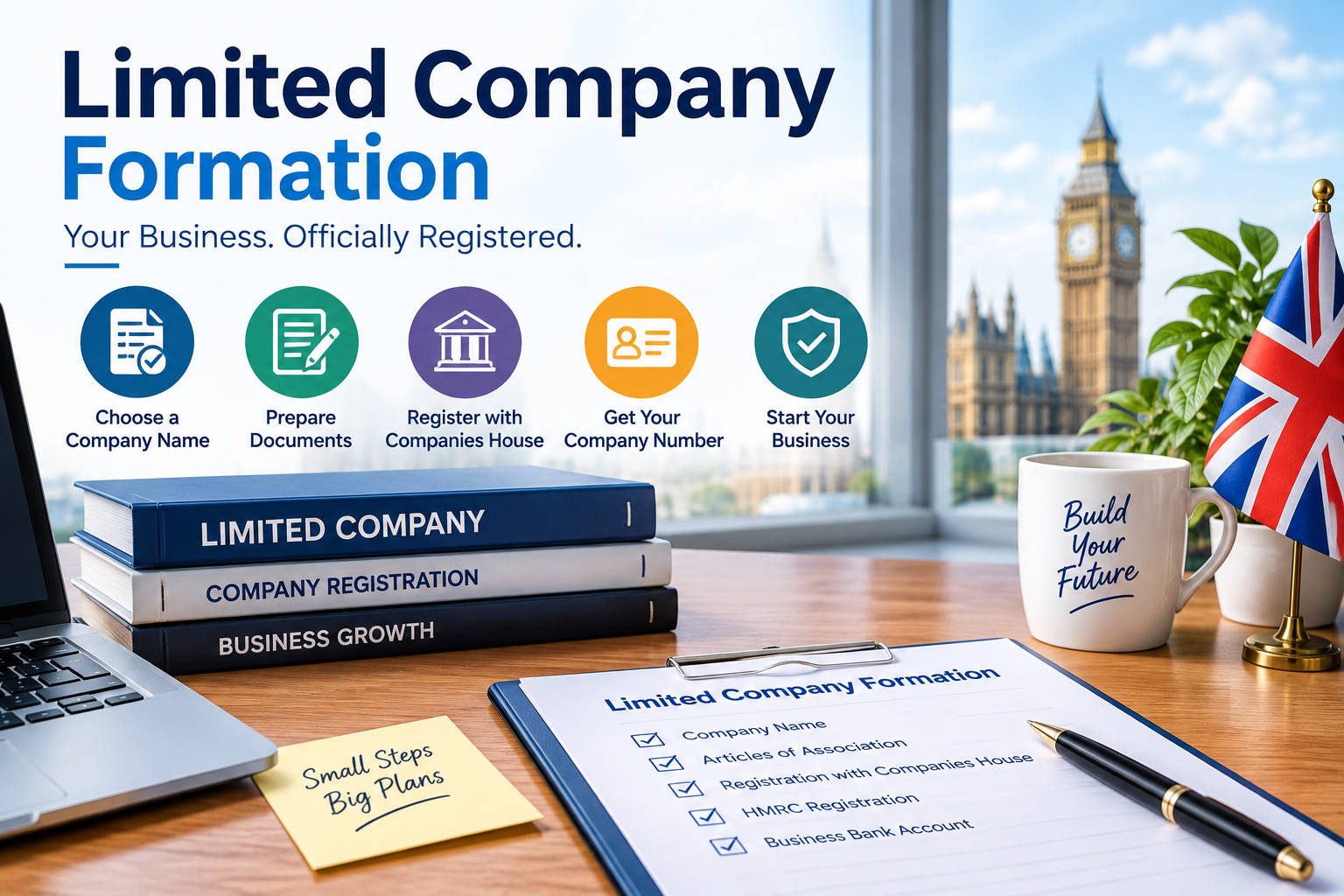
Starting a business involves more than choosing a name and finding customers. One of the most important decisions is selecting the right legal structure. For many entrepreneurs, limited company formation provides a practical way to separate personal and business responsibilities while creating a formal structure for growth.
A limited company is generally treated as a separate legal entity from its owners. This means the company can enter contracts, own assets, incur debts, and conduct business in its own name. In many jurisdictions, shareholders also receive limited liability protection, although this protection has important exceptions.
This guide explains how limited company formation works, why entrepreneurs choose this structure, what the process usually involves, and which responsibilities you should understand before registering.
What Is Limited Company Formation?
Limited company formation is the process of legally registering a business as a limited company with the relevant government authority or company registrar.
Once successfully incorporated, the company normally becomes a separate legal entity. Its owners are shareholders, while directors are responsible for managing the company.
The exact terminology differs between countries. For example, some jurisdictions distinguish between private and public limited companies, while others use different corporate structures and registration requirements.
The central features of a limited company usually include:
- A separate legal identity
- Shareholders who own the company
- Directors who manage it
- Limited liability, subject to legal exceptions
- Formal accounting and reporting requirements
- Registration with the appropriate authority
How Does a Limited Company Work?
A limited company typically has three important components: the company itself, its shareholders, and its directors.
The Company
The company is legally separate from the people who own it. It can generally enter agreements, hold assets, employ staff, and take on financial obligations.
Shareholders
Shareholders own shares in the company. Depending on the company’s structure, there may be one shareholder or multiple shareholders.
Directors
Directors are responsible for running the company and making business decisions. They also have legal duties, which can include maintaining proper records, filing required documents, and acting in the company’s interests.
Because these roles are separate, it is important to understand the responsibilities attached to ownership and management before incorporation.
Benefits of Forming a Limited Company
Limited company formation can offer several advantages compared with operating as an individual.
1. Limited Liability
One of the main attractions is limited liability. Generally, shareholders’ financial exposure is limited to their investment or the amount they have agreed to contribute.
However, limited liability is not absolute. Personal guarantees, fraud, wrongful conduct, certain legal breaches, or other circumstances can create personal liability.
2. Separate Legal Identity
A company can operate independently from its owners. This structure can make it easier to establish formal business relationships and manage business assets separately from personal finances.
3. Professional Business Structure
A registered company may provide a more formal appearance when dealing with customers, suppliers, investors, banks, or other businesses.
4. Growth Opportunities
A company structure can make it easier to bring additional shareholders or investors into the business, depending on local company law and the company’s constitution.
5. Business Continuity
Because the company has its own legal identity, it may continue operating even when ownership changes. This can provide greater continuity than some informal business structures.
Limited Company Formation Process
Although requirements vary by country, the general process follows several stages.
Step 1: Choose a Company Name
Select a name that complies with local naming rules. The name may need to be unique or sufficiently distinguishable from existing registered companies.
Before submitting an application, check the relevant company register and any applicable trademark considerations.
Step 2: Decide the Company Structure
Determine:
- Who will own the company
- Who will act as directors
- How shares will be distributed
- What business activities the company will conduct
- Where the registered office will be located
Step 3: Prepare Required Information
Registration authorities commonly request information about the company, directors, shareholders, registered address, and share structure.
Some countries also require information about beneficial ownership or individuals who ultimately control the company.
Step 4: Submit the Incorporation Application
The required application and documents are submitted to the relevant government authority. Some jurisdictions provide online registration, while others may require additional documentation.
Step 5: Receive Confirmation of Incorporation
After the application is approved, the company receives official confirmation of registration. Depending on the jurisdiction, this may include a certificate of incorporation and company registration number.
Step 6: Complete Post-Registration Requirements
Registration is not necessarily the final step. Depending on the country and business activity, you may need to:
- Register for relevant taxes
- Open a business bank account
- Maintain accounting records
- Obtain licenses or permits
- Register as an employer
- Submit annual returns or company reports
Information You Usually Need
The exact requirements depend on the jurisdiction, but company formation commonly involves the following information:
| Requirement | Purpose |
|---|---|
| Company name | Identifies the legal entity |
| Registered address | Provides the company’s official address |
| Director details | Identifies company management |
| Shareholder details | Identifies ownership |
| Share structure | Defines ownership interests |
| Business activity | Describes the company’s operations |
| Beneficial ownership information | Identifies ultimate control where required |
| Constitutional documents | Establishes company rules |
Some businesses may need additional licenses or approvals depending on their industry.
Costs of Setting Up a Limited Company
The cost of limited company formation varies considerably by country and company structure.
Potential expenses can include:
- Government incorporation fees
- Company name reservation fees
- Professional formation services
- Registered office services
- Accounting fees
- Business licenses
- Tax registration
- Annual compliance costs
It is important to distinguish between the initial formation cost and the ongoing cost of maintaining the company.
A low registration fee does not necessarily mean the company will be inexpensive to operate. Accounting, reporting, tax compliance, licensing, and professional services can create recurring expenses.
Ongoing Responsibilities
After incorporation, company owners and directors usually have continuing legal and administrative obligations.
These may include:
Financial Records
Companies generally need to maintain accurate financial and corporate records.
Tax Compliance
The company may have corporate tax, sales tax, VAT, payroll tax, or other obligations depending on its activities and location.
Annual Filings
Many jurisdictions require companies to submit annual returns, financial statements, or other periodic reports.
Changes to Company Information
Changes involving directors, shareholders, registered addresses, or ownership may need to be reported to the relevant authority.
Maintaining Corporate Separation
Owners should keep personal and company finances appropriately separated. Using company accounts and maintaining proper records can help demonstrate that the company operates as a distinct legal entity.
Limited Company vs Sole Trader
Choosing between a limited company and sole trader structure depends on the business and the owner’s circumstances.
| Feature | Limited Company | Sole Trader |
|---|---|---|
| Separate legal entity | Generally yes | No |
| Liability protection | Generally available | Generally no separate entity protection |
| Administration | Usually higher | Usually simpler |
| Ownership | Shareholders | Individual owner |
| Formal reporting | Usually required | Usually simpler |
| Suitable for | Businesses seeking formal structure and growth | Individuals wanting a simpler setup |
The most suitable option depends on factors such as expected income, risk, tax rules, business plans, and local regulations.
Common Mistakes to Avoid
Before completing limited company formation, avoid these common mistakes:
- Choosing a name without checking availability
A proposed name may conflict with an existing company or protected name. - Ignoring local regulations
Company formation requirements vary between jurisdictions. - Underestimating ongoing compliance
Incorporation is only the beginning of a company’s legal responsibilities. - Mixing personal and company finances
Maintain appropriate separation between personal and business transactions. - Choosing an unsuitable share structure
Consider future ownership and investment plans before issuing shares. - Ignoring tax obligations
Registration with a company registrar does not necessarily complete all tax registrations. - Failing to maintain records
Accurate corporate and financial records are important for compliance and good management.
FAQs
1. What is limited company formation?
Limited company formation is the legal process of registering a business as a limited company with the appropriate government authority. Once incorporated, the company generally becomes a separate legal entity.
2. Is a limited company better than being a sole trader?
Neither structure is automatically better. A limited company can provide a formal structure and potential liability protection, while sole trading is generally simpler to establish and administer. The best option depends on the business, financial circumstances, risk, and local regulations.
3. How long does limited company formation take?
The timeframe depends on the country, registration authority, application method, and whether the submitted information is complete. Online applications may be processed faster than applications requiring manual review.
4. How much does it cost to form a limited company?
There is no universal price. Costs vary by jurisdiction and may include government registration fees, professional services, address services, licenses, and other administrative expenses.
5. Can one person form a limited company?
In many jurisdictions, a single individual can establish and own a limited company, although the specific rules concerning directors, shareholders, and registered offices vary by country.
6. Does a limited company protect personal assets?
Generally, the company’s separate legal identity can provide shareholders with limited liability. However, protection is not absolute. Personal guarantees, fraud, wrongful conduct, and certain other circumstances can result in personal liability.
7. Do limited companies have to pay taxes?
Companies can have tax obligations depending on their country, income, activities, employees, and other circumstances. Incorporation does not eliminate tax responsibilities.
Conclusion
Limited company formation can provide entrepreneurs with a formal business structure, separate legal identity, and potential limited liability protection. It can also create additional administrative and reporting responsibilities that should be considered before incorporation.
The right approach depends heavily on the country where the company will operate and the nature of the business. Before registering, compare the legal structure, formation costs, tax obligations, reporting requirements, and long-term business goals. For complex ownership, tax, or regulatory matters, obtaining advice from a qualified local professional can help you make an informed decision.
Learn About: Company Run
