
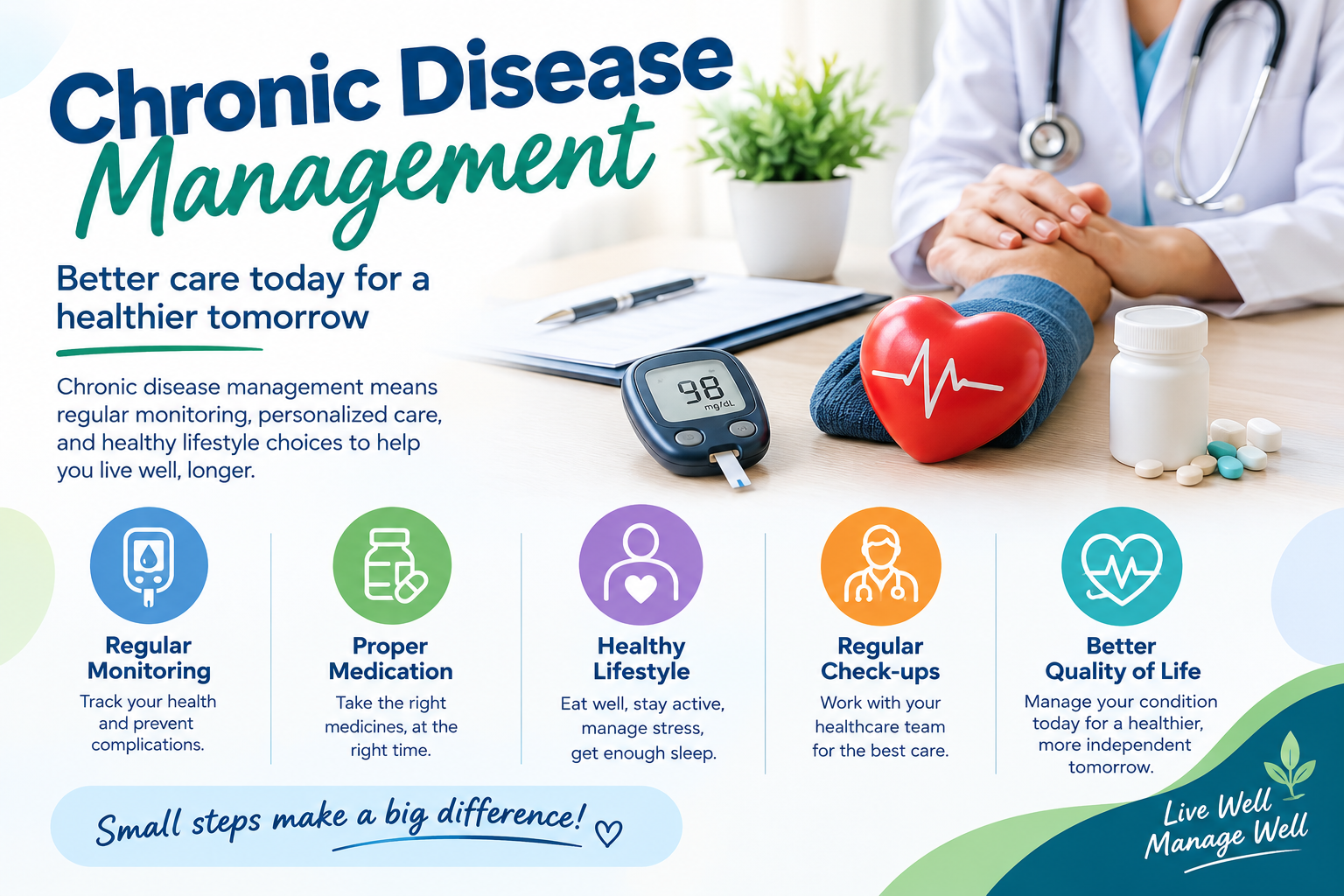
Living with a chronic condition often requires more than treating symptoms when they appear. Conditions such as diabetes, hypertension, asthma, arthritis, heart disease, and chronic kidney disease may need continuous monitoring and treatment over months or years.
Chronic disease management provides a structured approach to long-term care. It helps patients understand their condition, follow treatment plans, monitor changes, and work with healthcare professionals to reduce preventable complications.
Effective management is not only about medication. Nutrition, physical activity, stress management, regular checkups, self-monitoring, and communication with healthcare providers can all play important roles.
This guide explains how chronic disease management works, its key components, benefits, challenges, and practical ways patients can participate in their own care.
What Is Chronic Disease Management?
Chronic disease management is a coordinated approach to caring for health conditions that usually require ongoing attention rather than a short course of treatment.
A management plan may include:
- Regular medical appointments
- Medication management
- Health monitoring
- Laboratory tests and screenings
- Nutrition and physical activity guidance
- Patient education
- Mental and emotional support
- Preventive care
- Communication among healthcare professionals
The exact plan depends on the person’s condition, symptoms, treatment, age, lifestyle, and other health needs.
For example, someone managing diabetes may need regular blood glucose monitoring, medication or insulin when prescribed, nutrition planning, physical activity, and routine medical assessments.
Chronic Disease Management vs. Acute Care
Acute care generally focuses on a health problem that develops suddenly and requires short-term treatment. Chronic disease management focuses on maintaining health and controlling an ongoing condition over time.
| Acute Care | Chronic Disease Management |
|---|---|
| Usually short-term | Usually long-term |
| Treats sudden problems | Manages ongoing conditions |
| Often focuses on immediate symptoms | Focuses on control and prevention |
| May involve one episode of care | Often involves continuing follow-up |
Why Is Chronic Disease Management Important?
Chronic conditions can affect everyday activities, work, finances, and overall quality of life. Without appropriate care, some conditions may become more difficult to control or lead to complications.
A structured management approach can help people:
- Understand their condition
- Recognize changes in symptoms
- Follow treatment recommendations
- Monitor important health measurements
- Identify potential problems earlier
- Reduce avoidable complications
- Maintain independence and daily functioning
- Communicate more effectively with healthcare providers
It is important to remember that management does not necessarily mean curing a chronic condition. In many cases, the goal is to control the condition and support long-term health.
Common Conditions That Require Long-Term Management
Many chronic conditions benefit from ongoing monitoring and coordinated care.
Examples include:
Diabetes
Diabetes management may involve blood glucose monitoring, medication, nutrition, physical activity, and regular medical assessments.
Hypertension
High blood pressure often requires regular blood pressure checks, lifestyle changes, and medication when prescribed.
Asthma
People with asthma may need prescribed controller medicines, symptom monitoring, trigger management, and an action plan for worsening symptoms.
Heart Disease
Long-term cardiovascular care can involve medications, lifestyle changes, monitoring, rehabilitation, and regular follow-up.
Arthritis
Arthritis management may focus on controlling pain and inflammation, maintaining mobility, physical activity, and appropriate medical treatment.
Chronic Kidney Disease
Management may involve monitoring kidney function, controlling related conditions, medication review, dietary guidance, and regular healthcare visits.
Key Components of Chronic Disease Management
Effective management usually combines several areas rather than relying on one treatment.
1. Regular Health Monitoring
Monitoring helps healthcare professionals understand whether a condition is stable, improving, or becoming worse.
Depending on the condition, monitoring may include:
- Blood pressure
- Blood glucose
- Weight
- Symptoms
- Heart rate
- Laboratory results
- Medication effects
Patients should follow the monitoring schedule recommended by their healthcare provider.
2. Medication Management
Many chronic conditions require long-term medication.
Good medication management includes:
- Taking medicines according to instructions
- Understanding why each medicine is prescribed
- Knowing potential side effects
- Keeping an updated medication list
- Discussing problems with a healthcare professional
- Avoiding changes or stopping prescribed medicines without medical advice
If a person has difficulty taking medication regularly, they should discuss the reason with their healthcare provider rather than simply discontinuing treatment.
3. Healthy Eating
Nutrition can be an important part of managing chronic disease.
Depending on the condition, healthcare professionals may recommend changes involving:
- Salt intake
- Added sugars
- Dietary fiber
- Fruits and vegetables
- Portion sizes
- Saturated fats
- Overall calorie intake
There is no single diet suitable for everyone with a chronic condition. Dietary recommendations should take individual health needs into account.
4. Physical Activity
Appropriate physical activity can support cardiovascular health, mobility, strength, and overall well-being.
However, the safest type and intensity of exercise can vary according to a person’s condition and health status. People with significant health concerns should discuss an appropriate activity plan with a qualified healthcare professional.
5. Patient Education
People are more able to participate in their care when they understand their condition.
Education can include learning:
- What the condition means
- What symptoms to monitor
- How treatments work
- When to contact a healthcare provider
- How lifestyle habits affect the condition
- How to use monitoring devices correctly
6. Coordinated Healthcare
Chronic disease care may involve several professionals, such as:
- Primary care physicians
- Specialists
- Nurses
- Pharmacists
- Dietitians
- Physical therapists
- Mental health professionals
Good communication among members of the healthcare team can help reduce conflicting instructions and support continuity of care.
The Role of Patients in Managing Chronic Conditions
Patients are an important part of their own long-term care.
Practical steps include:
- Keep scheduled healthcare appointments.
- Maintain a current list of medications.
- Track recommended health measurements.
- Follow the agreed treatment plan.
- Ask questions when instructions are unclear.
- Report concerning changes or side effects.
- Keep relevant medical records organized.
- Follow recommended lifestyle changes consistently.
Keeping a simple health journal can also be useful. For example, a person may record symptoms, blood pressure readings, blood glucose readings, medication changes, and questions to discuss at their next appointment.
How Healthcare Providers Support Chronic Disease Management
Healthcare professionals can help patients create individualized care plans based on their medical history and current needs.
A provider may:
- Evaluate symptoms and health measurements
- Adjust treatment when appropriate
- Order necessary tests
- Screen for complications
- Provide lifestyle guidance
- Explain medications
- Refer patients to specialists
- Help establish realistic health goals
Follow-up is particularly important because chronic conditions can change over time.
Technology and Remote Monitoring
Digital healthcare tools are increasingly used to support long-term disease management.
Depending on the condition and healthcare system, these may include:
- Patient portals
- Digital health records
- Remote blood pressure monitoring
- Glucose monitoring systems
- Medication reminders
- Telehealth appointments
- Mobile health applications
Technology can make monitoring and communication easier, but it should complement—not automatically replace—professional medical care.
Patients should also consider privacy, data security, device accuracy, and whether a digital tool is appropriate for their specific condition.
Challenges in Chronic Disease Management
Managing a chronic condition can be difficult. Common challenges include:
Treatment Adherence
Long-term treatment can become difficult to maintain, particularly when a person takes multiple medications or has a demanding daily routine.
Cost and Access
Medication costs, transportation, healthcare availability, and access to healthy food or monitoring equipment can affect a person’s ability to follow a care plan.
Lifestyle Changes
Changing eating habits, increasing activity, losing weight, or stopping unhealthy habits can take time and consistent support.
Emotional Stress
Living with an ongoing health condition can affect daily life and emotional well-being. Discussing these concerns with an appropriate healthcare professional can be an important part of comprehensive care.
Tips for Building an Effective Management Plan
A practical chronic disease management plan should be realistic and individualized.
Consider these steps:
Understand the condition: Learn the basics from reliable healthcare sources and your medical team.
Set manageable goals: Small, sustainable changes may be easier to maintain than major changes made all at once.
Track important information: Keep records of measurements, symptoms, medications, and appointments when recommended.
Prepare for appointments: Write down questions and changes you have noticed.
Review medications regularly: Ask your healthcare professional whether your medication list is current.
Know when to seek help: Learn which symptoms require routine communication and which require urgent medical attention.
Most importantly, do not make major changes to prescribed treatment without discussing them with your healthcare provider.
FAQs
1. What is the main goal of chronic disease management?
The main goal is to help people control an ongoing health condition, reduce the risk of complications, maintain daily functioning, and support long-term quality of life.
2. What are examples of chronic disease management?
Examples include regularly monitoring blood pressure for hypertension, checking blood glucose for diabetes when recommended, taking prescribed medicines, following appropriate nutrition and activity plans, and attending regular medical appointments.
3. Can chronic diseases be cured through management?
Some chronic conditions can be controlled very effectively, but management is not the same as a cure. Whether a condition can be cured depends on the specific disease and individual circumstances.
4. Who is involved in chronic disease management?
Depending on a person’s needs, care may involve primary care providers, specialists, nurses, pharmacists, dietitians, physical therapists, and other healthcare professionals.
5. How can patients improve chronic disease management?
Patients can participate by following their care plan, taking medications as prescribed, attending follow-up appointments, monitoring recommended health measurements, maintaining healthy habits, and communicating changes or concerns to their healthcare team.
6. Does technology help with chronic disease management?
Yes. Tools such as telehealth, patient portals, remote monitoring devices, and health applications can support communication and tracking. Their usefulness depends on the condition, technology, and individual healthcare needs.
Conclusion
Chronic disease management is a continuous process that brings together medical treatment, monitoring, healthy lifestyle practices, education, and regular communication with healthcare professionals. Its purpose is to help people manage ongoing conditions while reducing preventable complications and maintaining their quality of life.
A successful approach is not identical for everyone. The most appropriate plan depends on the specific condition, treatment requirements, lifestyle, and individual health needs. Working consistently with a qualified healthcare team can help patients make informed decisions and adapt their care as their condition changes.
Learn About: Home Health Care
