
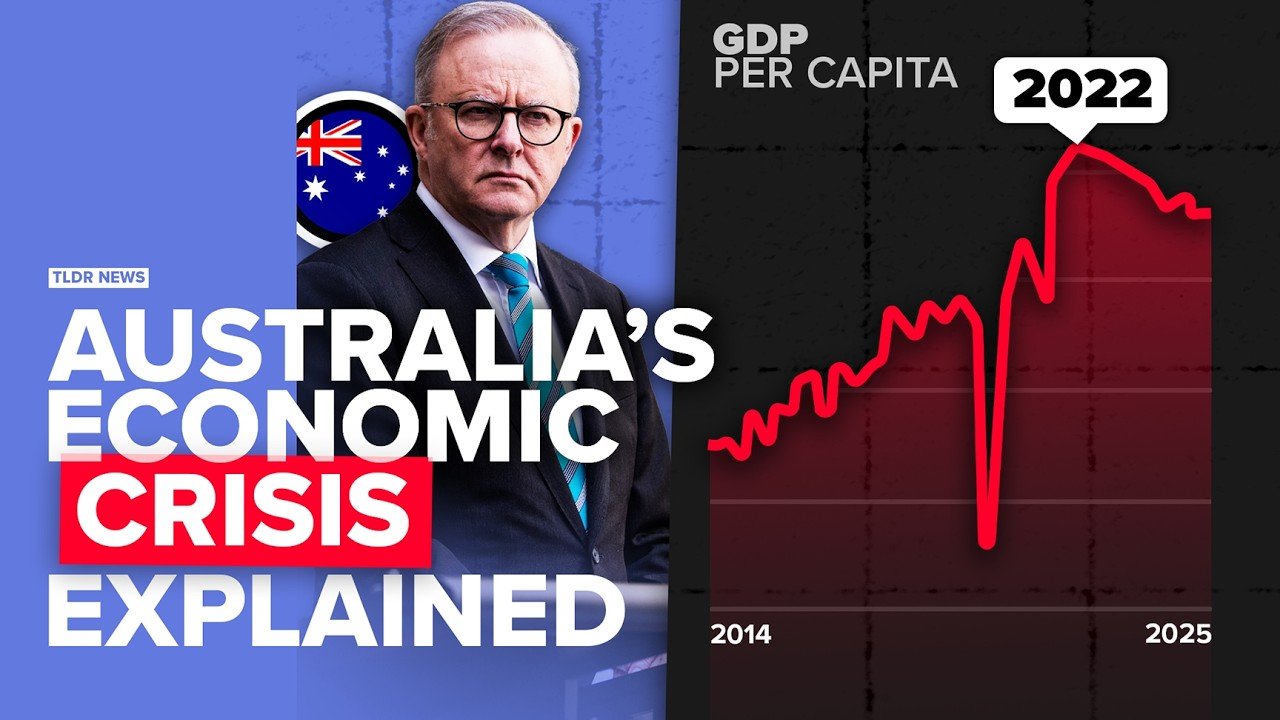
Australian economy news in September 2026 is focused on moderate economic growth, elevated inflation, a 4.35% RBA cash rate, and a gradual rise in unemployment. Australia’s GDP grew 0.4% in the June quarter of 2026 and 2.1% over the year, while the unemployment rate reached 4.6% in August.
Australia’s economy is continuing to grow in 2026, but the latest Australian economy news shows a complicated picture. Economic output is expanding, while inflation remains above the Reserve Bank of Australia’s target and borrowing costs are relatively high.
The latest national accounts show that Australia’s GDP increased by 0.4% in the June quarter of 2026 and was 2.1% higher than a year earlier. At the same time, the unemployment rate increased to 4.6% in August 2026.
These figures suggest that economic activity has not stopped, but households and businesses are still dealing with higher costs and tighter financial conditions.
Australia’s Economic Growth in 2026
The Australian Bureau of Statistics reported that GDP rose 0.4% in the June quarter. Annual growth reached 2.1% compared with the June quarter of 2025.
However, the headline growth figure does not tell the whole story. The ABS noted that households continued to behave cautiously, while imports made a significant contribution to overall GDP growth. The household saving-to-income ratio also increased from 6.4% to 6.5%.
This matters because consumer spending is an important part of the Australian economy. When households become more cautious, businesses can experience weaker demand for goods and services.
The Reserve Bank of Australia has also indicated that domestic demand is expected to moderate as tighter financial conditions work through the economy.
Inflation Remains a Major Economic Issue
Inflation continues to be one of the most important subjects in Australian economic news.
The RBA reported in August that inflation remained elevated and was being influenced by domestic capacity pressures as well as higher input costs. Energy prices and international developments have also created additional uncertainty.
According to the RBA’s latest available figures, Australia’s Consumer Price Index was rising at an annual rate of 3.5% in July 2026.
The RBA’s inflation target is 2–3% over time. Inflation above that range can reduce household purchasing power and make it harder for businesses to manage costs.
The central bank expects inflation to gradually decline, although the timing remains uncertain. Its August projections showed headline inflation at 3.9% for the year to June 2026, with forecasts declining in subsequent periods.
Interest Rates and the Reserve Bank of Australia
Interest rates remain central to the Australian economy because they affect mortgages, business borrowing, savings, investment and household spending.
The Reserve Bank of Australia kept its cash rate target at 4.35% at its August 2026 meeting. The rate had been increased three times earlier in the year, bringing the total increase to 75 basis points.
The RBA said financial conditions had become tighter and that the economy appeared to be slowing. However, the bank also stressed that inflation remained too high and that there were upside risks to the inflation outlook.
For households with mortgages, higher interest rates can mean larger repayments. For businesses, higher borrowing costs can affect investment decisions and expansion plans.
The next scheduled RBA cash-rate update is 29 September 2026, according to the central bank.
Australian Jobs Market and Unemployment
Employment remains another major part of current Australian economy news.
The latest ABS Labour Force data, released on 24 September 2026, showed that the seasonally adjusted unemployment rate increased by 0.2 percentage points to 4.6% in August. The employment-to-population ratio increased slightly to 63.9%.
The labour market is therefore still generating employment, but unemployment has moved higher.
The RBA expects the unemployment rate to increase gradually as economic growth slows. Its August forecasts placed the unemployment rate at 4.5% in December 2026 and 4.6% in June 2027.
For workers and businesses, employment trends will remain important because a weaker labour market can reduce household spending, while continued employment growth can provide support for consumer demand.
Household Spending and Saving
Australian households are adjusting to a combination of higher prices and relatively high interest rates.
The latest national accounts showed that the household saving-to-income ratio increased to 6.5% in the June quarter, up from 6.4% in the previous quarter.
Higher saving can indicate that households are becoming more cautious about spending. This can affect retailers, hospitality businesses, property-related companies and other consumer-focused industries.
The RBA has also identified slower total spending as part of the process needed to reduce domestic capacity pressures and bring inflation back toward its target.
Housing and Business Conditions
Housing remains closely connected to Australia’s economic outlook because property values, construction activity, mortgage costs and household wealth can all influence spending.
The RBA said in August that housing prices had declined noticeably and identified a greater-than-expected deterioration in housing market conditions as a potential downside risk to the economic outlook.
Businesses are also operating in an environment where borrowing costs and input prices remain important considerations.
At the same time, Australia’s major trading partners have continued to show resilience, with the RBA noting support from strong AI-related investment in global activity.
This creates a mixed environment for Australian companies. Some sectors may benefit from international demand and investment, while others remain sensitive to domestic consumer conditions.
What Could Shape the Australian Economy Next?
Several factors are likely to remain important in Australian economy news during the remainder of 2026.
Inflation
Whether inflation continues to ease will be closely watched by policymakers, businesses and households. Persistent price pressures could influence future interest-rate decisions.
Interest rates
The RBA will continue assessing incoming economic data before making monetary-policy decisions. The current cash rate target is 4.35%.
Employment
The unemployment rate has risen to 4.6%, making future labour-market data particularly important for understanding economic momentum.
Household demand
Consumer spending and saving behaviour will help determine how strongly the economy grows. Cautious households can limit demand, while stronger disposable income can provide support.
Global conditions
Australia is highly connected to global commodity markets and international trade. Energy prices, geopolitical developments, trading-partner growth and global investment can therefore affect domestic inflation and economic activity.
Australian Economy News FAQs
Is the Australian economy growing in 2026?
Yes. Australia’s GDP increased by 0.4% in the June quarter of 2026 and was 2.1% higher than a year earlier.
What is Australia’s current interest rate?
The RBA cash rate target is 4.35%, effective from 12 August 2026.
What is Australia’s unemployment rate?
The seasonally adjusted unemployment rate was 4.6% in August 2026, according to the latest ABS Labour Force release.
Is inflation still high in Australia?
Inflation remains above the RBA’s 2–3% target range. The latest RBA figures show annual CPI inflation at 3.5% for July 2026.
Why are Australian interest rates important?
Interest rates influence borrowing costs, mortgage repayments, saving, investment and consumer spending. Changes in monetary policy can therefore affect overall economic activity.
What is the outlook for Australia’s economy?
The RBA expects economic growth to slow while inflation gradually declines. Its August projections showed GDP growth remaining moderate and unemployment rising gradually over the forecast period.
When is the next RBA rate decision?
The RBA lists 29 September 2026 as the next update for its cash-rate target.
Conclusion
The latest Australian economy news points to an economy that is still expanding but operating under significant pressure. GDP grew in the June quarter, while unemployment reached 4.6% in August and inflation remained above the RBA’s target.
Interest rates, household spending, employment, housing and global conditions will continue to shape Australia’s economic direction. For households and businesses, the most important developments to watch are the path of inflation, future RBA decisions and changes in domestic demand.
Read More About:Business Licensing and Certificates
