
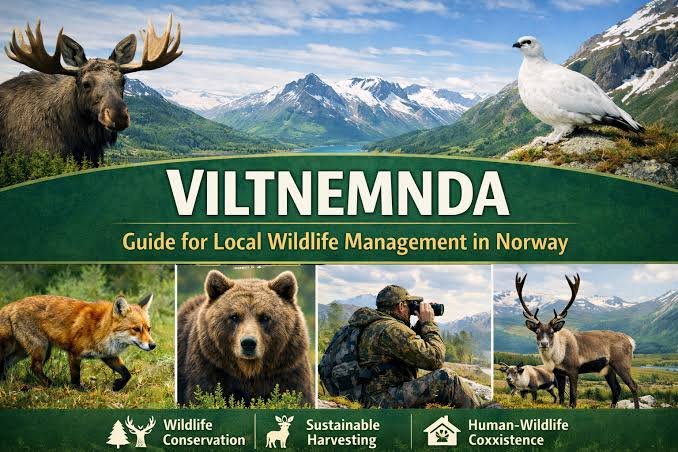
Viltnemnda: What It Is, How It Works, and Its Role in Norway
Norway is known for its forests, mountains, farmland, and abundant wildlife. Managing wild animals in such a large and varied landscape requires cooperation between national authorities, municipalities, landowners, hunters, and local communities.
This is where viltnemnda becomes relevant.
The Norwegian word viltnemnd refers to a wildlife management committee. The definite form, viltnemnda, can be understood in English as “the wildlife committee” or “the wildlife management board.” Norwegian dictionary sources define a viltnemnd as an administrative body with responsibilities related to the management of wildlife populations in a municipality.
However, it is important not to think of viltnemnda as a single nationwide organization with complete control over all Norwegian wildlife. Wildlife management in Norway is shared between different levels of government, and the precise responsibilities of a local committee can vary.
This guide explains what viltnemnda means, what it does, how it relates to hunting, and why it matters to people living in areas where wildlife and human activity overlap.
What Does Viltnemnda Mean?
The term viltnemnda comes from Norwegian.
- Vilt relates to wild animals or game.
- Nemnd means a committee or board.
- Viltnemnda is the definite form, meaning “the wildlife committee.”
In practical terms, a viltnemnd is connected with local wildlife administration and management.
Norwegian law has historically provided for wildlife management bodies at the municipal level. Earlier versions of the Wildlife Act specifically described a viltnemnd in each municipality, subject to certain exemptions.
Today, the exact structure and delegation of responsibilities can differ between municipalities. Some local authorities may handle wildlife matters through a dedicated committee, while others can organize responsibilities differently.
Why the distinction matters
A common mistake is to assume that every wildlife decision in Norway comes directly from viltnemnda. That is not the case.
National authorities establish laws and regulations, while regional and municipal bodies may have specific responsibilities. The result is a layered wildlife-management system rather than one organization controlling everything.
What Is the Role of Viltnemnda?
The responsibilities of a local viltnemnd depend on applicable legislation, regulations, and municipal delegation.
Common areas of work can include:
- Local wildlife management
- Hunting administration
- Management of hunting areas
- Issuing or administering certain felling permissions
- Wildlife monitoring and reporting
- Handling matters involving injured or dead game
- Cooperation with landowners and hunting organizations
- Providing advice on wildlife-related issues
- Supporting measures designed to prevent unnecessary wildlife damage
A useful example is the management of large game such as moose, deer, and roe deer. Norwegian regulations provide for viltnemnda involvement in approving hunting areas and issuing felling permissions for certain types of game.
The committee does not operate independently of national law. Its decisions must remain within the legal framework established by Norwegian wildlife legislation and relevant regulations.
Viltnemnda and Hunting in Norway
Hunting is one of the areas where local wildlife administration becomes especially visible.
Norwegian hunting is regulated rather than being an unrestricted activity. Hunters and hunting rights holders must follow rules covering species, seasons, hunting areas, quotas, and required permissions.
For example, regulations concerning large game state that hunting for moose, deer, wild reindeer, or roe deer requires an appropriate felling permission. The rules also define requirements for hunting areas, known as vald.
How local hunting administration works
A simplified process can look like this:
- Wildlife populations are considered.
Information about the size and development of local populations helps inform management decisions. - Hunting areas are assessed.
A suitable vald must meet the applicable requirements. - Local authorities apply relevant regulations.
The responsible wildlife body handles matters within its delegated authority. - Felling permissions are issued where applicable.
These permissions specify what can be harvested under the relevant rules. - Hunting results are reported.
Harvest information contributes to future wildlife management.
This approach helps ensure that hunting remains connected to population management rather than being treated simply as an individual recreational activity.
Wildlife Management and Local Decisions
One of the most important ideas behind viltnemnda is local knowledge.
Wildlife does not follow municipal boundaries. A moose, deer, or other animal can move across several areas during the year. For that reason, local management often needs to consider wider ecological conditions as well as municipal boundaries.
Norwegian regulations encourage cooperation between relevant viltnemnder when wildlife populations extend across administrative borders.
Balancing different interests
Wildlife management can involve competing interests.
For example:
- Hunters may want sustainable opportunities for hunting.
- Landowners may be concerned about crop or forest damage.
- Residents may be concerned about animals near roads or homes.
- Conservation interests focus on healthy wildlife populations.
- Authorities need to ensure decisions comply with national law.
A local wildlife committee can help bring these perspectives into the management process.
The goal is not simply to increase or reduce animal numbers. Good wildlife management considers population health, habitat, public safety, land use, and sustainable use of natural resources.
Dealing With Injured or Problematic Wildlife
Another important area associated with local wildlife administration is dealing with injured or dead game.
Wild animals can be injured in road accidents, hunting incidents, or other situations. Local arrangements may include search teams or other personnel responsible for locating and dealing with injured animals.
Municipal regulations can also assign specific responsibilities to local wildlife bodies. For example, rules adopted by Porsanger municipality describe cooperation between the viltnemnd and municipal administration on wildlife management, including arrangements for search and damage-control teams.
What should a person do after hitting wildlife?
The exact reporting procedure can depend on the situation and local rules. If a vehicle hits wildlife, the driver should not simply leave without taking appropriate action.
In Norway, wildlife-related road accidents can involve the police and local wildlife personnel. The appropriate authority can coordinate the response, particularly when an animal is injured and needs assistance.
If you encounter an injured wild animal, avoid approaching it unnecessarily. Wild animals can behave unpredictably when frightened or injured.
Who Works With Viltnemnda?
Viltnemnda does not work in isolation. Wildlife management often involves several groups.
| Group | Typical connection to wildlife management |
| Municipal authorities | Local administration and delegated wildlife responsibilities |
| Landowners | Management of land and hunting rights |
| Hunters | Legal hunting and reporting of harvest results |
| Regional authorities | Oversight and responsibilities under national regulations |
| National environmental authorities | National wildlife policy, regulations, and guidance |
| Local organizations | Cooperation on hunting and conservation matters |
The precise division of responsibility depends on the species, issue, municipality, and applicable legislation.
For predators such as wolves, bears, lynx, and wolverines, for example, Norway has a separate regional management system. The government states that eight regional carnivore-management boards are responsible for predator management in their respective regions.
That distinction is important because it shows why viltnemnda should not be described as the authority responsible for every wild animal in Norway.
Viltnemnda vs. Villreinnemnda
The names viltnemnda and villreinnemnda are easy to confuse, but they are not the same.
Viltnemnda
A viltnemnd is associated with local wildlife management and can have responsibilities involving game species and hunting administration.
Villreinnemnda
A villreinnemnd is specifically connected with wild reindeer management in designated wild-reindeer areas.
Norwegian regulations provide for villreinnemnder in wild-reindeer areas covering two or more municipalities. Their responsibilities include decisions concerning annual hunting quotas and management of wild-reindeer areas.
In some situations, local viltnemnder also have practical responsibilities connected with wild-reindeer hunting, including approving hunting areas and distributing felling permissions in accordance with the relevant quota decisions.
So, while the two bodies can interact, they have different functions.
Why Local Wildlife Management Matters
Wildlife management affects much more than hunting.
Healthy wildlife populations contribute to functioning ecosystems, while poorly managed populations can create challenges for agriculture, forestry, road safety, and local communities.
Local management is useful because conditions vary considerably across Norway. A wildlife strategy that works in one municipality may not be suitable in another.
For instance, a municipality with extensive forest and a large moose population may face different challenges from a coastal municipality with different habitats and wildlife pressures.
A practical example
Imagine a municipality where deer numbers have increased and animals are frequently entering agricultural land.
A responsible management approach might involve:
- Collecting information about the local population.
- Reviewing reports of agricultural damage.
- Consulting landowners and hunting interests.
- Applying relevant national and local regulations.
- Adjusting management measures where legally permitted.
- Monitoring the results over time.
This illustrates the broader purpose of local wildlife management: making decisions based on evidence and local conditions while remaining within national legal requirements.
Key Takeaways
- Viltnemnda is a Norwegian term associated with local wildlife management committees.
- Its responsibilities are shaped by legislation, regulations, and municipal delegation.
- It can play an important role in hunting and the management of game species.
- Large-game hunting requires appropriate permissions and must follow Norwegian regulations.
- Local wildlife bodies may cooperate across municipal boundaries because animal populations do not follow administrative borders.
- Injured or dead wildlife can require coordination between municipal wildlife personnel, police, and other responsible parties.
- Viltnemnda and villreinnemnda are different bodies, with the latter focused specifically on wild-reindeer management.
- Predator management is also handled through a separate regional system in Norway.
Frequently Asked Questions
1. What is viltnemnda?
Viltnemnda is a Norwegian wildlife management committee associated with local administration of wildlife and game. Its exact responsibilities depend on applicable law and municipal arrangements.
2. What does viltnemnda do?
Depending on the municipality and delegated authority, it can deal with hunting administration, wildlife management, felling permissions, injured or dead game, hunting areas, and other local wildlife matters.
3. Does viltnemnda control all wildlife in Norway?
No. Wildlife management is divided between national, regional, and local authorities. Different species and issues can fall under different management systems.
4. Is viltnemnda responsible for hunting permits?
It can be responsible for issuing or administering certain felling permissions, particularly for game such as moose, deer, and roe deer. The relevant rules and responsibilities depend on the species and local regulations.
5. What is the difference between viltnemnda and villreinnemnda?
Viltnemnda deals broadly with local wildlife and game management, while villreinnemnda is specifically responsible for management matters involving wild reindeer in designated areas.
6. Can viltnemnda make local wildlife regulations?
In some cases, local wildlife bodies can adopt decisions or regulations where authority has been provided by Norwegian law or applicable regulations. For example, a municipal beaver-management regulation can be established under the relevant legal framework.
7. Why is local wildlife management important?
Local wildlife management helps connect national conservation rules with conditions on the ground. It can help balance wildlife conservation, hunting, land use, public safety, and the interests of local communities.
Conclusion
Viltnemnda is an important part of Norway’s local approach to wildlife management. Although its precise powers vary according to legislation and municipal arrangements, it can play a practical role in hunting administration, game management, wildlife-related problems, and cooperation between local stakeholders.
Understanding viltnemnda also requires understanding Norway’s wider wildlife-management system. Local committees operate alongside municipal administrations, regional authorities, national environmental bodies, landowners, and specialized boards such as villreinnemnda and the regional carnivore-management boards.
For anyone researching Norwegian hunting, wildlife administration, or local environmental governance, knowing what viltnemnda means provides a useful starting point for understanding how wildlife management works at the local level.
Learn About: Lifestyle India
