
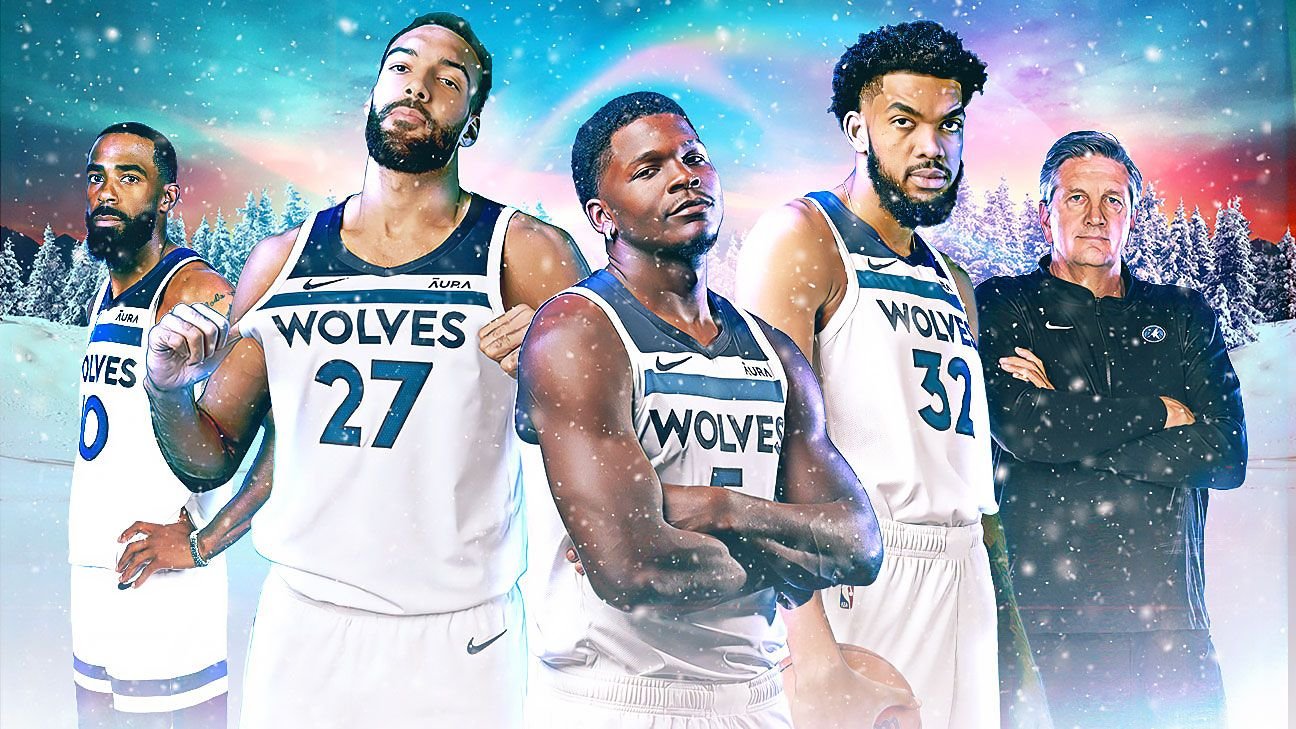
There’s something different about watching a Timberwolves game these days. For a long time, Minnesota basketball was often discussed with a “maybe someday” feeling. The team had talented players, exciting moments, and plenty of rebuilding years. But the conversation has changed.
The Minnesota Timberwolves now look like a team that expects to be part of the serious playoff conversation every year. They’ve built around young star power, defensive strength, and a roster that can give opponents plenty of problems.
And honestly, that change didn’t happen overnight.
The Rise of Minnesota Basketball
The Timberwolves entered the NBA in 1989, and the early years were anything but easy. Like many expansion teams, Minnesota had to find its identity while trying to compete against more established franchises.
The situation improved dramatically when Kevin Garnett became the face of the franchise. His energy, defensive ability, and relentless style helped turn the team into a legitimate playoff contender.
Garnett’s era remains an important part of the club’s history, but the current generation is creating its own story.
That’s what makes this period interesting.
Anthony Edwards Has Changed the Conversation
If there’s one player who represents the new era, it’s Anthony Edwards.
Edwards arrived as the No. 1 overall pick in the 2020 NBA Draft and gradually developed from an athletic young guard into one of the league’s most dangerous offensive players. During the 2024-25 season, he made another major jump and earned his third All-Star selection.
What stands out about Edwards isn’t just his scoring.
He plays with personality. He attacks the basket hard, isn’t afraid of big moments, and has the kind of confidence that teammates and fans naturally feed off. When he gets hot, a normal NBA game can suddenly feel like an event.
His development has also given Minnesota something it desperately needed: a genuine franchise centerpiece.
A Strong Defensive Foundation
Scoring gets the headlines, but defense has been a major part of Minnesota’s identity.
Rudy Gobert gives the team an enormous presence around the basket. At 7-foot-1, he changes the way opponents approach the paint. Players think twice before driving when they know a long, experienced rim protector is waiting underneath.
Jaden McDaniels adds another important piece.
He can defend multiple positions and gives the coaching staff flexibility when dealing with different offensive threats. That versatility matters a lot during the playoffs, where teams constantly search for weaknesses.
The result is a group that can make life uncomfortable for opposing offenses.
And sometimes, that’s just as valuable as having another high-volume scorer.
The Supporting Cast Matters
A star can take a team only so far.
The Timberwolves have spent recent seasons trying to surround Edwards with players who can contribute in different ways. Julius Randle has provided scoring and physicality, while Naz Reid offers a different look with his ability to stretch the floor and create offense.
Donte DiVincenzo is another useful piece because of his shooting, movement, and defensive activity.
The official NBA roster also lists LaMelo Ball among Minnesota’s current guards, following his move to the team in July 2026.
That addition gives the backcourt a completely different dimension. Ball is a creative passer who can generate offense without simply relying on isolation basketball. If he stays healthy and finds his rhythm alongside Edwards, the combination could be fascinating to watch.
The Wolves Have Learned From Playoff Disappointment
Being a good regular-season team is one thing.
Winning in the playoffs is another.
Minnesota has had some tough postseason lessons, but those experiences have also helped the franchise grow. The team reached the Western Conference Finals in consecutive seasons, a remarkable stretch for a franchise that spent many years struggling to establish itself among the NBA’s better teams.
Those playoff runs showed that this group can compete with elite opponents.
They also exposed the areas that still need work.
Late-game execution, consistency, injuries, shooting stretches, and maintaining focus for an entire playoff series can decide everything. A team might look unbeatable for three quarters and then suddenly find itself in trouble.
That’s the harsh reality of postseason basketball.
Why Playoff Experience Matters
Young teams often need to lose before they learn how difficult the final steps really are.
Minnesota has already experienced the pressure of playing deep into May. That experience can be useful when the next close playoff game arrives.
Players know what the atmosphere feels like now.
They know how quickly momentum can disappear.
And they know that one poor quarter can change an entire series.
What Makes This Team Fun to Watch?
For me, it’s the contrast in styles.
You can watch Edwards explode offensively, then see Gobert controlling the paint on the other end. McDaniels can take on a difficult defensive assignment, while another player suddenly knocks down a few important three-pointers.
It doesn’t always look perfect. That’s part of the fun.
Basketball is messy sometimes. Players miss shots, rotations break down, and even great teams have ugly nights. But when everything clicks, Minnesota has enough athleticism, size, shooting, and defensive ability to make games extremely entertaining.
What’s Next for the Timberwolves?
The biggest question isn’t whether Minnesota has talent.
It clearly does.
The bigger question is whether all those pieces can stay healthy, develop chemistry, and perform consistently when the pressure is highest.
Edwards is still young enough to improve. The supporting cast continues to evolve, and the organization has shown that it’s willing to make meaningful moves when it believes they can improve the roster.
The current roster reflects that approach. The NBA’s official team information lists Edwards, Ball, Gobert, McDaniels, DiVincenzo, and several other returning or newer pieces heading into the next chapter.
For Minnesota, the goal should be simple: turn regular playoff appearances into a real championship opportunity.
That final step is never easy.
But the team is much closer to that level than it was a few years ago.
Final Thoughts
The Minnesota Timberwolves have gone through enough rebuilding and uncertainty to appreciate where they are now.
There’s a recognizable star in Anthony Edwards, a defensive anchor in Rudy Gobert, experienced supporting players, and a group that has already tasted deep playoff basketball.
That doesn’t guarantee a championship. Nothing in the NBA does.
But there’s a real sense that Minnesota isn’t simply trying to become respectable anymore. The expectation is higher now.
And for Timberwolves fans, that’s probably the most exciting part of all.
FAQs
Who is the biggest star on the Timberwolves?
Anthony Edwards is the team’s primary star and franchise centerpiece. He has developed into an elite scorer and multiple-time All-Star.
Who is the Timberwolves’ main defensive player?
Rudy Gobert remains one of the most important defensive pieces because of his size, rebounding, and ability to protect the rim.
Have the Timberwolves reached the Western Conference Finals?
Yes. Minnesota reached the Western Conference Finals in consecutive seasons, establishing itself as a serious contender in the Western Conference.
Who are some important players on the current roster?
Anthony Edwards, LaMelo Ball, Rudy Gobert, Jaden McDaniels, Donte DiVincenzo, and other supporting players make up the current roster. The exact lineup can change during the offseason and throughout the NBA season.
Can Minnesota win an NBA championship?
They have the talent to compete at a high level, but winning a championship requires health, consistency, strong playoff execution, and a little luck along the way. That’s what makes the NBA so difficult—and so fun to watch.
Learn About: Washington Commanders
